
A mature tree can look manageable from the ground, then reveal unstable limbs, hidden decay or overhead hazards as soon as work begins. This tree work safety checklist helps homeowners, landowners and site managers recognise what needs to be considered before pruning, felling or clearing storm damage. It is not a substitute for professional judgement, particularly where climbing, chainsaws, power lines or large trees are involved.
Safe tree work starts long before a branch is cut. A properly planned job protects people, nearby buildings, gardens, vehicles and the tree itself where it is being retained. It also prevents the common problems that turn a simple-looking task into an urgent call-out.
Tree work safety checklist before starting
The first question is whether the work is suitable for the person carrying it out. Light work on a small, accessible shrub may be straightforward. Work involving a chainsaw, ladders, climbing equipment, heavy timber or a tree close to a house should be handled by trained, properly equipped arborists.
Start by assessing the tree from a safe distance. Look for dead, hanging or split branches; cavities in the trunk; fungal growth around the base; cracks; loose bark; lifting roots; and a noticeable lean. These signs do not always mean a tree will fail, but they can indicate weakened wood or root problems that need an experienced assessment.
Check the weather as well. High winds can change the direction in which branches fall and make climbing unsafe. Heavy rain can make ground slippery, while poor light makes it harder to spot hazards and communicate clearly. If conditions are deteriorating, postponing non-urgent work is usually the right decision.
Before any equipment is brought out, make sure the work area can be controlled. Consider nearby footpaths, roads, gates, neighbours, parked cars, sheds, greenhouses, fencing and play areas. On commercial sites, this may mean arranging a temporary exclusion zone and informing staff, visitors or residents before work begins.
Check for overhead and underground hazards
Overhead services deserve particular attention. Electricity lines, telephone cables and street lighting can be difficult to judge from below, especially where foliage is dense. Never attempt to cut, pull or climb a tree that is touching or close enough to affect overhead electrical equipment. Keep well clear and arrange for the relevant network operator or a qualified tree contractor to advise on the correct course of action.
Do not overlook what is below ground. Underground utilities, drainage runs, septic systems and irrigation can affect where vehicles, stump grinders and larger equipment can safely operate. If a stump is being removed or access requires machinery across a lawn or driveway, check for vulnerable surfaces and services first.
The tree’s surroundings affect the method of work. A tree in an open field may be dismantled differently from one overhanging a conservatory or public pavement. Restricted access, fragile ground and limited drop zones all increase the need for careful sectional dismantling and controlled lowering techniques.
Use suitable equipment and protective clothing
Tree work requires more than a sharp saw. Equipment must match the task, be inspected before use and be operated by someone who knows its limits. A damaged chain, worn rope, faulty harness or loose ladder can create serious risk within seconds.
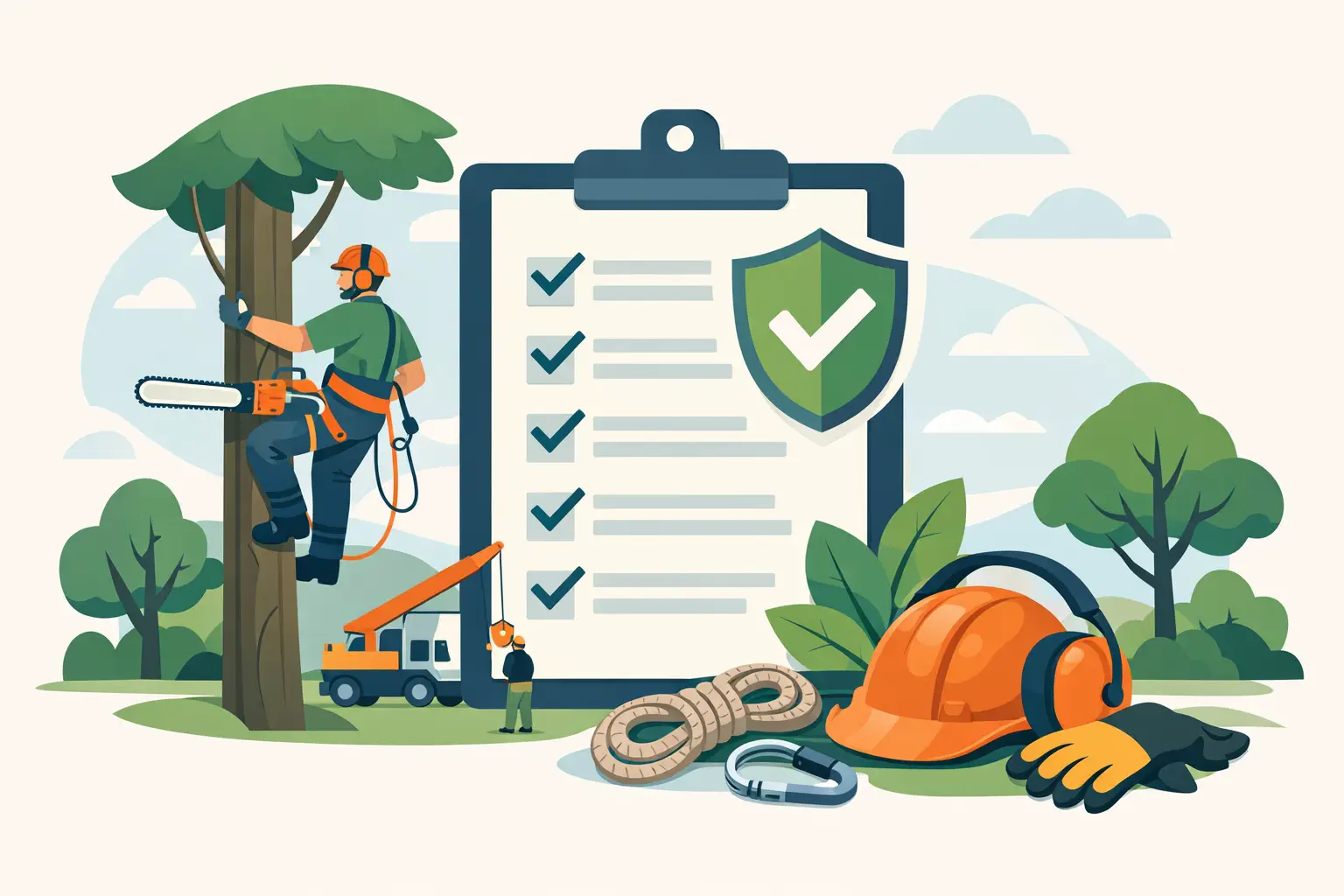
For professional chainsaw work, appropriate personal protective equipment normally includes a safety helmet with eye and hearing protection, chainsaw protective trousers, gloves and protective boots. Climbers also need correctly inspected climbing equipment, while ground teams need suitable protection and a clear understanding of their role in the work zone.
Avoid relying on a domestic ladder for tree cutting. Ladders are unstable on uneven ground and offer little control when a branch moves or a cutting tool is in use. Never work alone with a chainsaw or attempt to use one while balancing in a tree. The safest option is often to stop and arrange trained assistance rather than trying to make unsuitable equipment work.
Equipment checks should cover fuel, guards, chain tension, handles, emergency stops and the overall condition of the tool. Keep fuel and oil away from ignition sources, and refuel only when equipment is switched off and cooled as required. Clear the immediate ground area so that operators and assistants have secure footing and unobstructed escape routes.
Plan cuts, drop zones and communication
Branches are heavy, unpredictable and often under tension. Their weight can shift during a cut, and the section may swing, roll or fall farther than expected. No one should stand beneath a climber, beneath a suspended branch or inside a planned drop zone.
A safe team will agree the order of work before starting. That includes where each branch or timber section will land, how it will be moved, who is responsible for watching the exclusion zone and what signals will be used. Clear, simple communication matters, especially where machinery noise makes conversation difficult.
For larger pruning or dismantling jobs, sections may need to be lowered by rope rather than dropped. This protects roofs, fences, flowerbeds and surrounding trees, while giving the ground team better control. It takes specialist equipment and experience, but it is often the difference between a tidy job and expensive damage.
Do not rush the final cuts. A branch may be connected in ways that are not visible from the ground, and a tree with decay can behave differently from sound timber. If the cut is not progressing as expected, stop work, reassess and choose a safer method.
Protect people, wildlife and the site
Good tree work is not only about the person using the saw. It is also about everyone who may enter the area. Keep children, pets, visitors and members of the public away from the work zone. If the job is near a pavement, driveway or access road, additional traffic and pedestrian management may be needed.
Wildlife checks are essential before pruning, hedge cutting or felling. Birds may be nesting, and trees can provide habitat for bats and other protected species. If a nest, bat roost or other possible habitat is identified, stop and seek suitable advice before proceeding. Timing and method may need to change to protect wildlife and meet legal responsibilities.
Think about site protection too. Timber, brash and machinery can quickly damage lawns, borders and paving if there is no plan for handling them. A professional crew will organise access, protect sensitive areas where practical, process arisings safely and leave the site clear at the end of the job.
Know when to call a professional arborist
Some situations should never be treated as a weekend task. Arrange professional help if a tree is storm-damaged, leaning unexpectedly, split, dead, diseased, near a building, over a road or close to overhead lines. The same applies where branches require climbing access, the tree is too large to control from the ground, or the work involves felling and stump removal.
A qualified arborist can assess the condition of the tree, choose a suitable method and bring the right equipment for controlled work. They can also advise whether pruning is appropriate, whether a tree needs monitoring, or whether removal is the safest option. The answer depends on the species, condition, location and the level of risk – not simply on how untidy the tree looks.
For property managers and commercial sites, planned inspections and routine maintenance can reduce the likelihood of emergency work later. Removing deadwood, managing overgrowth and identifying defects early is generally safer and more cost-effective than waiting for a branch to fail during severe weather.
After the work is complete
Do a final walk-round before reopening the area. Check for hung-up branches, loose timber, sawdust-covered trip hazards, damaged fencing and debris in paths, drains or gutters. Stack or remove logs safely, and do not leave cut sections where they could roll, block access or invite children to climb on them.
If the work was prompted by a storm or visible damage, keep an eye on the tree over the following days. Fresh cracks, movement in the root plate or additional falling branches can indicate that the original damage was more extensive than it first appeared.
The best safety decision is often made before a tool is picked up. When there is any doubt about the tree, the access or the risk to people and property, a professional assessment provides the reassurance of a job planned properly and completed safely.