
A fallen limb across a drive, branches scraping a roof, or a heavily overhanging canopy can quickly turn into a safety concern. Tree branch clearance cost is not one fixed figure because every tree, location and level of risk is different. A straightforward collection of a few small branches will be priced very differently from safely removing large limbs above a conservatory, public footpath or power line.
For homes, estates and commercial sites across Norfolk and Suffolk, the right approach is to assess the work before any cutting starts. This helps ensure the price reflects the real job – including safe access, controlled dismantling, removal of waste and a clean finish – rather than leaving you with unexpected work once the team arrives.
Typical tree branch clearance costs in the UK
As a broad guide, small-scale branch clearance from an accessible garden may start from around £100 to £250. This might cover cutting up and removing a modest pile of fallen branches, or pruning a small tree that can be worked from ground level.
For larger branches, mature trees or work requiring climbing equipment, costs commonly move into the £250 to £600 range. Where a tree is close to buildings, has extensive storm damage, needs traffic or pedestrian management, or requires a specialist access platform, the price can be higher. Emergency attendance outside normal working hours will also usually carry an additional charge.
These figures are useful for setting expectations, but they should not replace a site visit or clear quotation. The cheapest estimate may exclude waste removal, stump work, access equipment or the careful lowering of timber. A professional quote should make clear what is included and how the site will be left once work is complete.
What affects tree branch clearance cost?
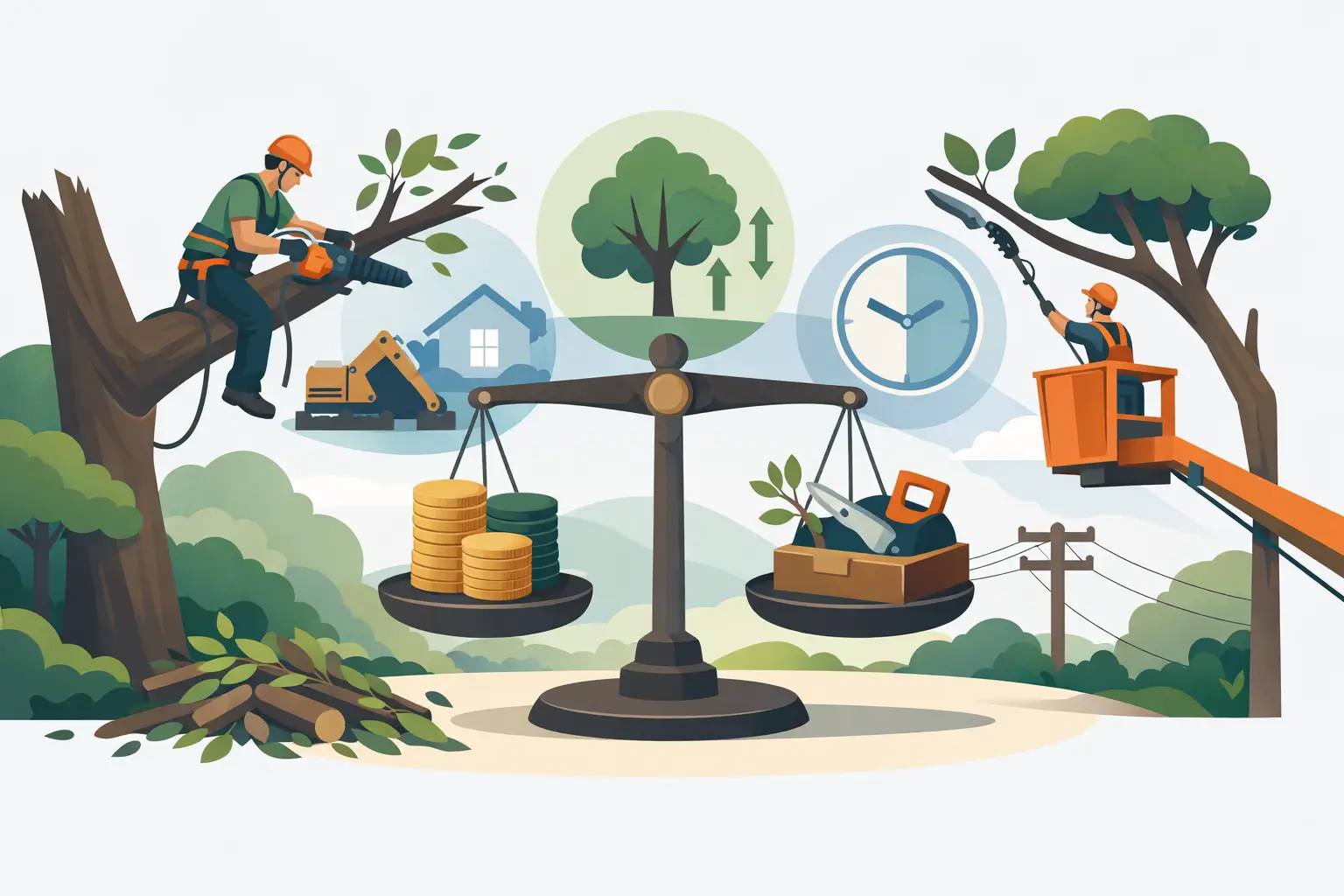
The main cost is usually driven by the time, equipment and skill needed to carry out the work safely. Branches may look manageable from the ground, but their weight, height and direction of fall can create a far more complex job than expected.
Size, height and condition of the branch
A small, sound branch can often be removed quickly. A large limb from a mature oak, beech or conifer may need to be cut into smaller sections and lowered on ropes to avoid damage below. Dead, split or storm-damaged branches require particular care because they can move unpredictably when climbed or cut.
The amount of material matters too. A few lightweight prunings are simple to process, while thick timber takes longer to cut, handle and load. If the branch has already fallen and is under tension, such as across a fence or resting on another tree, an arborist will plan the cuts carefully to prevent sudden movement.
Access to the tree
Good access keeps work efficient. A tree beside a driveway, with space for a lorry and chipper, is generally easier to manage than one at the end of a narrow passage, behind a terraced property or across soft ground.
Restricted access can mean branches must be carried out by hand, cut into smaller sections or removed with ropes. In some cases, a mobile elevated work platform is the safest solution. That equipment adds to the cost, but it can reduce risk and allow high or awkward limbs to be dealt with properly.
Nearby buildings, roads and services
Clearance becomes more technical when branches hang over a house, garage, greenhouse, parked vehicles, telephone lines or neighbouring land. Rather than simply dropping cut material, the team may need to rig each section down in a controlled way.
Work near roads, shared access routes or public spaces may also require extra planning to protect people and property. If branches are close to electricity lines, the relevant network operator may need to be contacted before work can proceed. This is not a job for untrained cutting or improvised ladders.
Waste removal and site clearance
Ask whether the quote includes chipping, loading and removal of all green waste. Branch clearance can create a surprising volume of material, especially from conifers and mature broadleaf trees. A tidy job should include raking up smaller debris and leaving paths, lawns and driveways safe to use.
Some customers choose to keep logs for firewood or woodchip for garden paths and beds. This can reduce the amount of waste that needs transporting away, although it does not always reduce the labour required to process the material. Agree this before work starts so the crew can leave the right material in the right place.
Urgency and weather damage
A branch that is already on the ground can often be booked at a convenient time. A hanging limb after high winds, however, may need urgent attention – particularly if it threatens a roof, blocks access or creates danger near a road.
Emergency tree work involves rapid response, risk assessment and, in some cases, working around poor weather conditions. That level of readiness affects the price, but prompt clearance can prevent a smaller problem becoming costly property damage.
Branch clearance, pruning or tree removal?
It is easy to request branch clearance when the tree actually needs a more considered pruning programme. Removing one offending limb may solve an immediate issue, but it can leave the canopy unbalanced or create a large wound that affects the tree’s future health. In other cases, selective crown reduction or deadwood removal gives better long-term clearance from a building without taking away more of the tree than necessary.
If the tree is declining, structurally unsound or unsuitable for its position, removal may be the safer option. That is a separate scope of work and will be quoted accordingly. An experienced arborist should explain the practical options, the likely result and why a particular method is recommended.
For commercial premises, schools, farms and managed properties, regular inspections can be more cost-effective than reacting to fallen branches. Planned maintenance identifies deadwood, rubbing limbs and excessive growth before it causes blocked access, damaged fencing or emergency call-outs.
Why professional clearance offers better value
Tree work is not only about making cuts. It involves understanding how a branch is loaded, where it can safely land, how to protect the remaining tree and how to manage the work area. Professional crews use the appropriate climbing, lowering and cutting equipment, along with safe working methods suited to the tree and site.
Insurance and competence matter when work is taking place around homes, vehicles and members of the public. A poorly cut branch can damage property, injure someone or leave a tree more vulnerable to decay and failure. Paying for qualified, properly equipped work protects more than the appearance of your garden.
T.G. Bird Tree Services provides practical, safety-led branch clearance for residential and commercial customers, from routine pruning to urgent storm-damage work. Every job is assessed on its own conditions, with a clear focus on safe workmanship, responsible waste handling and a clean site on completion.
How to get an accurate quote
The most useful enquiry includes the tree species if known, approximate height, the number and size of branches involved, and whether there is clear access for equipment. Photos can help give an initial indication, especially where the branch is visibly damaged or close to a structure. A site inspection may still be needed for high, heavy or awkward work.
Tell the contractor about gates, narrow access, overhead cables, protected areas, neighbours’ gardens and any urgency. It is also worth confirming whether you want all arisings removed, retained as logs, or chipped for use on site. Clear information allows for a more accurate price and avoids delays on the day.
If branches are cracked, suspended, resting on a roof or affecting a road or footpath, keep people away from the area and arrange professional assessment promptly. Acting early is usually safer, tidier and more affordable than waiting for the next strong wind to decide the issue for you.