
A fallen limb across a car park, an overgrown boundary blocking sightlines, or a mature tree too close to a building can turn into a costly problem very quickly. That is where commercial arborist services earn their place. For property managers, landlords, schools, estates and business owners, proper tree care is not just about appearance. It is about safety, access, liability and keeping a site well maintained without disruption.
On commercial land, trees and hedges often have to work harder than people realise. They frame entrances, soften hard landscaping, improve privacy and make a site look cared for. At the same time, they can create risks if they are left unmanaged. Deadwood, storm damage, root spread, low canopies and unchecked hedge growth can all interfere with public access, vehicles, signage and nearby structures. A practical arborist service helps you stay ahead of those issues before they become urgent.
What commercial arborist services cover
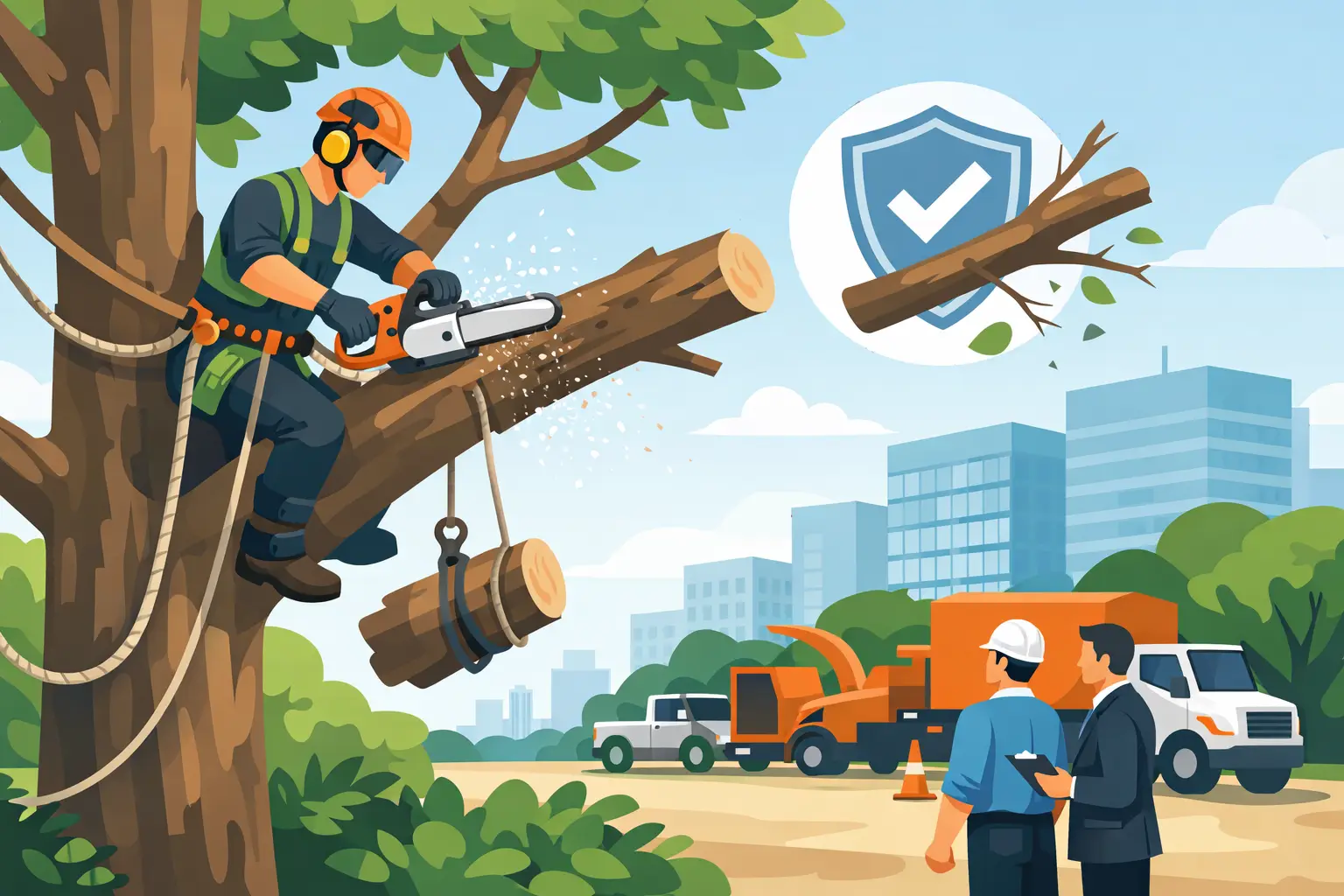
Commercial arborist services usually include far more than simply cutting branches back. The work can range from routine pruning and hedge maintenance to full tree removal, stump grinding, pollarding and emergency response after high winds or structural failure. On larger sites, it may also involve planned maintenance schedules to keep grounds safe and presentable throughout the year.
The right service depends on the site itself. A school may need low branches lifted from walkways and play areas. An industrial estate may need access routes kept clear for larger vehicles. A retail or hospitality site may be more focused on presentation as well as safety. In each case, the aim is the same – carry out the work properly, minimise risk and leave the site clean and usable.
That tailored approach matters. There is no single answer for every tree, every hedge or every commercial premises. Good arboricultural work takes account of species, condition, location, nearby structures and how the area is used day to day.
Why commercial arborist services matter for site safety
For commercial clients, safety is usually the main driver. Trees can fail without much warning, especially after poor weather, previous damage or long periods without maintenance. Even when a tree is fundamentally sound, overextended limbs, dead sections or dense growth can create avoidable hazards.
Public-facing sites need particular care. Footpaths, car parks, roads, loading areas and entrances all require clear space and good visibility. Low branches can strike vehicles. Dense hedges can block sightlines. Unstable trees can threaten buildings, fences and power lines. A professional arborist identifies the practical risks and deals with them in a controlled way.
There is also the question of responsibility. If a known issue is ignored and damage follows, the consequences can be expensive. Planned inspection and maintenance helps demonstrate that the site is being managed properly. That does not mean every tree needs heavy reduction or removal. In many cases, selective pruning is enough to improve clearance, reduce weight and remove defects while keeping the tree healthy and attractive.
Planned maintenance or reactive work?
Many commercial clients first call an arborist when something has already gone wrong. Storm damage, split limbs and blocked access routes need immediate attention, and a fast response matters. Emergency tree work is a key part of commercial arborist services because delays can leave a site unsafe or unusable.
Even so, relying only on reactive call-outs usually costs more in the long run. Planned maintenance tends to be the better option for sites with regular footfall, multiple trees, long boundaries or high presentation standards. It allows work to be scheduled sensibly, before defects worsen or access becomes restricted.
There is a balance to strike here. Some sites need regular hedge trimming and annual tree attention. Others may only need periodic inspections and occasional corrective work. It depends on tree stock, site use and how quickly vegetation grows in that location. A sensible contractor will not push unnecessary work. They will explain what needs doing now, what can wait and what should be monitored.
Tree work on commercial sites needs the right approach
Commercial jobs are different from domestic work. Access is often tighter, deadlines are stricter and there may be members of the public, staff, tenants or contractors moving around the site while work is underway. That means the job has to be organised properly from the outset.
Safe working methods, tidy operations and clear communication all matter. So does the ability to carry out technical work efficiently when trees are large, awkwardly positioned or close to buildings. On some sites, disruption needs to be kept to an absolute minimum. On others, the priority is making a dangerous tree safe as quickly as possible.
This is where experience shows. A dependable contractor knows how to assess the work, choose the right method and complete it with care. They also understand that commercial clients expect more than the tree itself to be dealt with. They want the area left presentable, debris removed and the site returned to normal use as quickly as possible.
Hedge maintenance is part of the bigger picture
When people think about commercial arborist services, they often focus on trees alone. In practice, hedge maintenance is just as important on many sites. Boundary hedges, screening hedges and formal frontage planting all need regular attention to stay neat, healthy and manageable.
Neglected hedges can quickly make a commercial property look poorly maintained. They can also encroach onto footpaths, reduce visibility for drivers and create problems with neighbouring land. Regular cutting keeps them under control and protects the overall appearance of the site.
As with trees, timing matters. Some hedges need more frequent trimming than others, and wildlife considerations should always be taken seriously. A professional service takes this into account and plans the work responsibly.
When removal is the right choice
Not every tree can or should be retained. Severe decay, major structural defects, disease, construction conflicts or repeated storm damage can make removal the safest and most practical option. On commercial premises, this decision often comes down to risk, budget and the future use of the space.
Removal is not something to approach casually. Mature trees contribute a lot to a site, and where retention is possible, it is often worth considering. But when a tree presents an ongoing hazard or is clearly unsuitable for its position, removal can be the sensible route.
The same applies to stump removal. Leaving a stump may be acceptable in low-use areas, but on active commercial land it can become a trip hazard, obstruct replanting or interfere with landscaping and access. Stump grinding is often the cleanest way to finish the job properly.
Choosing a contractor for commercial arborist services
Price matters, but it should not be the only factor. Commercial tree work needs to be safe, competent and reliable. A cheaper quote can become expensive if the work is poorly managed, the site is left untidy or the problem returns because the job was not done properly.
Look for a contractor who is clear in their communication and practical in their recommendations. They should be able to explain the work in plain terms, turn up when agreed and carry it out to a high standard. For commercial clients, responsiveness also counts. If a branch comes down across an entrance or a storm leaves a tree unstable, waiting days for a response is rarely acceptable.
Local knowledge can be valuable too. A contractor working regularly across Norfolk and Suffolk will understand the pace of local weather conditions, common site types and the expectations of property managers and landowners in the area. T.G. Bird Tree Services works with that practical mindset – safety first, work done properly, and every site left clean and secure.
A smarter way to protect your site
Good commercial tree care is not about cutting everything back hard and hoping for the best. It is about making sensible decisions that improve safety, maintain standards and avoid bigger issues later on. Sometimes that means urgent action. Sometimes it means routine pruning, hedge cutting or careful monitoring over time.
The real value of commercial arborist services is peace of mind. You know the risks are being managed, the grounds are being looked after and the work is in capable hands. For any commercial property, that is time and money well spent.
If your trees, hedges or site boundaries are starting to create questions, it is usually better to deal with them early while the options are still straightforward.