
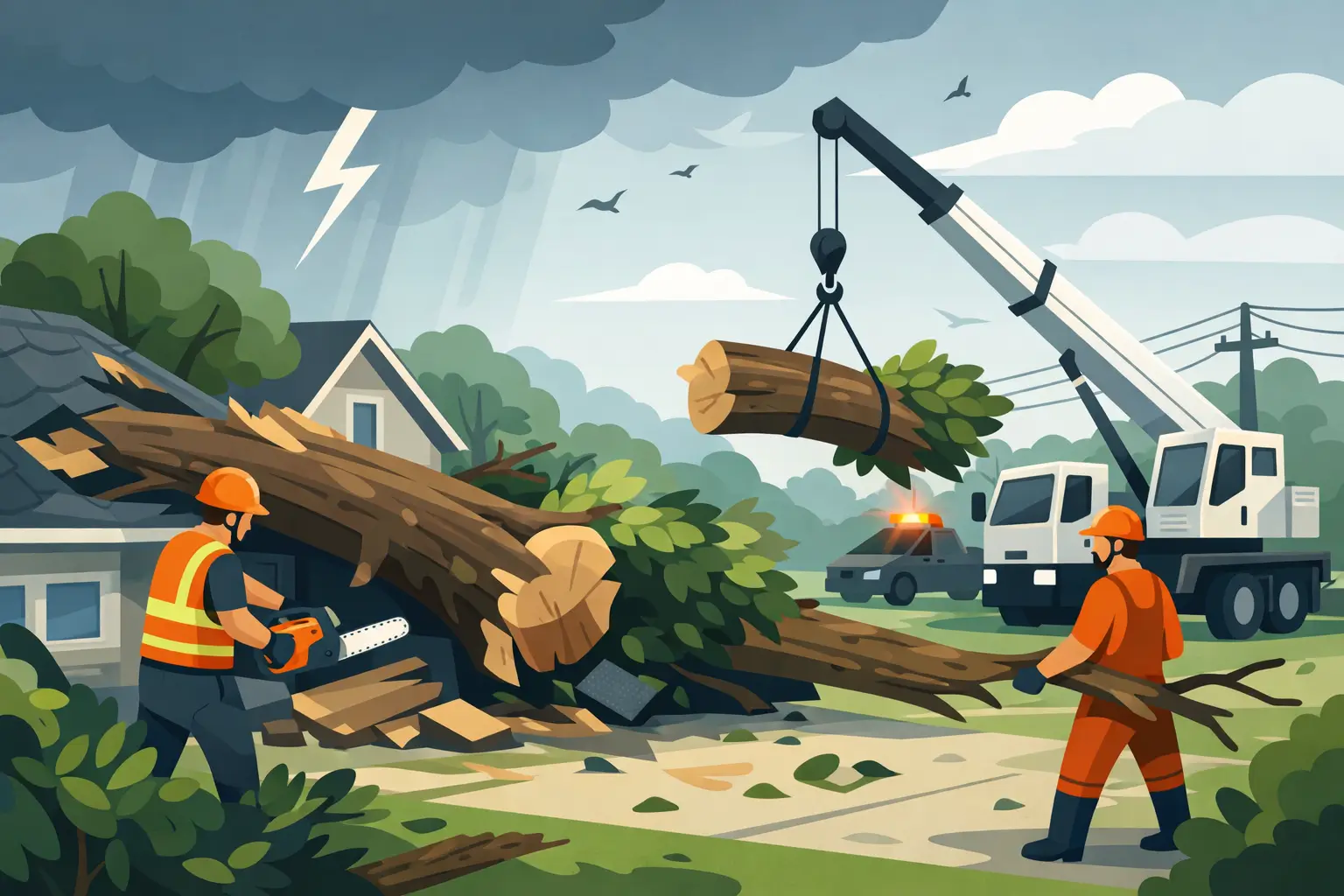
A tree leaning over a drive, a split limb hanging above a footpath, debris scattered across a garden – this is when quick decisions matter. Emergency tree removal after storm damage is not just about clearing a mess. It is about making the area safe, preventing further damage, and dealing with unstable timber properly before the situation gets worse.
After high winds and heavy rain, trees can fail in ways that are not always obvious from ground level. A stem may still be standing but badly fractured. Root plates can lift without the whole tree falling straight away. Branches can become lodged in neighbouring trees, roofs, fences, or utility lines. In these situations, the safest move is usually to keep clear, secure the area if you can do so safely, and arrange a professional assessment as soon as possible.
Why emergency tree removal after storm work needs care
Storm-damaged trees behave differently from trees being removed in normal conditions. The tension and compression in damaged timber can be unpredictable, and one cut in the wrong place can cause sudden movement. What looks like a straightforward clear-up job can quickly become hazardous if the tree is twisted, partly uprooted, or resting on a structure.
This is why emergency work should never be treated as routine garden maintenance. Proper equipment, trained arborists, and a clear method of dismantling are what make the difference between a controlled removal and an avoidable accident. In built-up areas across Norfolk and Suffolk, there is also the added issue of access, traffic, neighbouring properties, sheds, glasshouses, parked vehicles, and public rights of way.
A professional response is not only about getting the tree down. It is about doing it in the right order, with the site managed safely from start to finish, and leaving the area as tidy and secure as possible afterwards.
What to do straight after storm damage
The first priority is safety. If a tree or large branch has come down, keep people, pets, and vehicles away from the area. Do not walk underneath hanging limbs or approach a trunk that is cracked or partially uprooted. Even if nothing is moving, the tree may still be under significant strain.
If the damage involves power lines, treat it as an emergency and stay well back. Do not attempt to move branches or cut anything near live cables. The same applies if a tree has damaged a road entrance, blocked a shared access, or affected a public space. The right authority or emergency contact may also need to be informed depending on the situation.
Take a few clear photographs if it is safe to do so. These can help with insurance and give an arborist an early view of the damage before attending site. After that, the best step is to arrange an urgent inspection. The sooner the damage is assessed, the easier it is to control the risks and prevent secondary problems such as further collapse or water ingress to buildings.
When removal is necessary and when it depends
Not every storm-damaged tree has to be removed entirely. In some cases, a skilled arborist can carry out remedial pruning, reduce the canopy, remove broken limbs, or brace what remains if the tree is otherwise structurally sound. Mature trees with local value are often worth assessing properly before deciding on full removal.
That said, there are situations where removal is the most sensible option. A tree may have suffered major stem failure, substantial root movement, or extensive crown loss that leaves it unbalanced and unsafe. If it is very close to a house, garage, boundary wall, road, or commercial premises, the tolerance for risk is naturally lower. The right answer depends on the extent of damage, the species, the condition of the tree before the storm, and what sits around it.
This is where experienced judgement matters. Emergency tree removal after storm conditions should be based on real site assessment, not guesswork from a distance.
How professional storm clearance is typically handled
The first stage is making the site safe. That may mean establishing an exclusion zone, checking for overhead hazards, and deciding how the tree is loaded and where it may move during dismantling. Access for climbing equipment, rigging, chainsaws, and removal vehicles also needs to be considered before work begins.
If the tree is resting on a structure or tangled in other trees, sections are often removed carefully rather than dropping the whole tree at once. This controlled dismantling reduces the chance of further damage to roofs, fences, driveways, greenhouses, or landscaping. Where a root plate has lifted, the remaining stem may still be highly unstable, so the sequence of cuts becomes especially important.
Once the hazardous material is removed, the site can be cleared properly. That usually includes processing branches, removing timber, and dealing with stump issues if required. In some emergency situations, the priority is immediate hazard removal, with stump grinding or follow-on tidy-up arranged separately. It depends on urgency, access, and how much damage has been caused.
Hidden risks property owners often miss
Storm damage is not always limited to what has fallen. Trees nearby may have sustained partial failures that are less obvious, especially where there are cracks at unions, torn bark, hanging branches high in the crown, or soil movement around the base. These defects can lead to delayed failure days or even weeks after the weather has passed.
There is also the question of impact damage. A branch that clips a roof may have loosened tiles or guttering. A tree that falls across a garden may have damaged drains, fencing, or outbuildings. On commercial sites, access routes, signage, car parks, and perimeter boundaries may all need checking before the area is considered safe again.
This is why a thorough inspection after a storm is often just as important as the call-out itself. Clearing the obvious debris is only part of the job.
Emergency tree removal after storm events on homes and commercial sites
Domestic and commercial sites often need slightly different handling. At a home, the immediate concerns are usually family safety, property damage, and restoring normal access. Homeowners often need fast reassurance as much as technical advice, especially when a tree is close to the house or has blocked a driveway.
On commercial premises, there may be more formal risk controls to consider. Site managers may need hazards documented, access routes reopened quickly, and disruption kept to a minimum. Schools, industrial units, rental properties, farms, and managed grounds all bring different practical demands. A dependable contractor should be able to adjust the response to suit the site rather than apply a one-size-fits-all approach.
That practical flexibility is one reason local clients across Norfolk and Suffolk look for a team that can respond quickly, work safely, and leave the site presentable afterwards.
Why DIY storm tree work is rarely worth the risk
It is understandable that some property owners want to start clearing up straight away. Smaller garden debris can often be dealt with safely, but chainsaw work on storm-damaged trees is a different matter entirely. Timber under pressure can spring, roll, split, or drop without warning. Ladders, domestic tools, and basic protective clothing are no substitute for proper training and equipment.
There is also a cost trade-off to think about. What looks like a saving can become much more expensive if a structure is damaged further, a fence line is taken out, or someone is injured. In many cases, the quickest route back to normal is not attempting the removal yourself, but getting trained professionals to make the tree safe in one controlled operation.
Choosing the right team after a storm
Fast response matters, but so does competence. A good emergency tree service should be clear about safety, realistic about timings, and straightforward about what the site needs. They should be able to assess whether a tree can be made safe, reduced, or removed, and carry out the work with the right machinery and method for the conditions on site.
Just as important is the standard of finish. After storm damage, people want more than a tree cut down. They want access restored, hazards removed, and the area left tidy. That is the standard clients expect from T.G. Bird Tree Services, whether the job is a domestic emergency call-out or urgent work on a larger commercial site.
Storms can turn a healthy-looking tree into a serious risk in a matter of minutes. If a tree has failed, shifted, split, or started leaning after bad weather, the safest next step is simple – keep clear, avoid guesswork, and get it assessed properly before a manageable problem turns into a bigger one.