
A tree that is leaning over a roof, dropping dead branches onto a drive or growing into overhead lines is not a job for the cheapest person with a chainsaw. Knowing how to choose a qualified arborist helps protect people, property and the long-term health of your trees. It also gives you a far better chance of receiving tidy, well-planned work without unwelcome surprises once the job begins.
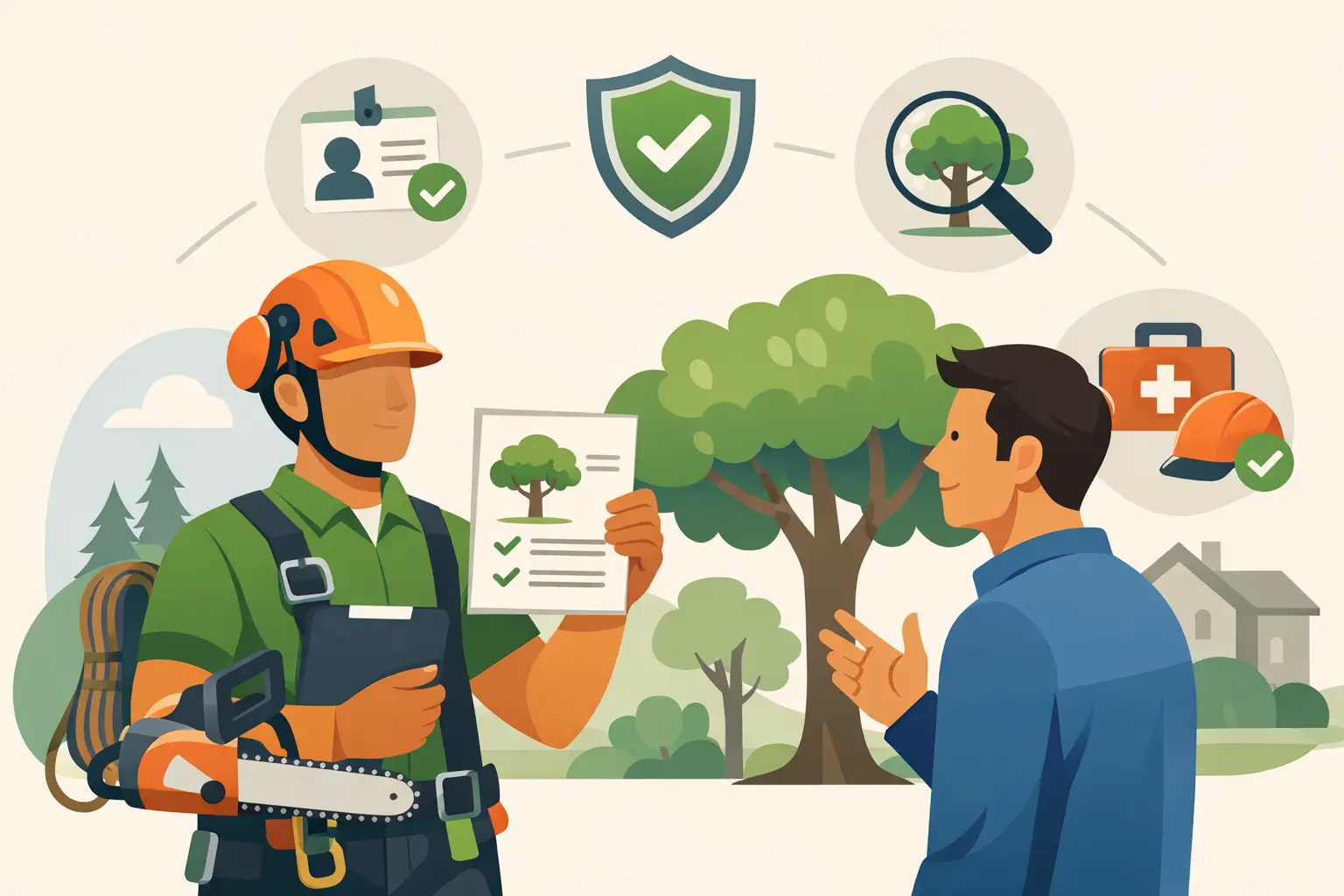
A good arborist combines practical experience with the right training, insurance, equipment and judgement. They should be able to explain what needs doing in plain English, why it is the right approach, and how they will leave your site safe and clear afterwards.
How to choose a qualified arborist for your property
Start by being clear about the problem you need solved. A mature oak close to a house, a storm-damaged conifer, an overgrown boundary hedge and an old stump each call for different skills and equipment. Explain what you have noticed, including fallen branches, visible decay, movement in the root area or concerns about light, access and neighbouring land.
A reliable contractor will assess the tree rather than immediately recommend heavy cutting or removal. In many cases, careful pruning, crown reduction or deadwood removal is safer and better for the tree than felling. Equally, if a tree has become unstable or poses a genuine risk, an experienced arborist should be direct about the danger and the safest way to manage it.
Be wary of anyone who offers to start immediately without looking properly at the site, particularly after severe weather. Urgent situations do happen, but even emergency work requires a sensible risk assessment and a safe method of working.
Check training, competence and relevant experience
Tree work is specialised. Climbing, aerial cutting, rigging sections down near buildings and operating chainsaws all involve significant risk. Ask what training and certifications the team holds, especially where climbing or powered equipment is involved. Relevant chainsaw and aerial tree-work qualifications, often referred to as NPTC or City & Guilds certificates, are a useful sign that operatives have been assessed for the tasks they carry out.
Qualifications are not the whole picture. A contractor who has spent years working on mature trees in confined gardens will usually be better placed to plan a difficult dismantle than someone whose experience is limited to light garden maintenance. Ask whether they have completed similar work before, particularly if your tree is large, protected, close to a structure or has restricted access.
For routine hedge cutting, the level of technical work may be lower than for dismantling a storm-damaged tree over a conservatory. The standard should still be professional: suitable equipment, safe working practices, neat cuts and a clear plan for removing waste.
Ask about public liability insurance
Insurance is one of the most practical checks you can make. Tree work can affect homes, vehicles, fences, neighbouring gardens and members of the public. A qualified arborist should hold appropriate public liability insurance and be willing to provide evidence when asked.
The right level of cover depends on the work. A small ornamental prune in an open garden presents a different risk from sectional felling beside a road or commercial building. Rather than assuming all policies are equal, ask whether the insurer knows the business carries out the type of tree work being quoted for.
If the work involves employees or regular staff, employers’ liability insurance may also be relevant. Professional contractors treat insurance as part of responsible day-to-day operation, not an awkward question to avoid.
Look for a detailed written quotation
A clear written quotation protects both sides. It should set out the work proposed, such as crown lifting, reduction, felling, stump grinding or hedge maintenance, along with the price and any assumptions about access. It should also say what will happen to branches, logs, woodchip and other arisings.
Do not compare quotes on price alone. One contractor may include full waste removal, traffic management, stump treatment or careful lowering of branches, while another may not. A lower figure can become poor value if you are left with a large pile of timber, damage to a lawn or extra costs after the work has started.
Before accepting, make sure you understand four points:
- exactly which trees, branches or hedge sections are included;
- whether all waste will be removed or left for you as firewood or mulch;
- how access, neighbouring property and vulnerable surfaces will be protected; and
- whether VAT, stump removal and any permission fees are included.
A good arborist will be happy to talk through the quotation. If the proposed work has changed after the site visit, ask for the written scope to be updated before work begins.
Make sure permissions are considered
Not every tree can be pruned or removed without checking local restrictions. Trees may be protected by a Tree Preservation Order, known as a TPO, or stand within a conservation area. There can also be planning conditions, tenancy obligations and restrictions on commercial sites or managed estates.
The property owner is usually responsible for ensuring the correct permissions are in place, but a professional arborist should raise the question and help you understand what needs checking. Work on protected trees without consent can lead to serious consequences, so do not accept reassurance based only on a verbal guess.
Wildlife also needs consideration. Birds may be nesting, bats may be using cavities or loose bark, and seasonal conditions can affect how and when work should proceed. Responsible tree care balances the needs of people and property with wildlife awareness. Sometimes that means adjusting the timing or method of work rather than pressing ahead.
Pay attention to safety planning and equipment
You do not need to be an arborist to spot whether a contractor takes safety seriously. On site, look for appropriate personal protective equipment, well-maintained tools, controlled work areas and a team that communicates clearly. For complex jobs, there may be climbing ropes, lowering equipment, a woodchipper, a stump grinder, access platforms or machinery to move timber safely.
The method should suit the site. A tree in a wide field may be felled in one direction, while the same tree beside a garage may need to be dismantled carefully in sections. Cutting corners on access or rigging can put buildings, gardens and people at risk.
Ask how the team will manage pedestrians, children, pets, parked cars and neighbours while work is under way. If a road, pavement or shared access is affected, extra controls may be required. Clear answers show that the contractor has considered the full job, not simply the cutting.
Choose communication and care, not just credentials
Technical ability matters, but so does how a contractor treats your property. Tree work can be noisy and disruptive for a short time. The difference between a stressful job and a straightforward one often comes down to planning, punctuality, respect for access arrangements and thorough clean-up.
A professional arborist should explain any limits to the result. For example, reducing a large tree may improve light, but it will not always stop all leaf fall or eliminate shade. Removing a stump can reduce regrowth risk, but the ground may still need levelling or reinstating afterwards. Honest advice is more useful than promises that no tree contractor can realistically keep.
Reviews and recommendations can help, particularly when they mention reliable attendance, tidy workmanship and careful handling of difficult work. However, use them alongside your own checks on insurance, qualifications, quotation detail and professionalism.
When an emergency needs a faster decision
After high winds, a split limb, uprooted tree or branch resting on a building needs prompt attention. Keep people away from the area, avoid touching damaged trees near power lines and do not attempt to cut or pull unstable timber yourself. Contact an emergency tree service that can assess the immediate risk and make the site safe.
Even under pressure, ask whether the contractor is insured and equipped for the situation. Emergency work may need a rapid response, but it should still be controlled, professional and clearly explained. Once the immediate danger has been dealt with, you can agree any follow-up pruning, removal or stump work needed to leave the area safe.
The right arborist will not push unnecessary work or hide behind technical language. They will assess the tree carefully, offer a practical recommendation and carry out the job with proper attention to safety, your property and the final clean-up. That is the standard worth choosing, whether you need a single branch removed or ongoing care for a larger site.