
A large tree does not always need to be removed to become safer, tidier or better suited to its setting. In the right circumstances, pollarding can reduce its size while retaining a healthy, managed tree. This guide to tree pollarding explains what the work involves, when it is appropriate and why it must be planned and carried out properly.
Pollarding is a specialist form of pruning, not a quick fix for an overgrown canopy. Done at the wrong time, on the wrong species or by cutting back too far, it can leave a tree stressed, unstable and vulnerable to decay. A professional assessment comes first, particularly where branches are close to homes, roads, power lines, boundaries or public areas.
What is tree pollarding?
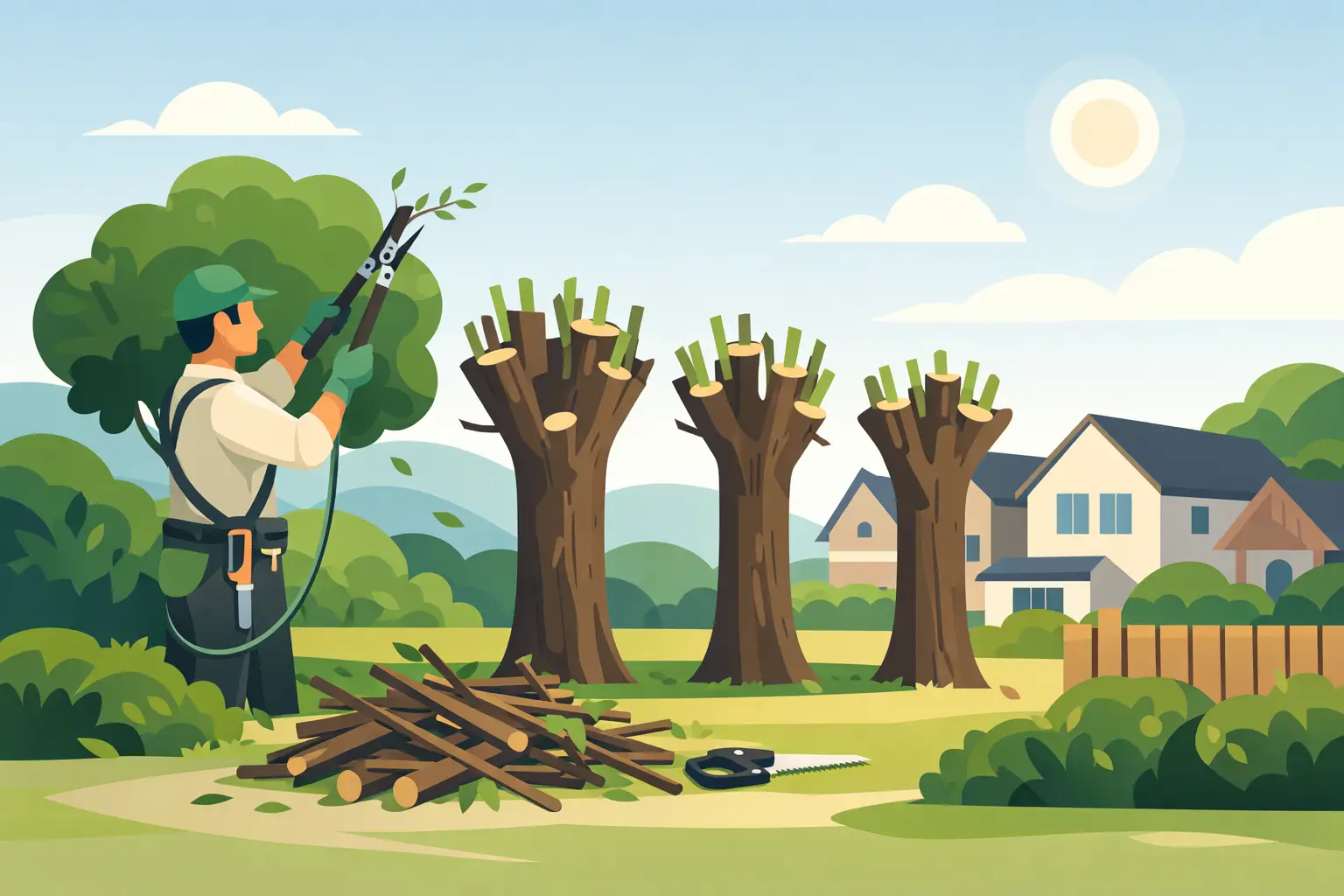
Tree pollarding is the regular removal of a tree’s upper branches back to established pruning points, known as pollard heads. The aim is to control the tree’s height and spread while encouraging new shoots to grow from those same points.
This differs from ordinary crown reduction, where selected branches are shortened while the tree keeps much of its natural shape. It is also very different from topping. Topping involves making indiscriminate cuts through branches or the main stem, often leaving large wounds and weak regrowth. It is poor tree management and can create a greater safety problem over time.
A correctly managed pollard has a recognisable structure. Its regrowth is cut back on a planned cycle before branches become too large or heavy. This keeps the tree within a manageable size and reduces the risk of poorly attached limbs failing in high winds.
When is pollarding the right choice?
Pollarding is often used where trees need to coexist with busy properties and limited space. It can be particularly useful for established street trees, trees beside access routes, and specimens that have historically been pollarded and need ongoing maintenance.
Homeowners may consider it when a tree is casting excessive shade, growing too close to a building, obstructing access or creating concern over heavy limbs. For commercial sites and managed grounds, it can help maintain clearances around footpaths, car parks, lighting and buildings.
However, the reason for the work matters. If the issue is a few long or damaged branches, a crown reduction or selective pruning may be the better option. If a tree is in poor health, has extensive decay or is structurally unsafe, pollarding may not address the underlying risk. In some cases, felling and suitable replanting is the safer long-term decision.
The best solution depends on the tree’s species, age, condition, previous pruning history and location. A mature tree that has never been pollarded should not automatically be cut back hard simply because it has become large.
Trees that respond well to pollarding
Some broadleaf species are naturally more tolerant of pollarding than others. Willow, lime, plane, sycamore and certain maples can often respond well, especially where the management method began when the tree was younger.
Willow is a common example around watercourses and larger gardens because it produces vigorous new shoots. Lime is frequently pollarded along roads and in urban settings. Even with suitable species, the tree must have enough vitality to recover from the work.
Conifers and many mature trees with little previous hard pruning are generally poor candidates. Cutting these trees back severely can cause permanent decline, unattractive regrowth or major structural weaknesses. This is why species identification and a close inspection are essential before any work is booked.
How professional tree pollarding is carried out
Pollarding starts from the ground. An arborist will assess the tree’s health, signs of disease or decay, branch unions, nearby targets and safe access for the team and equipment. The work area may need to be cordoned off, particularly if it is near a pavement, road, neighbouring garden or shared entrance.
The team then removes branches in controlled sections. Where there is limited space below, branches are lowered with ropes rather than dropped. This protects roofs, fencing, greenhouses, planting areas and surrounding property.
Cuts are made at suitable points to preserve the established pollard heads and avoid unnecessary damage. The aim is not simply to make the tree as small as possible. Good pollarding leaves a balanced framework that can produce manageable regrowth and remain structurally sound.
The resulting branches are processed and removed from site unless there is an agreed use for the timber or woodchip. A professional job should also include a thorough clean-up, leaving paths, lawns and access areas safe and tidy.
For larger, awkward or hazardous trees, specialist climbing equipment, rigging systems or a mobile elevated work platform may be needed. This is not work for untrained individuals with a ladder and chainsaw. Falling timber, unstable branches and overhead services all present serious risks.
Timing matters for pollarding
For many deciduous trees, pollarding is usually carried out during the dormant period, from late autumn to early spring. With fewer leaves on the tree, the structure is easier to inspect and the workload on the tree can be reduced.
That said, there is no single calendar date that suits every tree. Weather conditions, species, tree health and wildlife activity must all be considered. Work should not be carried out during severe frost, and an active bird nest must not be disturbed at any time of year.
Once a tree has entered a pollarding cycle, it needs regular attention. Depending on the species and location, regrowth may need reducing every one to five years. Leaving it too long allows new limbs to become heavy, increasing the likelihood of failure at the pollard points and making future work more difficult.
Permissions and wildlife checks
Before pollarding a tree, check whether it is protected by a Tree Preservation Order or located within a conservation area. Trees covered by a Tree Preservation Order normally require formal consent from the local planning authority before work begins. For trees in a conservation area, notice is generally required before carrying out work.
These protections can apply even in a private garden. Carrying out unauthorised work may lead to enforcement action and significant penalties, so it is always worth checking first.
Wildlife must also be considered. Birds, bats and other protected species can use trees for nesting, roosting and shelter. An experienced tree surgeon will look for signs of wildlife before starting and adapt the plan if necessary. This approach protects wildlife while avoiding unnecessary delays or complications for the property owner.
What happens after pollarding?
A pollarded tree can look bare immediately after the work, particularly in winter. That appearance is temporary. On a suitable, healthy tree, new growth should emerge from the pollard heads during the following growing season.
Avoid adding unnecessary fertiliser or overwatering an established tree unless professional advice identifies a genuine need. The most useful aftercare is to monitor the tree, keep the area around its base free from damage and arrange its next maintenance visit before regrowth becomes oversized.
If you notice cracking, fungal growth, dieback or large shoots pulling away from the pollard heads, seek advice promptly. These signs do not always mean the tree is failing, but they should be assessed before they develop into a more serious issue.
Common questions about tree pollarding
Does pollarding damage a tree?
It can if it is unsuitable for the species, carried out on a weak or stressed tree, or done without a long-term maintenance plan. When used on an appropriate tree and repeated correctly, pollarding is an established management method that can extend useful tree life in constrained locations.
Will pollarding stop a tree growing?
No. Pollarding controls the size and form of a tree, but it does not stop growth. New shoots will develop after pruning and will need reducing regularly. It is a continuing maintenance commitment rather than a one-off treatment.
Is pollarding cheaper than felling?
It depends on the tree and the site. Pollarding may cost less than a complex removal in the short term, especially where retaining the tree is desirable. Over several years, however, the cost of repeat pruning should be considered. Felling may be more appropriate where a tree is fundamentally unsuitable, unsafe or in severe decline.
Can I pollard my own garden tree?
Small pruning tasks may be manageable for competent homeowners, but pollarding involves significant cuts, working at height and careful judgement about tree health and structure. For anything beyond minor, accessible work, professional arborists are the safer choice.
A well-managed tree should improve a property, not become a recurring worry. If you are unsure whether pollarding, crown reduction or another form of tree work is right for your tree, a site assessment gives you a clear, safe plan before the first branch is cut.