
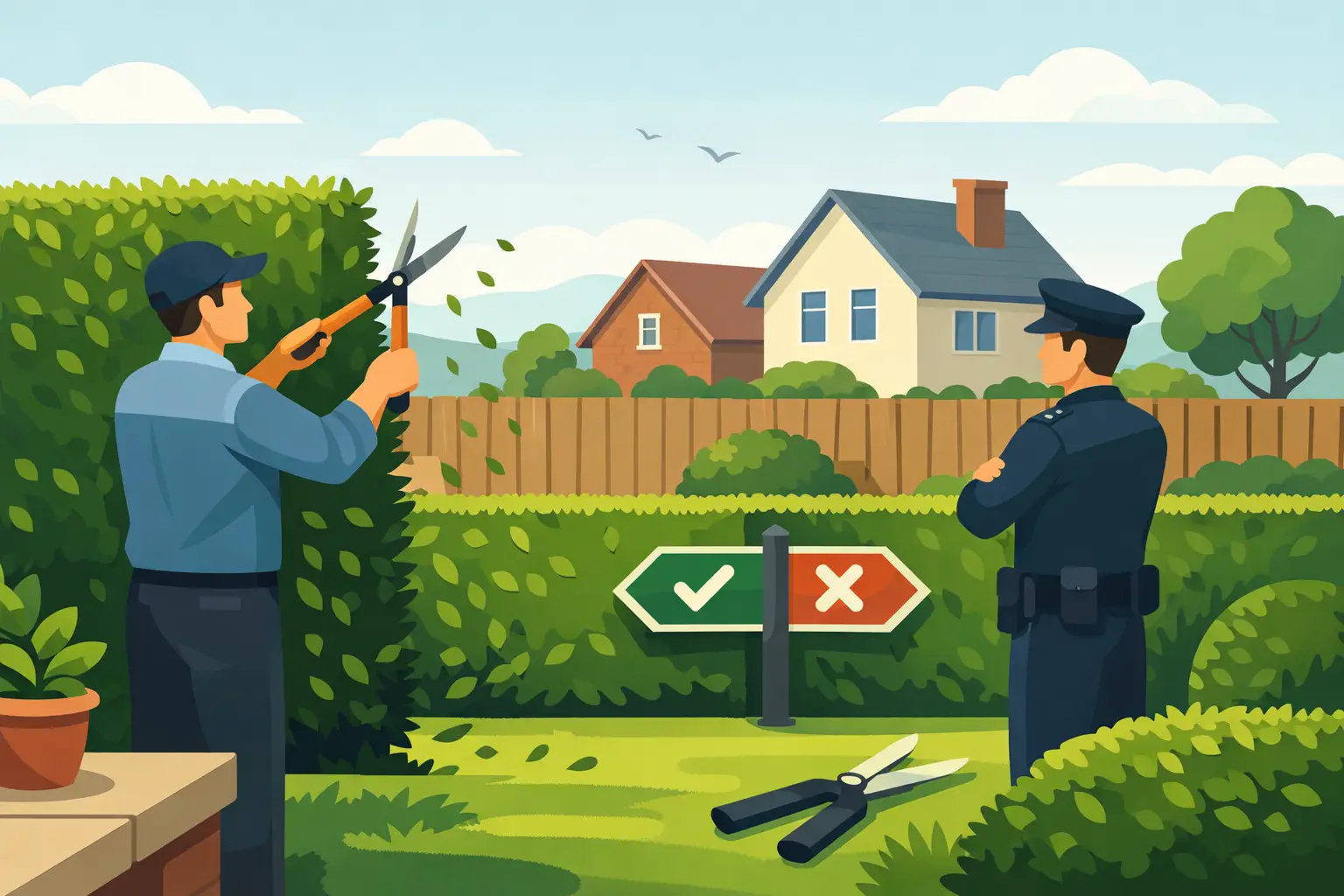
An overgrown hedge can block light, narrow a driveway, obscure a pavement or start encroaching on a neighbour’s garden. Before reaching for the hedge trimmer, many property owners ask, do I need permission to cut hedges? In most cases, you can maintain a hedge that belongs to you. However, ownership, legal boundaries, nesting birds, tenancy agreements and planning restrictions can all change what is sensible – and lawful.
For homeowners, landlords and site managers in Norfolk and Suffolk, the safest approach is to establish who owns the hedge and what work is needed before arranging cutting. A regular trim is usually straightforward. Reducing, removing or working on a shared boundary hedge needs more care.
Do I need permission to cut hedges on my property?
If the hedge is wholly within your land, you will not normally need permission from a neighbour to trim or reduce it. You are responsible for keeping it maintained, provided the work does not affect protected wildlife, a protected tree growing within the hedge, or any separate planning condition affecting the site.
The position is different where a hedge marks the boundary between two properties. A boundary hedge is not automatically jointly owned. It may sit on one side of the boundary, or ownership may be set out in title documents, a lease, transfer plan or historic deed. Fence ownership marks on plans are not always conclusive, so avoid assumptions where the boundary is disputed.
If the hedge is yours, you can normally cut it from your side. If it belongs to your neighbour, you may cut back branches, stems and growth that cross into your land, but only up to the boundary line. You must not cut beyond it, damage the hedge, enter your neighbour’s land without permission or make the hedge unstable.
Anything cut from a neighbour’s hedge still belongs to them. In practice, it is courteous to offer the cuttings back. Do not simply throw them over the fence or leave them where they could cause a nuisance.
Speak to your neighbour before cutting a boundary hedge
A short conversation prevents many avoidable disagreements. Tell your neighbour what work is proposed, especially if the hedge needs a substantial reduction, has become overgrown on both sides, or contains mature trees. Agreeing access, timing and removal of green waste makes the job easier for everyone.
You should always seek clear permission before a contractor enters a neighbour’s garden, uses their driveway for access or needs to work from their side of the boundary. This matters even if the hedge itself belongs to you. Access without consent can quickly turn a routine maintenance job into a dispute.
Where ownership is unclear, do not authorise major work until the position has been checked. Photographs, title plans and a practical discussion with the adjoining owner can help. For complex or long-running disputes, independent legal advice may be needed before cutting begins.
Hedges, height and the right to light
There is no general maximum legal height for a garden hedge in England. A hedge can be tall without automatically being unlawful. However, a group of two or more evergreen or semi-evergreen trees or shrubs may be treated as a high hedge if it is over two metres tall and is affecting a neighbour’s reasonable enjoyment of their home or garden.
Under the high hedges rules, a neighbour can complain to their local council after trying to resolve the issue directly. The council may decide that the hedge is adversely affecting enjoyment of the property and issue a remedial notice. This can require the hedge to be reduced and maintained at a specified height. It does not usually require complete removal.
If your hedge is causing a problem, regular professional maintenance is usually less disruptive and less costly than allowing it to reach the point of a formal complaint. A planned reduction can improve light and appearance while retaining privacy and avoiding harsh regrowth.
Check for nesting birds before hedge cutting
Hedges provide valuable shelter for birds and other wildlife. Under wildlife law, it is an offence to intentionally take, damage or destroy the nest of any wild bird while it is in use or being built. This is why hedge work during the main nesting period requires particular care.
The nesting season is commonly regarded as running from March to August, but birds can nest outside these months when conditions are favourable. There is no blanket rule that bans all hedge cutting in spring and summer. The key issue is whether an active nest is present and whether the proposed work could disturb or damage it.
Before cutting, inspect the hedge carefully for signs of nesting activity, such as birds repeatedly entering one area, visible nest material or chicks calling. Thick, mature hedges can be difficult to inspect properly from ground level, particularly where dense ivy, brambles or conifers are present.
If an active nest is found, stop work around that section and allow the nest to finish naturally before returning. A professional hedge contractor can assess the hedge, plan the work around wildlife and recommend the most suitable time for a full cut-back. This is particularly useful for commercial grounds, rental properties and large rural boundaries where there may be several hedges to manage.
When planning rules may apply
Routine trimming of an ordinary domestic hedge rarely needs planning permission. There are, however, situations where you should check before carrying out significant work.
A hedge may contain trees protected by a Tree Preservation Order, often called a TPO. The hedge itself may not be protected, but individual trees growing through it could be. Cutting, lopping or removing protected trees without consent can lead to serious penalties. Trees in conservation areas may also need notice to be given to the local planning authority before work takes place.
In the countryside, the removal of certain established hedgerows can be controlled by hedgerow regulations. These rules are most relevant where a hedge is being removed rather than simply trimmed, and where it forms part of an agricultural field, public route or other qualifying rural land. Removing an old hedge to widen access, change field layouts or develop land should never be treated as a simple garden clearance job.
Planning conditions on new developments, listed properties or commercial sites can also require boundary planting to be retained. If the hedge was planted as part of an approved landscaping scheme, check the relevant documents before removing or heavily reducing it.
Tenants, landlords and managed properties
If you rent your home, check your tenancy agreement before cutting or removing a hedge. Basic garden upkeep may be your responsibility, but major pruning, height reduction or removal is often a landlord decision. Written approval avoids arguments over damage, maintenance responsibilities and deposit deductions.
Landlords and managing agents should be clear about who is responsible for hedge maintenance, particularly where growth affects paths, parking areas, communal gardens or neighbouring properties. Keeping records of inspections and completed work is useful where a hedge presents a visibility or safety concern.
For commercial premises, schools, estates and managed developments, hedge cutting should form part of regular grounds maintenance. Overgrown hedges can conceal signage, restrict sight lines at vehicle exits, obstruct footpaths and create places where litter accumulates. Scheduling work at suitable intervals helps maintain a tidy, safe site without resorting to severe cuts.
Do not overlook roads, pavements and visibility
If a hedge borders a public pavement or highway, the owner is generally expected to prevent it from obstructing people using the route. Growth should not force pedestrians into the road, block signs, cover streetlights or reduce visibility at a junction or driveway.
Cutting near roads brings additional risks. Falling material, passing traffic, pedestrians and overhead services all need to be considered. For anything more than light trimming, especially beside a busy road, leave the work to trained professionals with the right equipment, work area controls and insurance.
Choose the right level of hedge work
A light seasonal trim, carried out with safe access and no wildlife concerns, may be manageable for a homeowner. Taller hedges, difficult boundaries and major reductions are different jobs. Working from ladders with powered cutting tools is a common cause of serious accidents, while cutting too hard at the wrong time can leave a hedge thin, brown or unable to recover well.
The right method depends on the species, condition and purpose of the hedge. Formal evergreen hedges often need careful, regular shaping. Native mixed hedges may benefit from rotational management that retains cover and habitat. A neglected conifer hedge may need phased reduction rather than one aggressive cut.
T.G. Bird Tree Services can assess access, hedge health, wildlife considerations and the finish you want before carrying out tidy, professional hedge maintenance. For a boundary hedge, a quick check before work starts can protect neighbourly relations as well as your garden.
If you are unsure whether you can cut a hedge, pause before arranging major work. Confirm ownership, check for active nests and ask whether any local planning protection applies. That little bit of preparation helps keep the job safe, lawful and looking right when it is finished.