

A tall, dense hedge can give a property privacy, shelter and a smart boundary. Left unmanaged, however, it can soon become difficult to cut safely, block light, grow into paths or roads, and place pressure on fences. Knowing how to maintain large garden hedges means planning regular work before height, width and access turn a routine trim into a hazardous job.
For many homeowners and property managers, the key is not trying to make an overgrown hedge perfect in one afternoon. Good hedge maintenance is measured, seasonal and suited to the species, condition and location of the hedge.
Start with the hedge’s condition and surroundings
Before cutting, assess the full length of the hedge from ground level. Look for dead sections, gaps, leaning stems, brambles, hidden wire or fencing, and branches pressing against sheds, roofs, gutters or overhead cables. Check whether the hedge overhangs a pavement, driveway or neighbouring land, as cuttings and falling branches must be managed safely.
The type of hedge also affects the right approach. Fast-growing evergreen species such as Leylandii, Lawson cypress and laurel often need regular attention to prevent them becoming too wide or tall. Yew can tolerate firmer pruning, while many flowering or native hedges need more careful timing to protect their shape, wildlife value and flowering display.
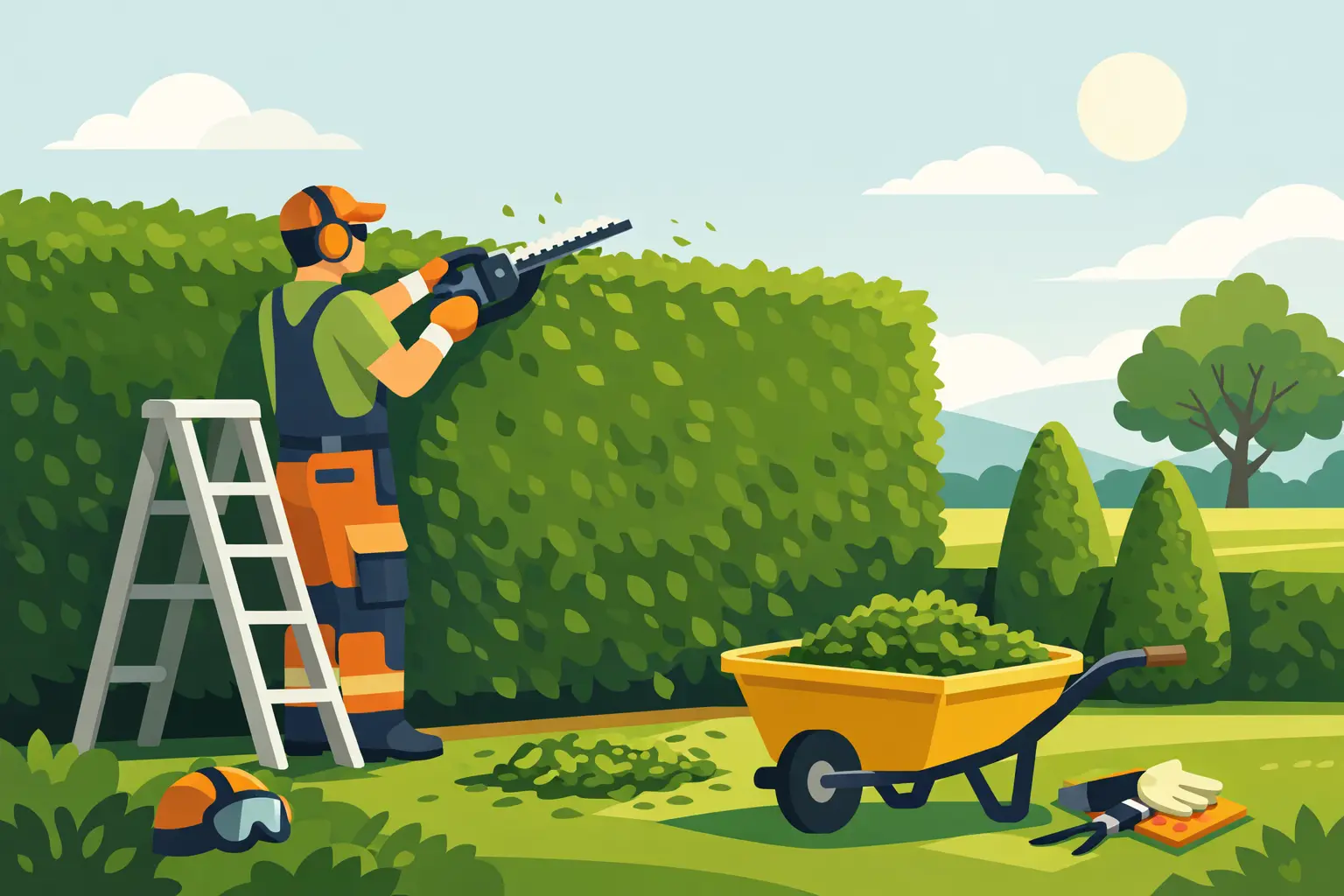
If a hedge has reached several metres high, do not assume a pair of domestic hedge trimmers and a ladder will be enough. Working at height with powered equipment creates a real risk of falls and serious injury. Uneven ground, heavy growth and restricted access all increase that risk. A professional team can use the right access equipment, cutting tools and safe working methods to manage the job properly.
Choose the right time for hedge maintenance
Most established hedges benefit from one or two trims each year. A light summer cut keeps formal evergreen hedges neat, while a second tidy-up may be needed in late summer or early autumn, depending on growth. Avoid cutting during very hot, dry weather, as exposed growth can scorch or struggle to recover, and avoid heavy pruning during hard frosts.
Wildlife needs to be part of the plan. Nesting birds are protected, and active nests must not be disturbed or damaged. The main nesting season is generally from March to August, although nesting can occur outside these months. Inspect the hedge carefully before work starts and postpone cutting if an active nest is found.
For substantial height reduction, late autumn and winter can often be more suitable, once the hedge is dormant and subject to a wildlife check. However, the best timing still depends on the species. Reducing a conifer hedge too hard into old brown wood, for example, may leave permanent bare patches because it often will not regrow from that area.
Keep the shape wide at the base and narrow at the top
A healthy hedge should usually have a slightly tapered profile, with the base wider than the top. This allows light to reach lower growth, helping prevent the thin, bare base that makes many older hedges look tired. It also stops snow and wind sitting heavily on a broad, flat top.
For a formal hedge, start by trimming the sides, then work across the top. Use a string line or a visual reference where a straight finish matters. Take small amounts off regularly rather than removing a large amount after years of neglect. This gives a cleaner result and reduces stress on the plants.
Do not cut beyond the green growth on most conifers unless you understand how that species responds. Laurel and yew are generally more forgiving, but even these should be reduced in stages when they are exceptionally large. A staged programme may take two or three seasons, but it is often the safest way to regain control while keeping screening and the hedge’s long-term health.
Managing height without creating new problems
Height reduction is where large hedges most often go wrong. Cutting a hedge down sharply can expose neighbouring properties, create an unattractive top edge and leave weak regrowth. It can also reveal that the lower hedge has become sparse through years of shade.
A practical approach is to set a realistic finished height, reduce the top gradually, and then maintain it before it exceeds that point again. Consider the hedge’s purpose as well as its appearance. A boundary screen may only need to be tall enough to preserve privacy, while a hedge beside a driveway must not obstruct visibility or restrict vehicle access.
Where a hedge is close to a public footpath or road, keep it clear of the route and ensure branches do not force pedestrians into the carriageway. Commercial sites should include this work in routine grounds maintenance, particularly where visitor safety and clear access are essential.
Use equipment that matches the job
For low, accessible hedges, well-maintained hand shears or a hedge trimmer can produce a clean finish. Large hedges need more than reach. They require stable footing, controlled cutting and a safe way to remove the arisings without leaving paths blocked or gardens covered in debris.
Before starting any hedge work, make sure you have:
- Suitable gloves, eye protection, sturdy footwear and hearing protection when using powered tools.
- A clear working area, with children, pets, vehicles and garden furniture kept away from the cutting zone.
- A safe method for reaching the work, without overreaching from a ladder or using machinery above its intended limits.
- A plan for collecting and removing cuttings as work progresses.
Never use a hedge trimmer above shoulder height while balancing on a ladder. It is safer to work from the ground with suitable long-reach equipment where appropriate, or bring in trained professionals for taller sections. This is especially important around glasshouses, parked vehicles, ponds, power lines and neighbouring gardens.
Feed, water and inspect after cutting
A hedge needs aftercare, particularly following a heavier trim. In dry weather, water the base deeply rather than giving it frequent light sprinklings. A layer of mulch around the root area can help conserve moisture and suppress weeds, provided it is kept clear of the stems.
A balanced slow-release feed in spring can support healthy growth where soil is poor, but avoid overfeeding. Excessive nitrogen can produce soft, rapid growth that needs cutting more often and may be more vulnerable to weather damage. For mature, established hedges in reasonable soil, regular trimming and sensible watering are usually more valuable than frequent feeding.
Check for signs of disease, pests or dieback during each visit. Brown patches in conifers can result from drought, root stress, fungal issues, poor drainage or overly severe cutting. Laurel may show leaf damage after cold weather or exposure. Early action gives the hedge a better chance of recovering and prevents a small issue becoming a full replacement job.
Plan for access, waste and neighbouring properties
Large hedge work creates a surprising volume of green waste. A long row of leylandii or laurel can fill a garden quickly, so do not leave disposal as an afterthought. Chipping suitable material can reduce volume, while other arisings may need removing from site. A tidy finish matters just as much as the cutting itself, particularly at managed properties, shared access routes and commercial premises.
If the hedge sits on a boundary, speak to neighbours before major work begins. Confirm access arrangements and discuss the intended height or width if the hedge affects both properties. This avoids unnecessary disagreement and helps ensure the finished result is practical for everyone.
For large, neglected or awkward hedges, T.G. Bird Tree Services can assess the growth, access and safety requirements before carrying out tailored hedge reduction and maintenance work. The aim is a controlled, clean result that improves the appearance of the property without taking unnecessary risks.
A well-kept hedge should not become a recurring problem that demands an emergency fix every few years. Set a realistic height, book maintenance before the growing season gets away from you, and treat major reductions as skilled tree and hedge work rather than a weekend shortcut. That approach keeps boundaries attractive, access clear and your garden safer throughout the year.