

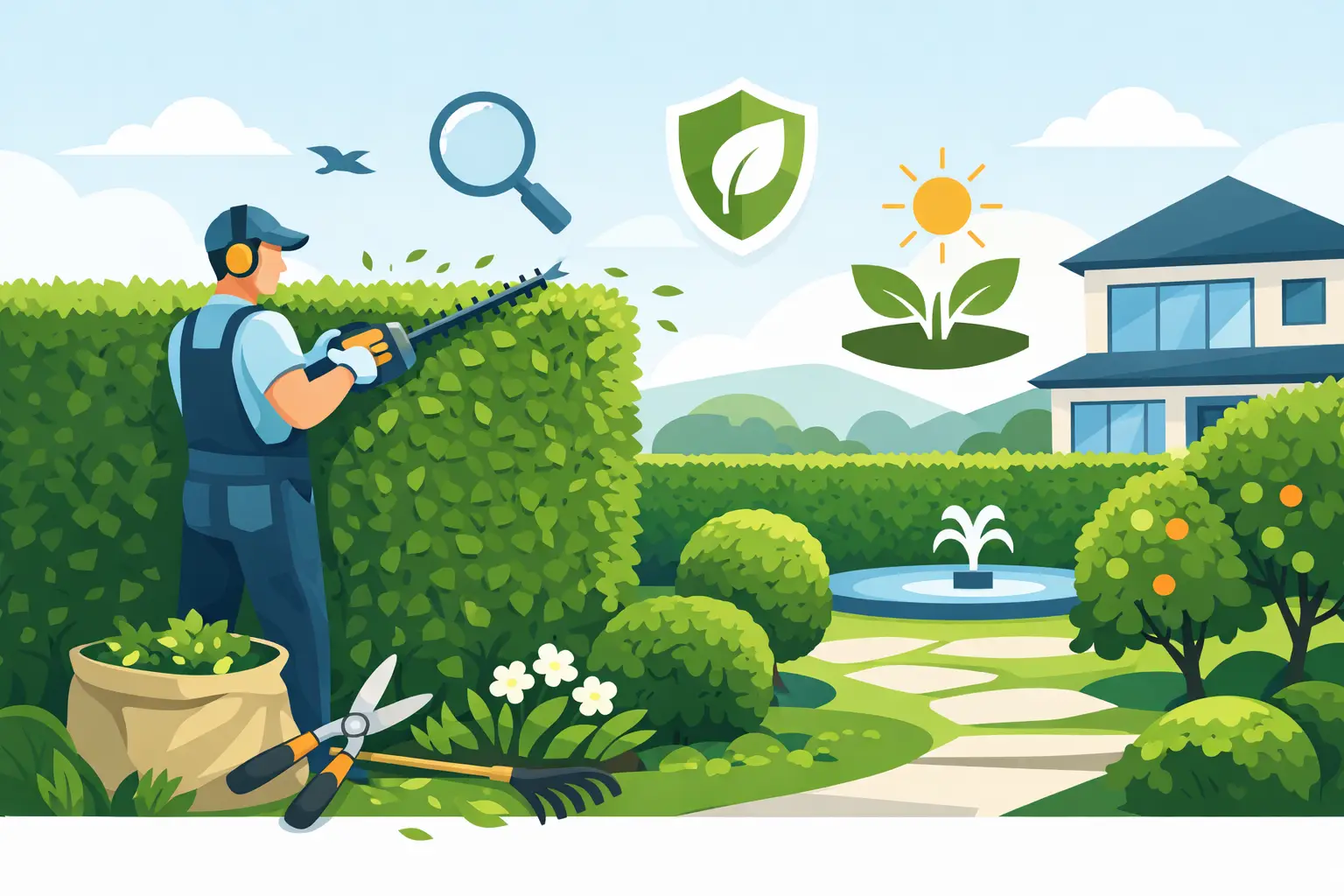
A hedge can tidy up a boundary or make it a constant source of work. The difference usually comes down to timing. One of the main benefits of regular hedge maintenance is that small, routine cuts prevent the kind of overgrowth that turns a simple job into a larger, more expensive one.
For homeowners, landlords and site managers, that matters for more than appearance. A well-kept hedge helps a property look cared for, keeps paths and driveways clear, and reduces the chance of branches causing problems near roads, fences, buildings or neighbouring land. Left too long, even a healthy hedge can become uneven, sparse at the base, and harder to bring back under control without more severe cutting.
Why the benefits of regular hedge maintenance add up
Hedge work is often treated as a cosmetic task, but in practice it supports the wider condition and safety of a property. Regular trimming encourages dense, even growth and helps maintain the shape and size that suit the space. That is particularly useful where hedges act as screening, wind protection or boundary definition.
There is also a practical cost benefit. Routine maintenance usually means lighter cuts at the right time of year, which are quicker to complete and less disruptive. Once a hedge has been neglected for several seasons, the work can involve heavier reduction, more waste to remove, and a longer recovery period for the hedge itself.
For commercial sites, schools, managed developments and larger grounds, consistency matters. A hedge that is kept to a planned maintenance schedule presents a better image and helps outdoor areas remain accessible and safe for residents, staff, visitors and contractors.
A healthier hedge with stronger, denser growth
Most hedges respond well to regular, skilled trimming because it promotes branching and a fuller structure. Instead of producing long, leggy growth at the outer edge, the plant puts energy into creating a thicker framework. That is what gives a hedge its screening value and its neat, finished look.
The timing and frequency do depend on the species. Fast-growing hedges may need attention more than once through the growing season, while slower-growing types can often be maintained with less frequent cuts. Cutting too hard or at the wrong time can set growth back, so there is always some judgement involved.
A hedge that is maintained properly is also easier to inspect. Dead sections, disease, storm damage or weak growth are more visible when the structure is not hidden by excessive foliage. Spotting problems early can prevent more serious decline later on.
Better kerb appeal and a tidier overall finish
One of the most obvious benefits of regular hedge maintenance is the effect it has on the way a property looks from the outside. Neat hedges frame gardens, drives and entrances far better than overgrown ones. They make boundaries look intentional rather than neglected.
That matters whether you are living in the property, preparing it for sale, managing a rental, or maintaining a commercial site. First impressions are formed quickly. A tidy frontage suggests the rest of the property is being looked after as well.
It is not about making every hedge look formal. Some customers want sharp, straight lines, while others prefer a softer, more natural finish. The point of regular maintenance is control. It allows the hedge to suit the property instead of overwhelming it.
Improved safety around paths, roads and buildings
Overgrown hedges do more than look untidy. They can restrict visibility, narrow access routes and put pressure on nearby structures. On domestic properties, that might mean branches encroaching onto a footpath, blocking light from windows or scraping parked vehicles. On commercial sites, it can create issues around entrances, signs, car parks and pedestrian routes.
Keeping a hedge within a sensible size helps maintain clear sight lines and usable space. This is especially important near driveways and roadside boundaries where visibility for vehicles and pedestrians needs to remain clear.
There is also a risk management side to hedge care. Heavier, unmanaged growth can become more vulnerable in high winds, and thorny or woody sections can obstruct movement around the site. Regular cutting keeps growth controlled and reduces the chance of a hedge becoming a nuisance or hazard.
More privacy without losing control of the space
A hedge is often planted to create privacy, but if it is not maintained properly it can stop doing that job well. Growth may become patchy in some areas and too tall or too wide in others. The result is a screen that looks bulky without giving consistent coverage.
Regular trimming helps keep the hedge dense from top to bottom, which is what provides reliable screening. It also allows you to maintain a height that works for the property. Too low and it loses privacy value. Too high and it may dominate the garden, block light or create tension with neighbouring boundaries.
This is one of those areas where balance matters. A hedge should give separation and shelter without taking over the entire space. Ongoing maintenance is what keeps that balance right.
Lower long-term costs and fewer major corrections
Putting hedge work off can feel like saving money, but it often leads to a more involved job later. Once a hedge gets beyond its intended shape, restoring it is rarely as simple as one quick trim. It may need staged reduction, more labour, and more green waste removal.
Some species cope well with hard reduction, while others do not recover as neatly from severe cutting. If the lower sections have been shaded out for too long, they may not regrow densely, leaving bare patches that spoil the appearance for years.
Regular maintenance spreads the work out into manageable visits and helps avoid these bigger interventions. It is generally the most cost-effective way to keep a hedge in good order over time.
Support for fences, boundaries and neighbouring areas
A hedge that is allowed to spread unchecked can interfere with more than your own land. It can push into fencing, overhang neighbouring gardens, block public footpaths or creep into parking areas and access points. Once that happens, the issue becomes as much about boundary management as appearance.
Keeping growth back protects fences and reduces the chance of friction with neighbours. It also helps preserve a clean line around the property, which is useful for ongoing maintenance tasks such as mowing, edging, surface cleaning and general access.
For larger sites and rural properties, boundary hedges can become substantial very quickly. Routine cutting keeps them serving their purpose without creating extra work elsewhere.
Wildlife awareness matters
Any discussion about the benefits of regular hedge maintenance should include wildlife. Hedges provide shelter and nesting opportunities for birds and other species, so maintenance needs to be planned responsibly. That is why timing matters and why hedge work should always be approached with care.
Regular maintenance can actually make this easier to manage. Light, scheduled trimming is often more straightforward to plan around nesting periods than urgent, heavy work on an overgrown hedge that has been ignored for too long. The goal is to keep the hedge healthy and functional while respecting the wildlife that may be using it.
This is also where professional advice helps. Different hedge types, locations and conditions call for different approaches, especially where public access, neighbouring land or conservation concerns are involved.
When regular hedge maintenance is most worthwhile
Some hedges clearly need frequent attention, particularly fast-growing species on front boundaries or around commercial premises. Others can go longer between cuts. The best schedule depends on the species, the desired shape, the setting, and how the hedge is being used.
A formal hedge along a driveway usually needs a different standard of finish from a mixed boundary hedge on a larger plot. Likewise, a screening hedge beside a patio may need closer control than one at the far edge of a field. There is no single timetable that suits every property.
What does stay consistent is the value of keeping ahead of the growth. Planned maintenance is almost always simpler than corrective work. It keeps hedges healthier, spaces tidier and costs more predictable.
For property owners across Norfolk and Suffolk, that practical approach is often the difference between a hedge that improves the site and one that keeps causing problems. If a hedge is part of your boundary, your privacy or your property’s first impression, looking after it regularly is time well spent.