
A tree that has become unsafe, overgrown or badly damaged can quickly turn from an asset into a concern. Tree felling is often the safest answer when a tree cannot be managed through pruning, but it is never simply a case of cutting it down. The condition of the tree, its position, nearby buildings and the surrounding access all need careful consideration before work begins.
For homeowners, landowners and property managers, the priority is straightforward: make the area safe, protect the property and leave the site clean. Professional tree work brings the planning, equipment and practical experience needed to achieve that without unnecessary disruption.
When tree felling is the right option
Felling is usually considered when a tree is dead, dying, structurally unsound or causing a serious issue that cannot be resolved with selective pruning. Storm damage can expose splits, hanging branches and weakened root plates. In other cases, decay within the trunk or roots may make a tree unstable, even when the canopy still looks healthy from a distance.
A tree may also need removal when it is too close to a house, outbuilding, road, overhead service or boundary. Roots can affect surfaces and drains, while a rapidly growing tree may cast excessive shade or dominate a small garden. These concerns do not always mean removal is necessary. Crown reduction, thinning or pollarding can sometimes retain the tree while reducing its size, weight or spread.
The deciding factor is whether the tree can be made acceptably safe and suitable for its setting through ongoing management. If it cannot, felling may be the most responsible long-term choice.
Why professional tree felling matters
The direction in which a tree falls is only one part of the job. A professional arborist assesses its natural lean, canopy weight, visible defects, wind conditions, ground level and escape routes. They also identify potential targets such as fences, sheds, greenhouses, parked vehicles and neighbouring properties.
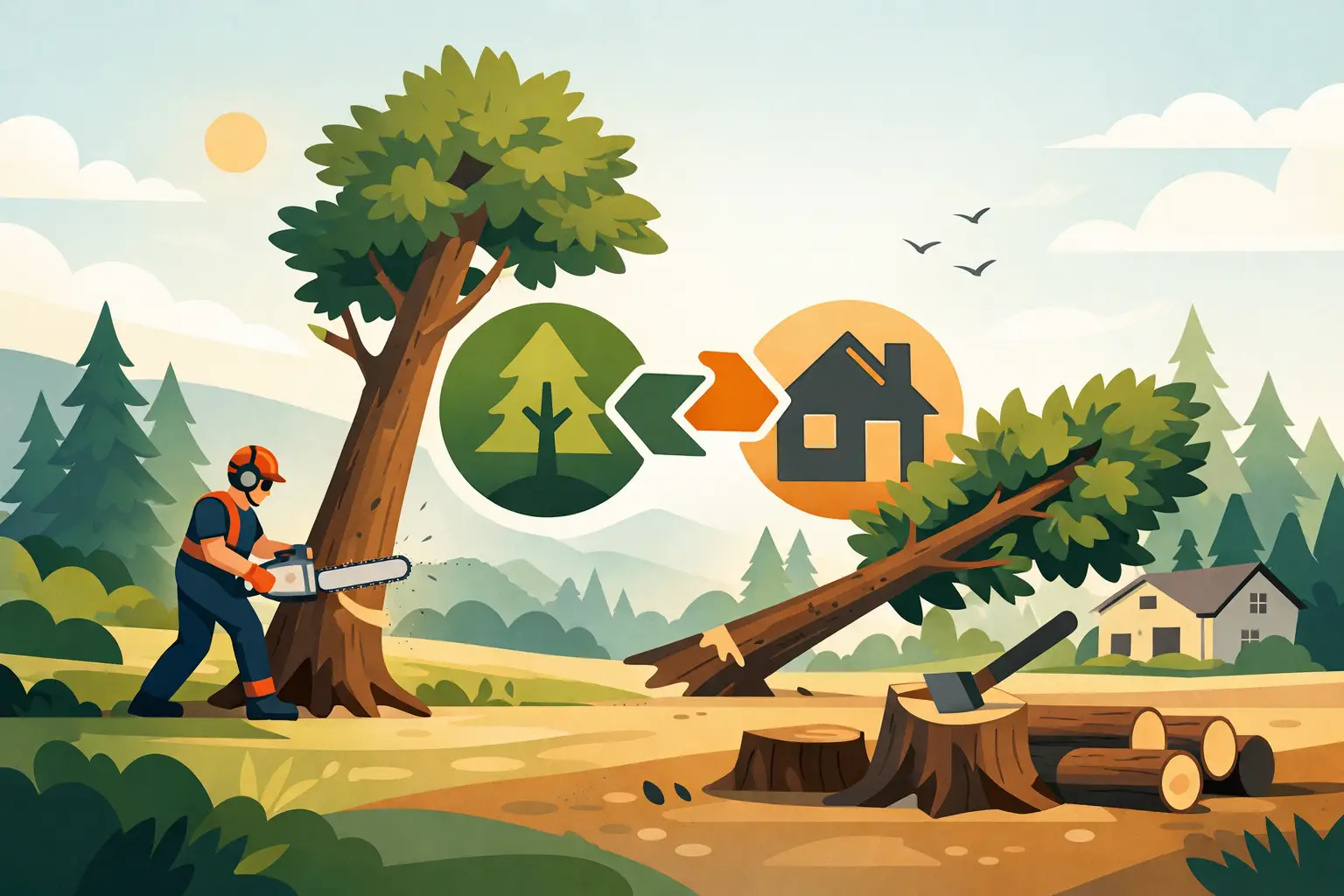
In an open field, a suitable tree may be felled in one controlled operation. In a residential garden or commercial site, there is often no clear space to do that safely. The tree may need to be dismantled in sections, with climbers or access equipment removing branches and trunk pieces progressively. Lowered sections can be controlled with ropes where required, reducing the risk of damage below.
This is why attempting major tree removal with household tools is rarely worth the risk. Chainsaws, ladders and unpredictable timber are a dangerous combination, particularly where a tree is diseased, leaning or under tension after a storm. The correct equipment and a planned method make a significant difference to safety and the final result.
The planning that happens before the first cut
A proper site assessment starts with the tree itself. The team looks for deadwood, cavities, fungal growth, cracks, included bark and signs of root disturbance. These details help determine whether it is safe to climb, whether machinery is needed and how the work should be sequenced.
Access is equally important. A narrow side passage, soft lawn, steep bank or limited parking can affect the equipment that can be brought onto site and how timber is removed. Good planning prevents avoidable delays and helps protect gardens, driveways and landscaped areas during the work.
Checks should also be made before any removal begins. Some trees are protected by a Tree Preservation Order, while others stand within a conservation area. Permission may be required from the local planning authority before work can proceed. The responsibility can vary depending on the site and the type of work, so it is sensible to establish the position early rather than assume that removal is permitted.
Wildlife must be considered too. Trees can provide nesting sites, roosting opportunities and habitat for a range of species. Work should be planned with appropriate care, particularly during the bird nesting season. If there are signs of protected wildlife, specialist advice may be needed before the job goes ahead.
What to expect on the day
Clear communication makes tree work far less stressful for property owners. Before starting, the team should confirm the agreed scope of work, explain any access requirements and identify areas that need to be kept clear. Vehicles, garden furniture, pots and other movable items may need moving away from the working zone.
The work area is then set up to keep people, pets and visitors away from the operation. If the tree is near a public path, road or shared access, additional traffic or pedestrian management may be needed. Safety measures are not an inconvenience – they allow the work to be completed efficiently without exposing anyone to unnecessary risk.
Once branches and timber are down, they are processed on the ground. Smaller material can be chipped, while larger logs may be cut into manageable lengths. Depending on the agreed service, woodchip can be removed or left for use around suitable garden areas, and usable timber may be retained as logs. T.G. Bird Tree Services can also provide firewood separately for customers who want a dependable local supply.
A professional finish includes a thorough clear-up. Paths, lawns and driveways should be cleared of debris, with the working area left safe and tidy. Tree removal can be substantial work, but it should not leave a property looking like a building site.
Felling, dismantling and stump removal
Tree felling is sometimes used as a general term for removal, but the method depends on the site. Straight felling involves bringing the whole tree down in a planned direction and is generally reserved for locations with sufficient clear space. Sectional dismantling is more common in built-up areas, where branches and trunk sections are removed from the top down.
After removal, the stump remains. Leaving it in place is an option when it is out of the way and unlikely to cause problems. However, a stump can restrict replanting, make mowing awkward, attract regrowth or become a trip hazard. Stump grinding removes the visible stump below ground level, creating space for turfing, planting or landscaping.
Grinding does not usually remove every root from the ground, and that is rarely necessary. The aim is to remove the stump and main root crown to a practical depth, allowing the area to be reinstated. The resulting grindings can often be used on site or removed as part of the clean-up.
Choosing the right timing for removal
There is no single best time for all tree work. Winter can make access and branch structure easier to assess on deciduous trees, while dry ground may be preferable for protecting lawns and reducing the impact of machinery. Urgent work, however, should not wait for an ideal season. A split stem, uprooted tree or hazardous hanging branch needs prompt attention whenever it occurs.
Weather also affects the schedule. High winds, lightning and poor visibility can make climbing and felling unsafe, so a reputable contractor may postpone work when conditions are unsuitable. That is a sensible safety decision, not a lack of commitment to the job.
If a tree has recently been storm-damaged, keep well clear and avoid touching fallen branches that may be under tension or near overhead lines. Take photographs from a safe distance if helpful, but leave the assessment and clearance to trained professionals. Emergency tree work is about making the area safe first, then deciding what remedial action is needed.
A safer, better-looking result
Removing a tree can feel like a major decision, especially when it has been part of a garden or site for years. Yet a compromised or poorly positioned tree can create ongoing worry, repair costs and a genuine risk to people and property. The best outcome is not always to keep every tree at any cost, nor to remove one at the first sign of inconvenience. It is to choose the work that suits the tree, the location and the future use of the space.
If you are concerned about a tree on your property, arrange an assessment before the issue becomes urgent. Clear advice, a safe method of work and a tidy finish give you the confidence to make the right decision for your home, land or business premises.