
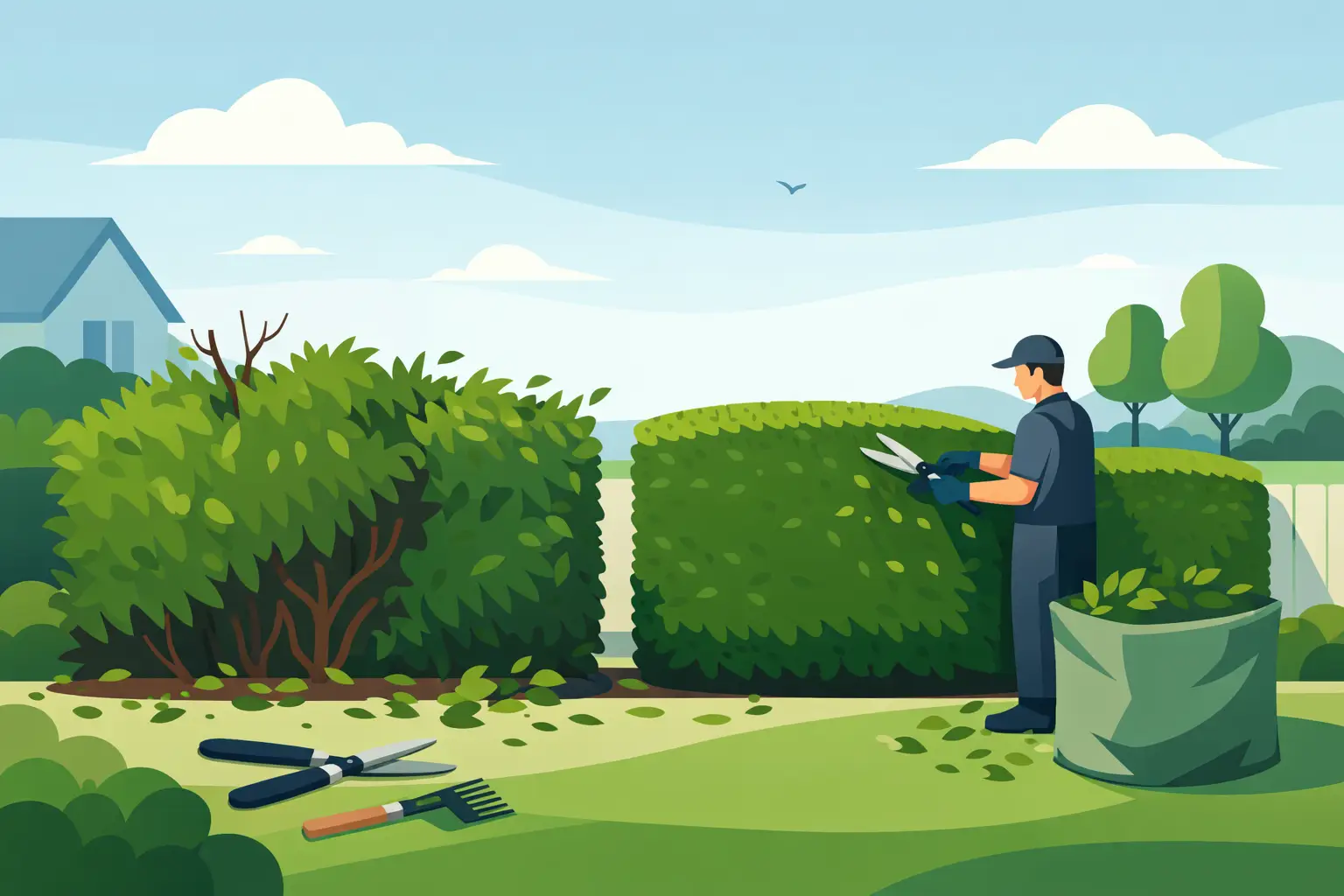
A hedge rarely becomes a problem overnight. One season of strong growth can make it look a little untidy, but several seasons without the right cutting can leave it too tall, thin at the base, difficult to manage and intrusive around paths or buildings. Knowing the top signs a hedge needs reshaping helps you act before a straightforward maintenance job turns into a larger reduction.
For homes, rental properties and commercial grounds across Norfolk and Suffolk, a well-managed hedge does more than improve kerb appeal. It can provide privacy, define boundaries, soften noise and give shelter to wildlife. The aim is not to cut it back as hard as possible. It is to restore a healthy, even shape that suits the hedge species, its location and the way you use the space.
Top signs a hedge needs reshaping
It is wider at the top than at the bottom
This is one of the clearest signs that reshaping is overdue. A hedge should usually taper slightly, with a broader base and narrower top. That shape allows light to reach the lower foliage. When the top becomes heavier and wider, it shades the base, causing the lower branches to weaken and lose leaves.
Left untreated, the hedge can become leggy and bare near ground level. A light trim may no longer correct the issue, particularly with older conifers. A planned reduction, carried out over the right timescale, gives the best chance of rebuilding a denser outline without causing unnecessary stress to the plants.
The base is bare, thin or full of gaps
Gaps along a hedge can make a boundary feel exposed and spoil an otherwise tidy garden. They are often caused by lack of light, repeated clipping in the same place, dry ground, disease, or damage from pets and foot traffic. Sometimes the hedge has simply outgrown the amount of soil, moisture and light available to it.
Reshaping can improve the conditions around the lower growth, but it cannot always make old bare wood produce new shoots. Whether recovery is realistic depends on the species. Yew and many native hedges can tolerate firmer renovation pruning than leylandii, for example. A professional assessment prevents the common mistake of cutting into old conifer wood that will not regrow.
It is blocking paths, drives, windows or signs
When branches brush against people using a footpath, obscure sightlines from a driveway, cover a window or push through a fence, the hedge needs attention. On commercial sites, overgrown hedges can also hide entrance signs, restrict access routes and make regular grounds maintenance more difficult.
A careful reshape restores clearance while keeping the hedge looking natural. It is better to deal with encroachment early than repeatedly cut one side back hard. Uneven cutting often leaves a lopsided result and can create weak, sparse sections over time.
The top has become too high to maintain safely
If routine trimming now requires balancing on a ladder, reaching over a fence or working close to overhead cables, the hedge has moved beyond a simple home maintenance task. Height is not only an appearance issue. A tall hedge is harder to cut evenly, harder to inspect and more likely to shed loose material onto neighbouring land or public areas.
Reducing height needs a measured approach. Cutting too much in one visit may expose brown internal growth, especially on dense evergreen varieties. In some cases, staged reduction over more than one season is the safer option. The right method depends on the hedge type, condition and desired final height.
It looks uneven despite regular trimming
A hedge can be cut frequently and still look poor. If the surface is bumpy, one end is taller than the other, or sections are bulging out, it may be receiving quick surface trims rather than a proper reshape. Repeatedly clipping only the outermost growth encourages a thick shell of foliage while the structure beneath becomes increasingly congested.
A reshaping cut resets the line, levels the face and removes selected overextended growth where needed. This produces a smarter finish and makes future maintenance more straightforward. For long boundary hedges, professional equipment and accurate sighting make a noticeable difference to the final result.
It is leaning, lifting a fence or crowding other plants
Hedges can become top-heavy, particularly after a period of rapid summer growth. A lean towards a garden path, neighbouring garden or fence line is worth addressing before strong winds add further pressure. Roots may also be competing with nearby shrubs, planting beds or lawns, leaving surrounding areas dry and struggling.
Reshaping reduces wind resistance and weight in the canopy, but it is not a cure for every structural issue. A hedge growing through a damaged fence, close to a wall, or over a boundary may need a tailored plan that considers access, ownership and the condition of the surrounding structures.
Light and airflow have disappeared
A dense hedge is useful for privacy, but it should not make a patio, side passage or ground-floor room feel permanently dark. Excessive shade can limit lawn growth, encourage damp conditions and prevent plants beneath the hedge from thriving. Poor airflow within an overgrown hedge can also create a damp interior where dead foliage and fungal problems are more likely to develop.
Selective thinning and reshaping can bring back light without removing the screening value people want from a hedge. The best result is usually a controlled reduction rather than taking the hedge down to an arbitrary height.
When is the right time to reshape a hedge?
Timing depends on the species and the scale of the work. Formal evergreen hedges are often maintained during the growing season, while many deciduous hedges respond well to winter work when they are dormant. However, weather matters too. Avoid cutting in very dry conditions, during hard frost or when the hedge is already under stress.
Wildlife must also be considered before work starts. Hedges are valuable nesting sites, and active bird nests must not be disturbed. A thorough check before cutting is essential, particularly in spring and summer. If there is evidence of nesting activity, the work may need to wait until it is safe to proceed.
For boundary hedges, it is sensible to speak with neighbours before a significant reduction. A clear conversation about access, the intended height and where cuttings will go can prevent avoidable disagreements.
What a professional hedge reshape should achieve
Good hedge work is not simply about making everything smaller. The finished hedge should have a clean, balanced profile, suitable clearance from paths and buildings, and a shape that encourages healthy growth lower down. Cuttings should be removed, with the work area left tidy and safe.
The approach also needs to suit the plant. Fast-growing leylandii may need regular, light maintenance to avoid cutting back into non-regenerating brown wood. Privet, beech, hornbeam and yew often offer more flexibility, though each still benefits from considered cuts rather than aggressive trimming. For neglected or very tall hedges, access, nearby services and disposal requirements all affect the safest way to carry out the job.
A qualified team can assess these details before starting, then use the appropriate tools to reduce, shape and clear the hedge efficiently. This is especially valuable where hedges are beside roads, driveways, outbuildings or shared boundaries, where falling material and access need careful control.
Do not wait for a hedge to become unmanageable
A hedge that is starting to lose its shape is usually easier and more affordable to correct than one that has been neglected for years. Regular maintenance also helps preserve the dense, healthy finish that makes a hedge such a useful part of a property.
If your hedge is overgrown, sparse at the base, blocking access or becoming unsafe to maintain, arrange an assessment before the next growing season adds more height and weight. T.G. Bird Tree Services can provide practical, tidy hedge care tailored to the condition of the hedge and the needs of your property.