
A site can look manageable from the gate, then tell a very different story once the work starts. Dense scrub, self-seeded trees, old stumps and overgrown boundaries can quickly slow down a build, create access problems and raise safety concerns. That is where site clearance tree services matter. Done properly, they do more than clear vegetation – they prepare land for the next stage with safety, speed and a clean finish in mind.
For homeowners, developers, landlords and commercial site managers, the aim is usually straightforward. You need land cleared efficiently, hazards dealt with properly and the site left in a condition that supports what comes next. Whether that means a new extension, improved access, groundwork, fencing, landscaping or a larger construction project, the tree work has to be planned and carried out with care.
What site clearance tree services involve
Site clearance tree services cover the removal and management of trees, saplings, hedges, brambles, scrub and stumps across a defined area. In some cases, the job is selective. A few problem trees may need to come down while healthy specimens are retained. In others, the goal is broader clearance to open up the land and make it safe and usable.
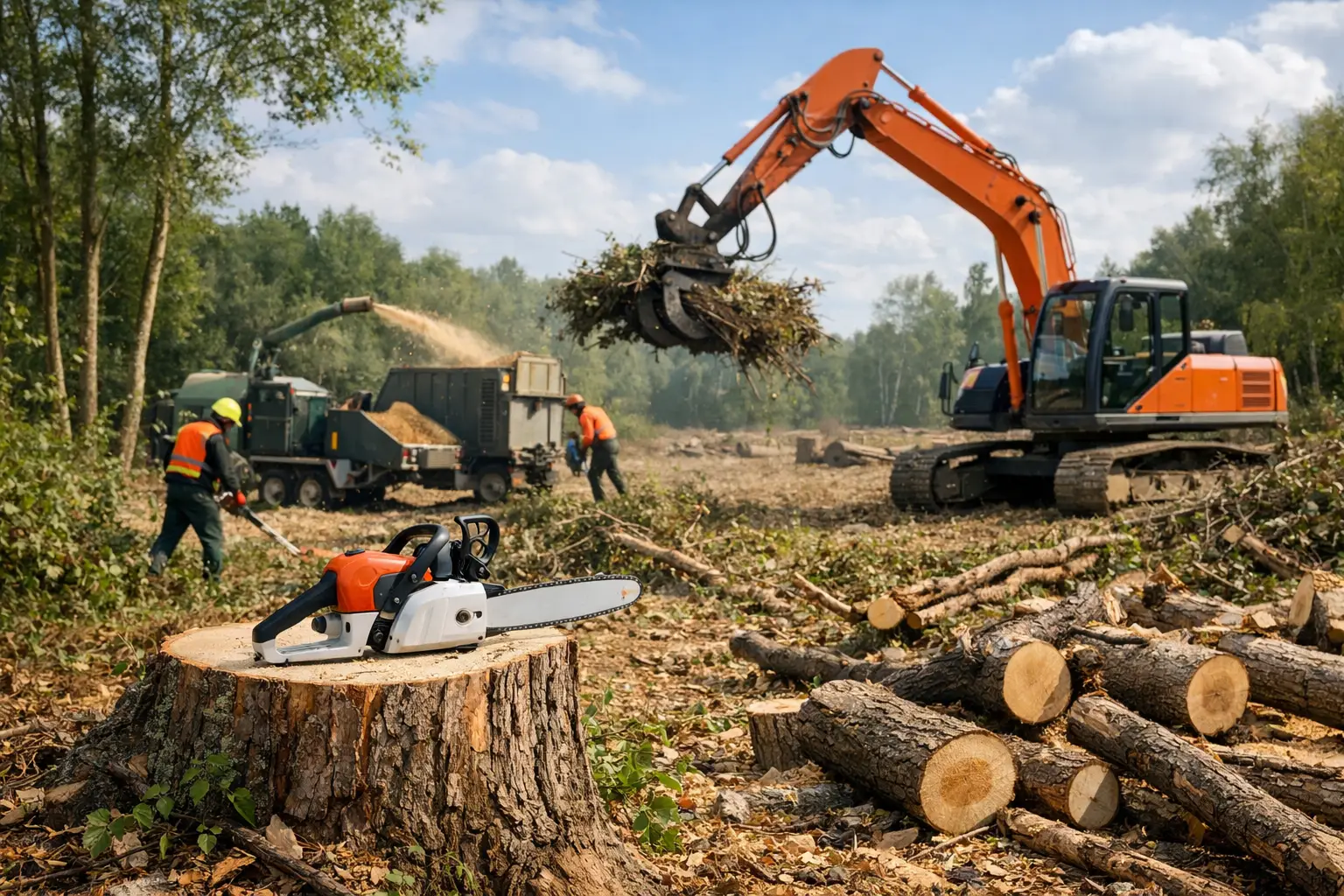
The work often includes tree felling, sectional dismantling where space is limited, hedge reduction or removal, stump grinding and the clearance of woody debris. On sites with restricted access or nearby structures, the method matters just as much as the result. A tree in the middle of an open plot can often be handled differently from one leaning over a garage, road, boundary fence or outbuilding.
That is why a proper assessment at the start makes a real difference. Ground conditions, access routes, the size and condition of the trees, nearby structures and intended future use of the site all affect how the work should be approached.
Why proper clearance saves time later
Clearing land badly usually creates more work for someone else. Half-removed stumps, hidden root plates, unstable limbs and piles of brash left on site can hold up groundworkers, fencing teams and landscapers. In some situations, they can also create liability if the area is meant to be safe for residents, visitors or contractors.
Good clearance work looks beyond the cutting itself. It considers what machinery needs to get in afterwards, whether the ground must be left level, and how waste is handled. A clean, organised finish is not an extra. It is part of doing the job properly.
This is especially important on domestic projects where access may be tight and disruption needs to be controlled. It also matters on commercial sites where schedules are tighter and several trades may be working around each other. A tidy, well-managed tree clearance job helps keep the wider project moving.
Site clearance tree services for domestic and commercial work
The same service can look quite different depending on the site. For a homeowner, site clearance may involve removing overgrown conifers, neglected hedges, invasive scrub and one or two unsafe trees before landscaping or building work begins. The priority is often making the garden usable again while protecting fences, sheds and neighbouring property.
On a commercial site, the scope may be larger and the planning more detailed. Access for plant, visibility around boundaries, safe working zones and deadlines all become more critical. Property managers and developers usually need a contractor who can turn up prepared, work efficiently and leave the site in a condition that supports the next phase.
In both settings, there is rarely a one-size-fits-all approach. Some clients need full clearance. Others need a more careful balance between removal, retention and ongoing maintenance. That depends on budget, planning requirements and the intended use of the land.
Safety is not optional
Tree clearance can become hazardous quickly, particularly where trees are dead, storm-damaged, tangled in other growth or close to buildings and roads. Even smaller trees and dense scrub can present issues if visibility is poor or the site has uneven ground, hidden debris or difficult access.
A professional approach keeps the work controlled from start to finish. That means assessing risks before cutting starts, using the right equipment for the site, managing falling material carefully and maintaining a clear working area. It also means knowing when straightforward felling is suitable and when dismantling in sections is the safer option.
For clients, this matters because the cheapest-looking quote is not always the most cost-effective choice. If the site is left unsafe, damaged or only partly cleared, the savings disappear quickly. Reliable workmanship usually saves money where it counts – in avoided delays, avoided damage and fewer problems for the next contractor.
Trees, wildlife and legal considerations
Not every tree can simply be removed because it is in the way. Depending on the site, there may be restrictions or checks required before work goes ahead. Trees can be protected, and wildlife considerations may also affect timing and method.
This is one of the key reasons to use experienced arborists rather than treating clearance as basic vegetation removal. A responsible contractor will flag likely issues early and help prevent avoidable mistakes. That protects the client as much as the site itself.
It also helps with decision-making. Sometimes complete removal is the right answer. Sometimes a reduction, pollard or selective thinning achieves the result without taking everything out. The right approach depends on the condition of the trees, future plans for the land and any restrictions in place.
What to expect from a professional site clearance job
A good site clearance project should feel organised, not chaotic. The first step is usually a visit to assess the scope of the work, identify hazards and understand what the client needs from the cleared area. That might include retaining certain trees, opening access for vehicles, removing stumps, or clearing sight lines along a boundary.
Once the plan is clear, the work can be scheduled with the right team and equipment. On some sites, clearance is completed in a day. On others, especially where there are multiple mature trees or limited access, it may need to be phased.
Waste removal is another point worth checking. Timber, branches, scrub and stump arisings need to be dealt with properly. Some clients want everything removed. Others may wish to keep usable logs or woodchip for the site. A practical contractor will discuss that before work begins rather than leaving it as an afterthought.
The final condition of the site should match the purpose of the job. If the aim is groundwork, the area needs to be left clear enough for the next team. If the aim is simply to make land safer and more manageable, the finish should still be clean, tidy and free from obvious hazards.
Choosing the right contractor for site clearance tree services
Experience matters, but so does attitude. Site clearance often involves more than cutting down trees. It requires planning, communication, attention to safety and a willingness to leave the site properly finished. That is what separates a dependable contractor from someone who just turns up with a saw and starts cutting.
When comparing providers, it is worth looking for clear communication, realistic timescales and evidence that they understand both domestic and commercial requirements. If a site has difficult access, neighbouring properties, unstable trees or urgent deadlines, those details need to be reflected in the plan from the outset.
It is also sensible to choose a team that values tidy completion. Clients usually notice the finish as much as the clearance itself. A well-cleared site should not leave you with damaged borders, blocked access or heaps of debris to sort out afterwards.
For customers across Norfolk and Suffolk, that practical, safety-led approach is exactly what makes the difference. T.G. Bird Tree Services focuses on carrying out specialist work efficiently, safely and with proper care for the site as a whole.
When site clearance is urgent
Not every clearance job is planned months ahead. Storm damage, fallen trees, split limbs or suddenly exposed hazards can force quick action. In those cases, the immediate priority is making the area safe and preventing further damage, but the longer-term clearance still needs to be handled properly.
Urgent work often calls for quick judgement. A damaged tree may be salvageable, or it may need full removal. A blocked access route might need temporary clearance first, followed by a more complete tidy-up once conditions are safe. The best response is calm, practical and based on the actual condition of the site rather than guesswork.
If your land is overgrown, obstructed or affected by unsafe trees, the right clearance work gives you a solid starting point. It removes risk, creates usable space and helps the next stage happen without unnecessary delays.