

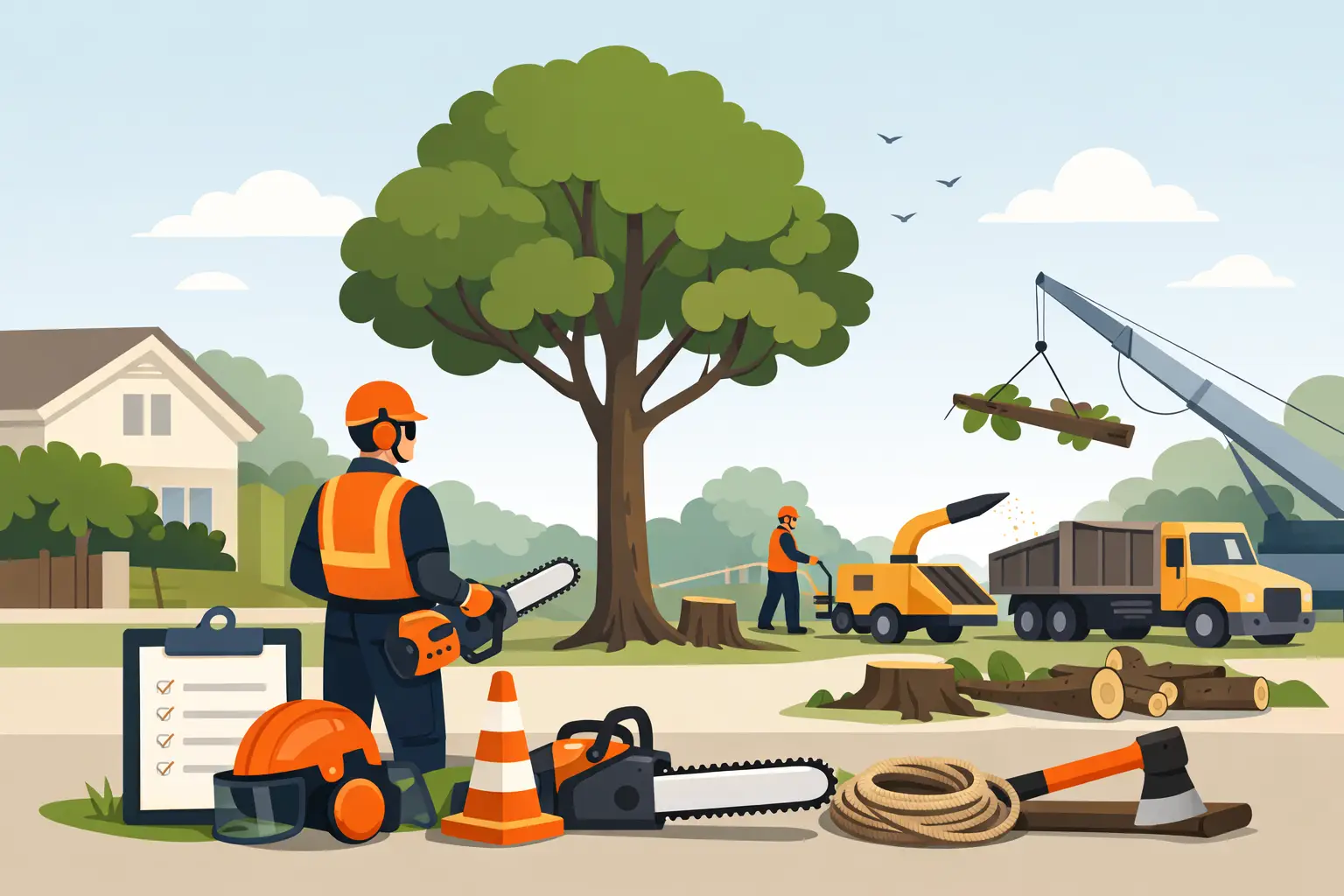
When a tree needs to come down, the work itself is only part of the job. Knowing how to prepare for tree removal can make the process safer, quicker and far less stressful, especially if the tree is close to a house, fence, garage, driveway or public space.
Good preparation helps your contractor work efficiently and reduces the chance of avoidable delays on the day. It also gives you a clearer idea of what to expect, from access and noise to site clearance and stump removal. Whether you are managing a domestic garden in Norwich or a larger commercial site in Suffolk, a little planning goes a long way.
Why preparation matters before tree removal
Tree removal is not just a matter of cutting and clearing. Every site is different. A straightforward garden tree with open access is very different from a storm-damaged tree leaning over a shed or a mature tree with limbs extending over neighbouring land.
The more restricted the site, the more important it is to prepare properly. Arborists may need room for climbing equipment, lowering ropes, saws, wood chippers and vehicles. If access is tight or obstacles are left in place, the work can take longer and may require a different method.
Preparation also helps protect what matters to you. Garden furniture, pots, vehicles, gates, ornamental features and delicate planting can all be affected if the area is not cleared in advance. A professional team will work carefully, but a tidy working area always improves safety and control.
How to prepare for tree removal at your property
Start by confirming exactly what is being removed. If more than one tree is involved, make sure the contractor has clearly identified each one. It sounds obvious, but confusion can happen where trees are grouped closely together or where boundary lines are not clear.
Once that is agreed, think about access. The team will need the safest and most direct route to the tree. In some gardens this is simple. In others, access may be through a side passage, across a lawn or via a shared drive. Let your contractor know about narrow gates, steps, soft ground or low overhead obstacles before the day of the job.
If you have a driveway or parking area near the work zone, keep it clear if possible. This allows vehicles, trailers or a chipper to be positioned sensibly and reduces the distance heavy timber has to be moved by hand. For larger removals, that can make a real difference to both safety and efficiency.
You should also move anything breakable or valuable from the immediate area. Garden tables, barbecues, plant pots, toys, bins and tools are best relocated well away from the working zone. If the tree overhangs a greenhouse, pergola or outbuilding, mention this during the site visit so the removal plan takes it into account.
Check for permissions and restrictions
One of the most overlooked parts of how to prepare for tree removal is checking whether permission is needed before work starts. In some areas, trees may be protected by a Tree Preservation Order or be within a conservation area. If that applies, consent may be required before any removal takes place.
This is especially important with mature trees or prominent front garden trees. If you are unsure, ask the contractor early. A professional tree surgeon will usually flag potential restrictions during the quotation stage, but the key point is not to leave it until the last minute.
There may also be practical restrictions on site. Commercial premises, schools, rental properties and managed developments often have access rules, set working hours or requirements around tenant notice. If someone else manages the land, check what needs to be approved in advance.
Speak to neighbours if the work may affect them
You do not always need to inform neighbours, but it is often sensible. Tree removal can be noisy, and in some cases branches may need to be lowered near boundary lines or over shared spaces. A quick conversation beforehand helps avoid surprises.
This matters even more if access is shared or if vehicles may briefly affect parking arrangements. In most cases, good communication prevents minor inconvenience becoming a complaint.
If the tree actually straddles a boundary or there is any dispute about ownership, sort that out before work begins. Do not assume. It is always better to clarify responsibility early than face problems after the tree has been cut.
Make the work area safe and accessible
On the day before removal, walk through the site as if you were creating a clear route for the team. Open side gates if needed. Cut back anything that blocks access. Keep pets indoors or securely away from the area. If you have children, make sure they know the work zone is off limits.
It is also worth checking the ground conditions. Wet lawns, steep banks and loose gravel can affect how equipment is moved. You do not need to fix every issue yourself, but letting the contractor know in advance helps them bring the right kit and plan for safe movement around the site.
If electricity lines, phone cables or other overhead services are close to the tree, flag this immediately. Never treat this as a minor detail. Trees near live utilities require extra care and, in some cases, coordination with the network operator.
Protect surfaces and nearby features
Tree work is controlled, but it is still heavy work. Timber sections, foot traffic and machinery can all affect lawns, paving and soft ground. If you are concerned about a specific surface, mention it before the job starts.
Sometimes there is a trade-off between protecting a lawn and gaining the best access for fast removal. A professional contractor can explain the safest option. In many cases, temporary ground protection or an adjusted route will solve the issue, but that depends on the size of the tree and the site layout.
Decide what should happen to the waste and stump
Before the day arrives, make sure you know what is included in the job. Will all branches and timber be removed from site? Is the wood being chipped and taken away, logged for firewood, or left in a stack? Is stump grinding included, or is the stump staying in place?
These details affect both cost and preparation. If you want to keep some timber for firewood, say so in advance and agree where it should be left. If stump removal is part of the job, the team may need extra access space for the grinder.
This is also the time to think about what comes next for the area. If you plan to replant, re-turf or install fencing after the removal, tell your contractor. The best approach to stump height, arisings and final clearance can vary depending on your plans for the space.
Understand what to expect on the day
Even a well-prepared job will involve noise, movement and a degree of disruption while the work is underway. Chainsaws, chippers and lowering operations are all part of professional tree removal. The site may look busier than expected, particularly on larger jobs.
That does not mean the process should feel chaotic. A good team will arrive with a clear plan, set up the working area properly and keep safety front and centre throughout. At T.G. Bird Tree Services, that practical, tidy approach is a key part of how tree work should be carried out.
If you are working from home, planning around the noisiest part of the day can help. If you manage a commercial site, let staff or tenants know the work is scheduled and mark out any temporary exclusion zones if needed.
Questions worth asking before work starts
You do not need specialist knowledge to prepare well, but a few simple questions can help. Ask when the team will arrive, how long the job is likely to take, whether access needs to be available all day, and what the final tidy-up will include.
If the tree is large, damaged or in a difficult position, ask whether the removal will be done in sections and whether any part of the site needs to be kept completely clear. Clear answers give you confidence and help avoid last-minute issues.
When preparation needs to change
Not every removal follows the original plan exactly. Weather can affect timing. Ground conditions may worsen after heavy rain. Hidden decay or tension within the tree may only become obvious once work begins. That is normal in arboriculture and one reason experience matters.
Good preparation does not eliminate every variable, but it puts the contractor in the strongest position to respond safely. If changes are needed on the day, they should be explained clearly and handled professionally.
The simplest way to prepare for tree removal is to think in practical terms. Confirm the tree, clear the route, protect nearby items, sort permissions, and make sure everyone involved knows what is happening. It is not about doing the contractor’s job for them. It is about giving the work the right conditions to be carried out safely and properly.
If you are unsure about any part of the process, ask before the saws start. A reliable tree surgeon would always rather answer a question early than solve a preventable problem later.