
A large limb over a driveway, a conifer blocking light, or a storm-damaged tree near a building all raise the same question: do you need an arborist or a tree surgeon? In practice, the arborist vs tree surgeon distinction is less clear-cut than many property owners expect. Both terms are commonly used for skilled professionals who assess, maintain and safely manage trees.
What matters most is not the job title on its own. It is whether the contractor has the knowledge, equipment and working methods to carry out the required work safely, protect the health of the tree where appropriate, and leave your site clean and secure.
Arborist vs Tree Surgeon: Is There a Difference?
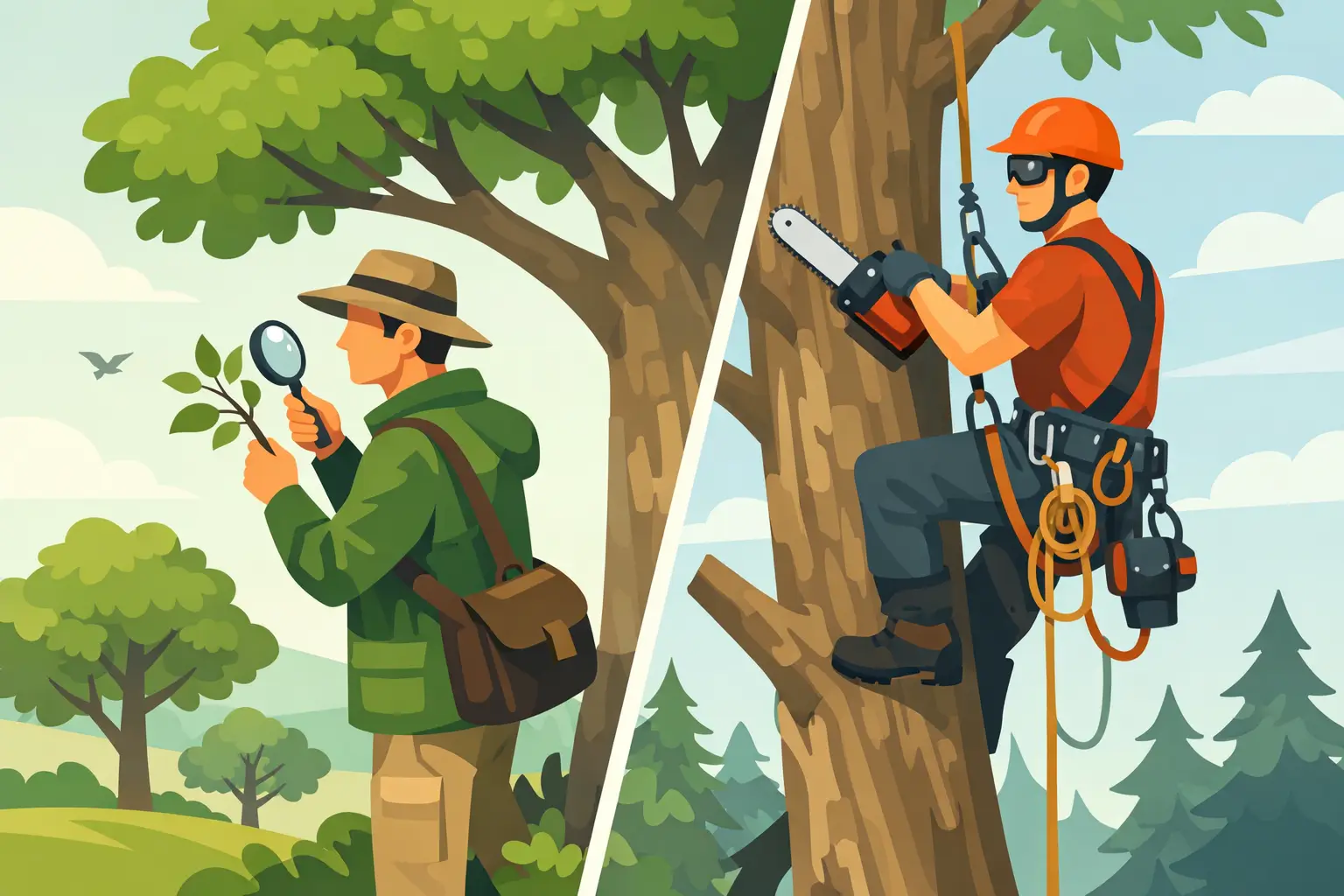
An arborist is a person who works professionally with trees. Arboriculture is the study and practical management of trees, including their growth, condition, structure, safety and relationship with the surrounding environment. An arborist may inspect trees, recommend suitable management, carry out pruning, identify defects and advise on longer-term care.
A tree surgeon is a more familiar term for someone who performs practical tree work. This can include dismantling a tree in sections, removing dangerous limbs, reducing a crown, pollarding, felling, stump grinding and clearing the resulting waste.
The two roles overlap significantly. Many experienced tree surgeons are arborists in the practical sense: they understand tree biology and use that knowledge while carrying out demanding work at height. Equally, an arborist may spend much of their working day using climbing equipment, chainsaws and rigging systems on site.
For homeowners and site managers, the difference is usually one of emphasis rather than capability. “Arborist” can suggest broader tree knowledge and assessment, while “tree surgeon” often describes the hands-on work needed to maintain or remove a tree. A reliable contractor should be able to provide both sensible advice and competent practical delivery.
The Work You May Need an Arborist or Tree Surgeon For
The right service depends on the tree, its condition, its location and what you need it to achieve. A mature oak in a garden may need careful deadwood removal to reduce risk while retaining its natural shape. A fast-growing leylandii hedge may need regular trimming to keep it manageable and prevent it overwhelming a boundary. A split, storm-damaged tree close to a house may need urgent dismantling before further damage occurs.
Common tree care work includes crown reductions, thinning, lifting and deadwood removal. These are not simply different ways of cutting branches. Each operation has a specific purpose. A crown reduction lowers the overall height and spread of a tree while retaining a balanced form. Crown lifting removes selected lower branches to create clearance over paths, roads, gardens or buildings. Deadwood removal takes out broken, dying or dead limbs that could fall.
Tree removal is sometimes the right option, particularly where a tree has failed, is severely diseased, has outgrown its position or presents an unacceptable risk. However, removal should not be the automatic answer to every concern. A well-planned pruning programme can often improve safety, allow more light into a property and extend the useful life of a tree.
Why Tree Knowledge Changes the Result
Trees do not respond well to arbitrary cutting. Removing too much live growth at once can stress a tree, encourage weak regrowth, affect its appearance and, in some cases, make future management more difficult. Poor cuts can also leave unnecessary wounds or remove branches that are important to the tree’s structure.
This is where a skilled arborist or tree surgeon adds real value. Before work begins, they should consider the species, age, vigour, branch structure, nearby targets and signs of decay or disease. They should also assess access. A small tree in an open garden is very different from a large tree overhanging a conservatory, public footpath, shed, power line or neighbouring property.
The method used must suit the setting. In a confined space, a tree may need to be dismantled piece by piece using ropes and controlled lowering techniques. Where there is clear space, straightforward felling may be possible. The safest and most efficient approach is not always the quickest-looking one, but it will protect people, property and the surrounding garden.
Safety Is the First Question, Not an Added Extra
Tree work involves working at height, heavy timber, specialist machinery and unpredictable natural defects. Even a branch that appears sound from the ground can behave differently once weight is removed elsewhere in the canopy. That is why professional planning matters.
A competent contractor will assess the work area, establish safe exclusion zones and select suitable equipment before cutting begins. They will consider where timber can land, how it will be moved, and whether access needs protecting. For commercial sites, this may also involve managing pedestrian routes, vehicle movements and public safety.
Ask how the job will be carried out, not just how much it will cost. A very low quotation can sometimes reflect a lack of proper equipment, time for safe dismantling, waste removal or appropriate insurance. Price matters, but it should be considered alongside the proposed method, experience and the standard of finish.
Permissions, Wildlife and Neighbours
Before arranging major tree work, it is worth checking whether the tree is protected by a Tree Preservation Order or stands within a conservation area. These controls can affect what work is allowed and may require formal notice or consent from the local planning authority. Carrying out unauthorised work can lead to serious consequences, so this should be clarified before the job is booked.
Wildlife also needs careful consideration. Trees and hedges can provide nesting, roosting and feeding habitat. Bird nests are protected while in use, and bats may use cavities, loose bark or splits in mature trees. The presence of wildlife does not always prevent work, but it can affect the timing and method. A professional should raise any visible concerns and adapt the plan where necessary.
Good communication also helps where branches cross a boundary or work may affect a neighbour’s access, light or garden. You may have rights to deal with overhanging growth from a neighbouring tree up to your boundary, but this does not automatically give permission to enter their land or remove the whole tree. A sensible conversation before work starts can prevent avoidable disputes.
How to Choose the Right Tree Care Contractor
Rather than getting stuck on the label of arborist or tree surgeon, focus on practical evidence that the contractor is right for the job. They should be willing to visit the site where needed, explain the recommended work in plain language and provide a clear written quotation.
For substantial, difficult or hazardous work, look for evidence of relevant training and competence, appropriate public liability cover, suitable machinery and a safe working approach. It is also sensible to ask what will happen to the arisings. Will branches be chipped and removed? Will timber be stacked, taken away or processed into logs? Is stump removal included, if that is required?
A tidy finish matters. Tree work can create a considerable amount of material, and the job is not complete when the final cut is made. A professional team should leave paths, lawns, borders and access areas clear, with the site safe for you to use again.
When an Urgent Call-Out Is Needed
If a tree or branch has fallen, is hanging dangerously, has split after high winds or is pressing against a building, act quickly but keep your distance. Do not attempt to cut, pull or climb the tree yourself. Avoid the area beneath damaged limbs, keep children and pets away, and do not approach any tree involved with overhead cables.
Emergency work often requires a different approach from planned maintenance. The first priority is making the site safe, followed by controlled removal and clearance. If the tree can be retained safely after the immediate danger has been dealt with, further management can be planned once conditions are stable.
For properties across Norfolk and Suffolk, T.G. Bird Tree Services approaches every job with the same practical focus: assess the risk, choose the right method, carry out the work professionally and leave the area clean and secure.
The best choice is rarely about whether someone calls themselves an arborist or a tree surgeon. Choose the professional who listens to what you need, explains what the tree needs, and has the skill to bring those two things together safely.