

A tree may be gone, but the stump can still dictate what happens next in your garden or grounds. It can obstruct a new patio, make mowing awkward, encourage unwanted shoots or create a trip hazard near paths and play areas. Professional stump removal deals with the remaining root base properly, leaving the area safer, tidier and ready for its next use.
For homeowners, landowners and commercial property managers, the right approach depends on the stump’s size, position, species and the plans for the space. A small stump at the back of a border is very different from a large, established stump beside a driveway, fence or building.
When is stump removal the right choice?
Not every stump needs immediate attention. If it is well away from access routes and you are happy for it to decay naturally, leaving it in place can sometimes benefit insects and fungi. This is often a sensible option in woodland areas or parts of a larger site where the ground will not be used.
In most maintained gardens and working premises, however, a stump soon becomes an inconvenience. It can damage mower blades, make hedge or lawn maintenance harder and spoil the finish of a recently cleared area. Decaying timber may also attract fungi, while some tree species can send up new growth from the roots if the stump is left untreated.
Removal is particularly worthwhile when you are preparing for turf, planting, fencing, access work, a shed base, paving or building work. It is also a practical choice where the stump sits close to a path, entrance, parking area or public-facing part of a commercial site.
Stump grinding: the practical solution
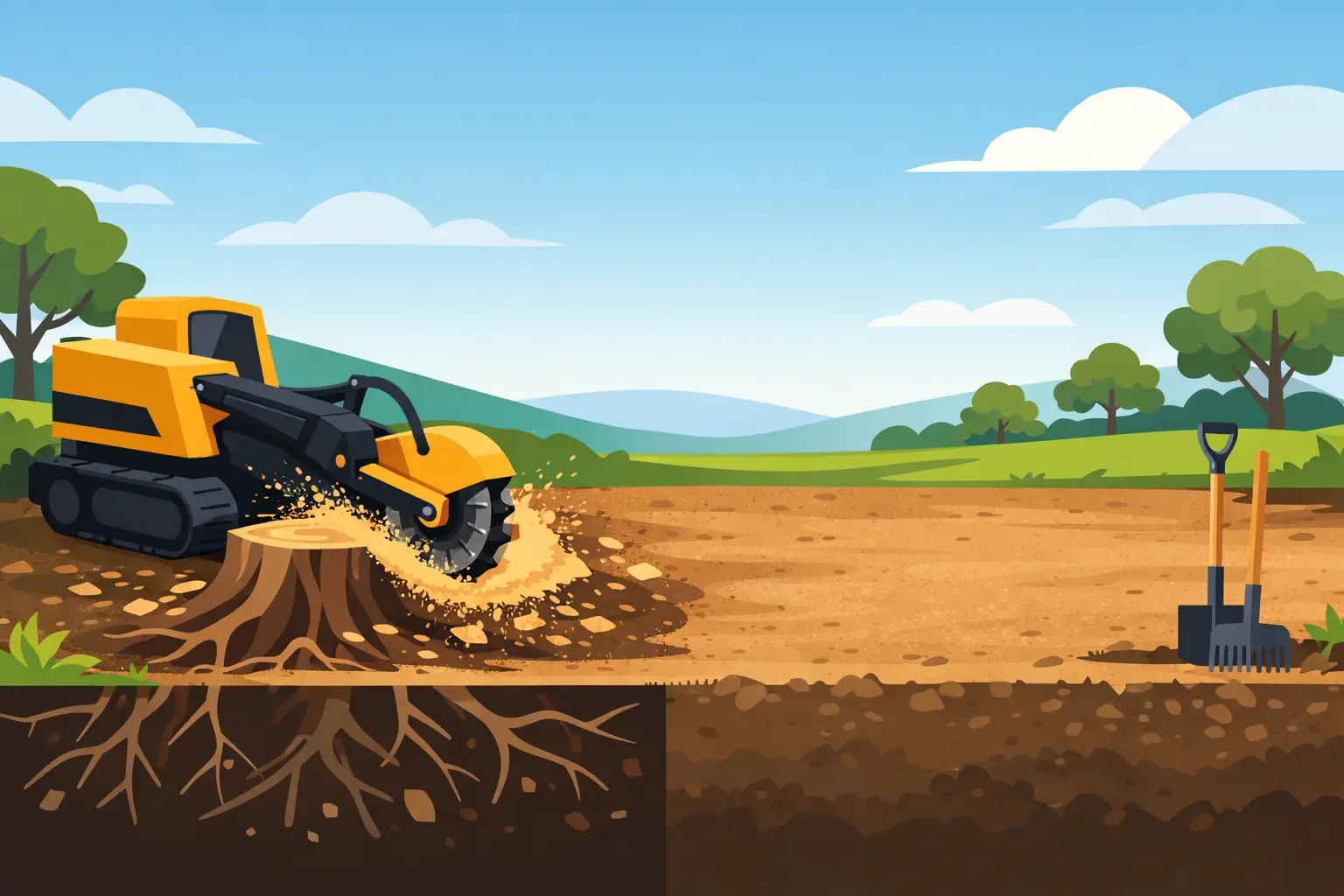
The most efficient method for most situations is stump grinding. A specialist machine uses a rotating cutting wheel to reduce the stump below ground level, breaking the timber into fine wood chips. This avoids the need to excavate a large root system and usually causes far less disruption to the surrounding ground than digging the whole stump out.
The finished depth will depend on what is planned for the area. For a lawn or planting bed, grinding below the surface generally provides enough space to cover the area with soil and establish new growth. If the location is being prepared for construction, surfacing or foundations, the required depth and extent of root clearance should be discussed beforehand.
Grinding does not always remove every root running through the soil. That is rarely necessary, as most remaining roots will break down naturally over time. The key is to remove the central stump and major surface roots that would interfere with the intended use of the ground.
Why grinding is preferable to digging
Large stumps can have extensive roots, particularly from mature trees. Pulling or excavating them by force can disturb patios, drains, walls, lawns and nearby planting. It can also leave a sizeable hole that needs filling and levelling.
A stump grinder is designed to work precisely within a defined area. Experienced operators can assess access, identify potential obstacles and select a method that protects nearby features wherever possible. This makes grinding especially useful in established gardens where space is limited and the surrounding landscape needs to be preserved.
That said, access matters. A narrow side passage, steep bank or enclosed rear garden may affect the size of machine that can be used. A professional survey helps establish the safest and most efficient way to complete the work before any equipment arrives on site.
What happens during a professional stump removal job?
A well-managed job starts with an assessment of the stump and its surroundings. The operator will consider its diameter and height, the tree species, ground conditions, access routes and the proximity of buildings, utilities, fencing, paving and garden features. This is also the time to discuss what you want to do with the area afterwards.
Before grinding begins, the work zone is prepared and loose obstacles are cleared. Stones, metal, old wire and hidden debris can damage machinery or be thrown out during the grinding process, so careful inspection is essential. The immediate area is kept clear while the machine is operating.
The stump is then ground down in controlled passes. The resulting chips can often be left for use as mulch in suitable areas, removed from site, or incorporated into the backfill depending on your preference and the intended finish. If you want to lay turf, create a flower bed or install hard landscaping, it is usually best to ensure the surface is properly levelled with suitable soil rather than relying on wood chips alone.
A professional service should also include a thorough tidy-up. At T.G. Bird Tree Services, the aim is to leave every site clean, safe and ready for the next stage of your project, rather than leaving you with a stump-free area and a separate clearance problem.
Safety, services and underground risks
Stump removal may look straightforward, but it involves powerful equipment and a careful understanding of the site. Stumps near gas, electric, water, drainage or communications services need particular caution. The same applies to locations beside walls, underground structures, ponds and tree roots you intend to retain.
Always tell your contractor about anything you know is buried or installed nearby, even if it seems unrelated. Old garden lighting cables, irrigation pipes, historic drainage runs and disused services are easily overlooked. Where there is uncertainty, further checks may be needed before work can proceed.
For commercial grounds, safety planning is equally important. Areas used by staff, visitors, residents or the public may need to be temporarily cordoned off, and the timing of the work should minimise disruption. A reliable contractor will plan around the site rather than treating every stump as the same job.
Can you remove a stump yourself?
Small, isolated stumps can sometimes be dug out by hand, but it is hard physical work and is not always successful. Roots often extend much farther than expected, and trying to cut through them with unsuitable tools can cause injury or unnecessary damage to the garden.
Chemical stump treatments are another option, but they are slow and do not provide an immediate, usable result. They may take many months to work, can be unsuitable around pets, children or planting areas, and still leave the task of dealing with degraded timber later on.
Hiring a stump grinder without experience can create risks to people, property and underground services. It may appear to save money initially, but the job can become more costly if access is misjudged, equipment is damaged or surrounding surfaces are disturbed. For large, awkward, mature or poorly positioned stumps, professional removal is usually the safer and more cost-effective choice.
Preparing the area after grinding
Once a stump has been ground out, the area needs a little consideration before it is replanted or resurfaced. Remove or redistribute excess wood chips as appropriate, then bring the level up with good-quality topsoil. For a lawn, allow the ground to settle, firm it gently and seed or turf when conditions are suitable.
If you are planting a replacement tree, avoid placing it directly in the old stump position. The soil can settle as old roots decay, and there may be competition from remaining root material. Moving the new tree a short distance away gives it a better start and allows you to improve the planting soil properly.
For paving, driveways or structural work, tell the contractor exactly what is planned. The preparation needed for a decorative planting area is different from the preparation needed for a stable, load-bearing surface. Clear expectations at the start help avoid extra work later.
A removed stump gives you more than a clear patch of ground. It gives you the freedom to use that space properly, whether that means a safer lawn, a new planting scheme or a clean foundation for the next improvement to your property.