
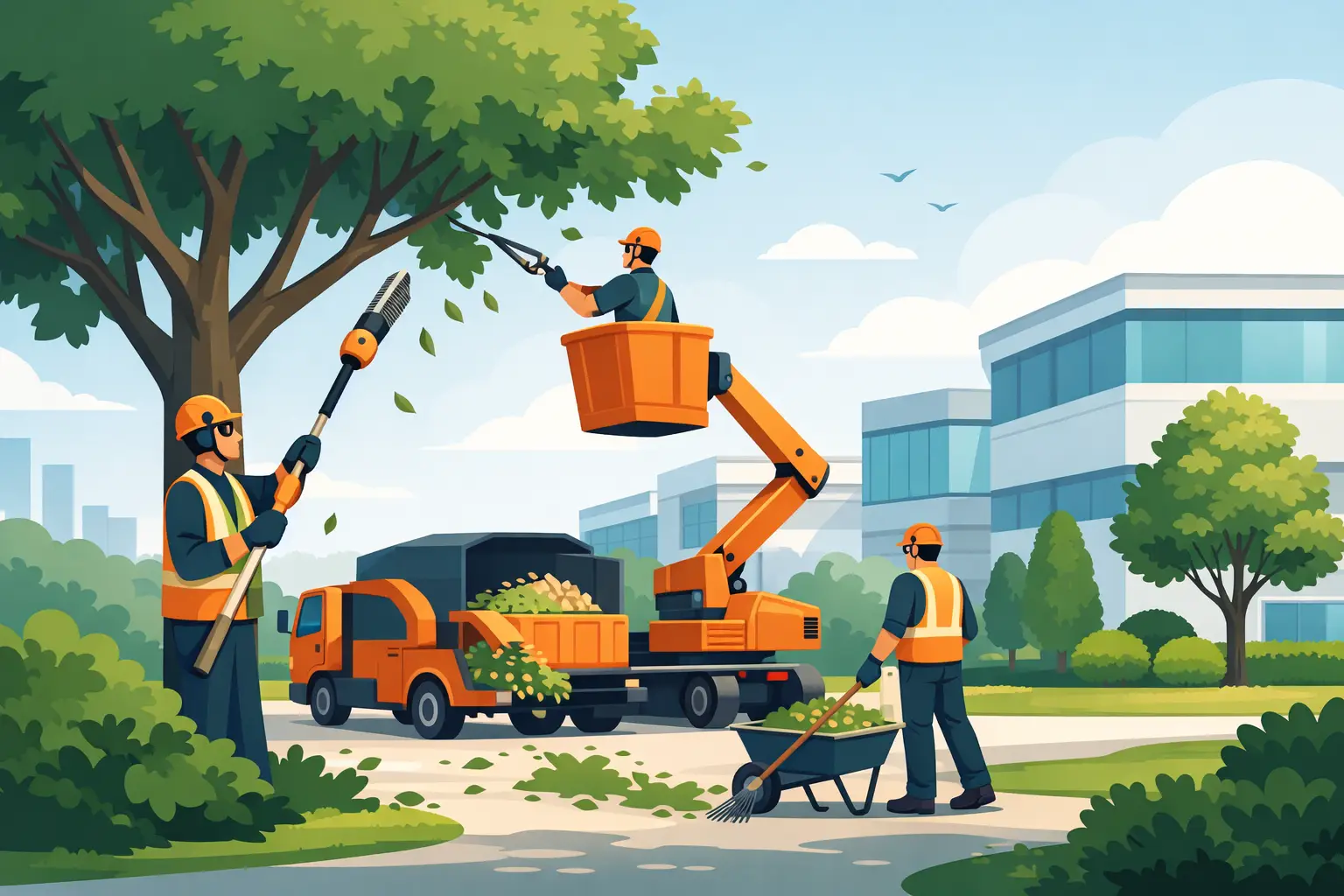
A neglected tree on a commercial site rarely stays a small problem for long. One overhanging limb can block signage, scrape vehicles, reduce light, or create a safety risk for staff and visitors. This guide to commercial tree maintenance is designed to help property managers, landlords and site operators keep trees safe, healthy and presentable without waiting for problems to become expensive.
Commercial grounds have different demands from a private garden. Trees may sit beside access roads, car parks, footpaths, boundaries, loading areas or public-facing entrances. That means maintenance is not just about appearance. It is about risk control, legal responsibility, site usability and protecting the long-term value of the landscape.
Why commercial tree maintenance needs a planned approach
On a business premises, tree work usually affects more than the tree itself. It can influence customer access, vehicle movement, neighbour relations and day-to-day operations. A branch failure in a quiet back garden is one thing. The same failure over a busy path or parking bay is a different level of problem altogether.
Planned maintenance gives you more control. Instead of reacting to storm damage, blocked gutters or complaints about overgrowth, you can schedule work at sensible times and spread costs more predictably. For schools, industrial estates, retail parks, office buildings and managed residential developments, that consistency matters.
There is also the question of presentation. Well-maintained trees improve the look of a site, soften hard landscaping and make outdoor areas feel cared for. Overgrown, unbalanced or deadwood-heavy trees can have the opposite effect, even when the building itself is well kept.
What a guide to commercial tree maintenance should cover
A practical maintenance plan starts with the condition of the trees, but it also needs to reflect how the site is used. A row of trees along a quiet perimeter may need a different approach from specimens near entrances or play areas. The right standard is not always the most aggressive cut. In many cases, careful pruning at the right time is better than heavy reduction after years of neglect.
A good commercial plan usually includes routine inspections, pruning where needed, removal of dead, diseased or unstable growth, hedge maintenance if relevant, and a clear response process for urgent issues after high winds or heavy rain. Some sites also need stump removal, crown lifting for vehicle clearance, or pollarding to keep growth within strict limits.
The best approach depends on species, age, condition and location. It also depends on your priorities. If your main concern is safety, the focus may be deadwood removal and structural pruning. If appearance and light levels matter most, thinning and reshaping may be the priority. Often, it is a balance of both.
Inspection comes first
You cannot manage what has not been assessed properly. Regular inspections help spot weak unions, decay, storm damage, pest activity and growth patterns that may become a problem later. They also help identify trees that are fine as they are, which matters just as much. Not every tree needs cutting every year.
Frequency depends on the site. High-traffic areas usually justify more regular checks than quiet land with limited access. Mature trees close to buildings, roads or public spaces may need closer monitoring than younger trees in open areas. After severe weather, an additional inspection is often sensible even if routine checks are already in place.
Pruning for safety and shape
Pruning is one of the most common parts of commercial tree care, but it needs to be done for the right reason. Removing deadwood reduces the chance of falling branches. Crown lifting can improve visibility and clearance over roads, paths and parking areas. Crown reduction may be used where a tree has outgrown its position, though it should be done carefully to avoid poor regrowth or unnecessary stress.
There is always a trade-off. Cut too little and the problem may return quickly. Cut too hard and you can spoil the shape, reduce vitality or create more maintenance later. Professional pruning should improve the tree’s structure and the site’s safety without leaving the tree looking hacked back.
Hedges, boundaries and visibility
Commercial grounds often include hedges as well as trees. These can become just as problematic when they block sightlines, creep into footpaths or make a site look untidy. Routine hedge cutting keeps boundaries sharp and helps maintain a cleaner, more professional appearance.
For many businesses, visibility is a practical issue as much as a visual one. Drivers need clear views at entrances and exits. Pedestrians need usable walkways. Signs and lighting need to remain unobstructed. Keeping this under control throughout the year is usually easier than dealing with heavy overgrowth in one visit.
Common risks on commercial sites
The obvious risk is branch or tree failure, especially where trees have been weakened by disease, previous poor pruning or storm damage. But commercial sites also face more routine issues that are easy to overlook. Trees can interfere with security lighting, CCTV lines, drainage runs and roofing. Roots may affect paving or kerb lines. Low branches can strike delivery vehicles or obstruct maintenance access.
Leaf drop and sap can also become a nuisance in car parks and entrance areas. These are not always grounds for major work, but they do influence how often maintenance is needed and what sort of pruning will be most useful. A smart plan looks at both immediate hazards and ongoing operational problems.
Wildlife and legal considerations matter too. Birds, bats and protected habitats can affect when and how work is carried out. This is another reason to avoid last-minute decisions where possible. Planning ahead gives more options and reduces the risk of delays.
Timing matters more than many people think
Commercial tree work is not simply a case of booking the first available date. Timing affects safety, tree health and site disruption. Some pruning is best carried out during dormant periods, while other work depends on species and growth habits. Nesting season and protected wildlife may limit what can be done in certain areas.
Then there is the practical side. On a busy commercial site, early scheduling can help avoid peak trading hours, school movements, tenant complaints or blocked access. For managed properties, coordinated maintenance often causes less disruption than repeated reactive callouts.
It is worth remembering that emergency work does not always happen at a convenient time. Strong winds and saturated ground can expose weaknesses very quickly. Having a trusted contractor who can respond promptly is part of good commercial management, not an optional extra.
Choosing the right contractor for commercial work
Commercial tree maintenance is not just domestic work on a bigger scale. It often involves traffic management, public safety measures, careful work around buildings and clear communication with site contacts. The contractor needs the right equipment, experience and working practices to manage the job properly.
Look for a team that can assess the site realistically, explain what is necessary, and carry out the work safely and efficiently. Good site care matters as well. On commercial jobs, tidy completion is part of the service. Branches, logs, sawdust and general debris should not be left creating another problem once the cutting is done.
Price matters, but so does value. The cheapest quote may not allow for the level of care a busy site requires. Equally, not every site needs the most extensive programme. A dependable contractor should recommend work that matches the actual condition of the trees and the way the premises operates.
Building a maintenance schedule that works
The most effective schedule is one you can actually keep in place. For some sites, that means annual inspections with follow-up work as needed. For others, especially larger premises or sites with heavy public use, seasonal visits may be more appropriate.
It helps to group work into priorities. Immediate risks should be dealt with first. After that, attention can turn to clearance, shaping, hedge management and longer-term improvements. This staged approach often makes budgeting easier and avoids unnecessary disruption.
At T.G. Bird Tree Services, the focus is always on practical, safety-led work that leaves sites clean, secure and looking their best. That is what commercial clients need – not guesswork, not overcomplication, just skilled tree care carried out properly.
A well-managed site does not happen by accident. Trees need the same level of attention as any other part of the grounds, and when they are looked after properly, they do their job well for years. The right maintenance plan keeps problems smaller, standards higher and your site easier to manage in every season.