
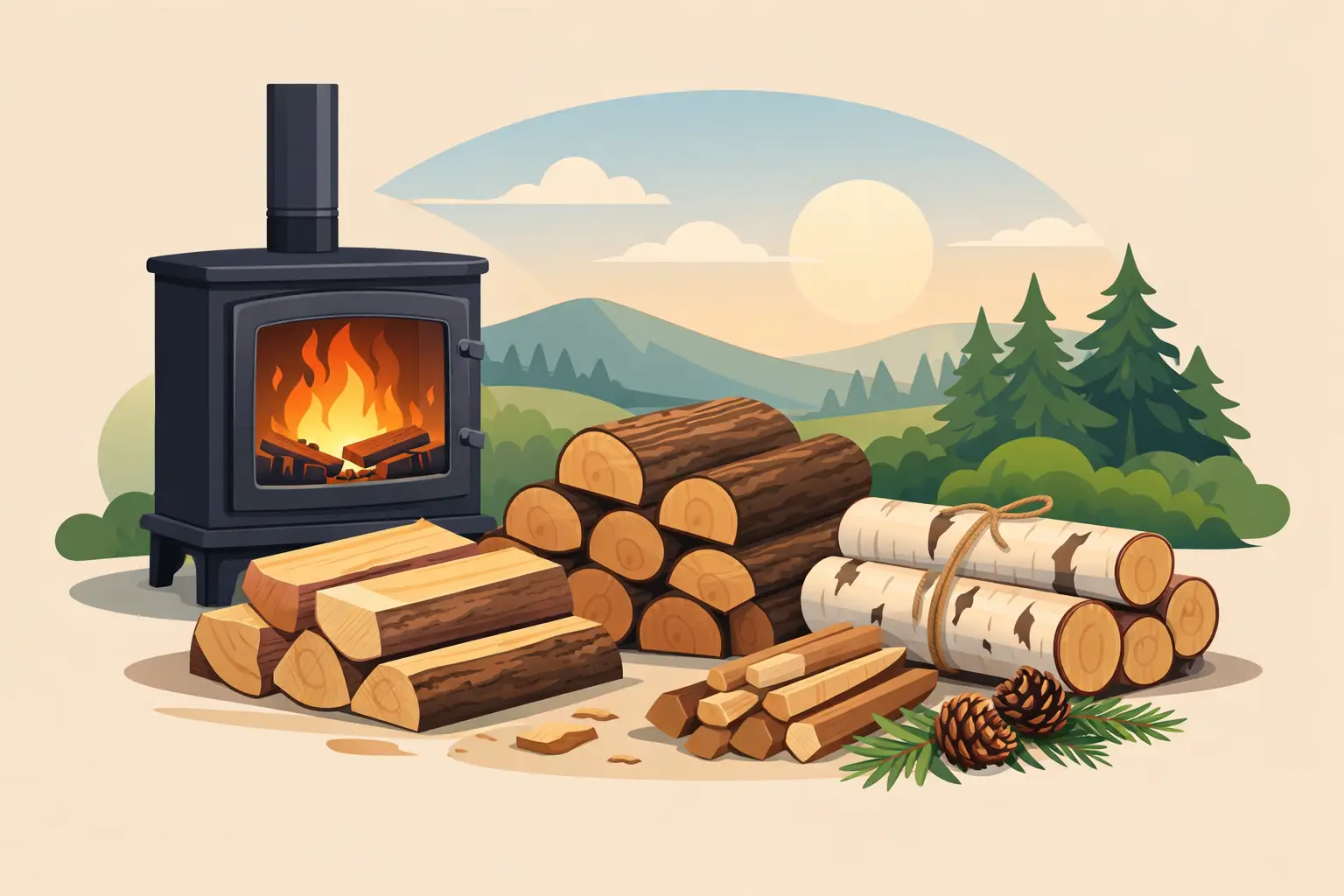
A log burner soon tells you when the wood is wrong. The fire struggles to catch, the glass blacks over, and instead of steady heat you get smoke, hiss and wasted fuel. So, what is the best firewood for log burners? In most cases, it is properly seasoned or kiln-dried hardwood with a moisture content below 20%, because that gives you a hotter, cleaner and more reliable burn.
That simple answer covers most homes, but the right choice depends on what you want from your stove. Some people want long, steady heat through the evening. Others want quick warmth to take the chill off a room. The species of wood matters, but moisture matters even more.
What is the best firewood for log burners in practice?
If you want the best all-round performance, hardwoods such as ash, oak, beech and hornbeam are usually the strongest options for log burners. They are denser than softwoods, so they tend to burn for longer and produce a more consistent heat output. That makes them well suited to home heating, especially if you want a stove to stay in well without constant refuelling.
Ash is often seen as one of the most dependable choices. It lights relatively easily, burns steadily and gives good heat. Beech is another strong performer, producing a hot, clean fire when dried properly. Oak burns slowly and lasts well, though it can be a little harder to get going if you are starting from cold. Hornbeam is excellent where available, as it is very dense and burns with strong heat.
For many households, a mixed hardwood load is the most practical option. It gives you a balance of easy lighting, solid heat and good burn time, rather than relying on one species alone.
Why moisture content matters more than the species
A common mistake is focusing only on whether the wood is hardwood or softwood. In reality, wet wood causes more trouble than almost anything else. If logs contain too much moisture, much of the fire’s energy is spent boiling off water before the wood can burn properly. That means less heat into the room and more smoke through the flue.
Wood for a log burner should be under 20% moisture. This is the standard most stove owners should aim for, and it is where you start to see the real benefits of dry fuel – cleaner combustion, better efficiency and less soot build-up.
When firewood is too wet, the signs are usually obvious. It can feel heavy, the bark may be damp, and you may hear hissing or spitting on the fire. It also tends to leave the stove glass dirtier and can contribute to creosote deposits in the chimney, which is not something to ignore from a safety point of view.
If you are buying logs rather than seasoning them yourself, asking how the wood has been dried is sensible. Properly prepared firewood saves time, performs better and reduces avoidable stove issues.
Hardwood vs softwood for log burners
Hardwood is usually the better choice for sustained heat, but that does not mean softwood has no place. The difference is mainly density. Hardwoods are slower-burning and generally give longer-lasting embers. Softwoods ignite quickly and burn faster.
That means softwood can be useful for kindling and for getting the stove up to temperature quickly. Species such as pine or spruce can help establish a fire, especially on cold mornings when you want fast results. The trade-off is that you will usually get through it faster, so it is less efficient for long evening burns.
There is also a lot of confusion around resin. People often assume all softwood is bad for stoves. That is too broad. Dry softwood can burn perfectly well. The real problem is burning poor-quality, wet or sappy wood, which creates more smoke and residue. Used properly, softwood has a role, but for most households relying on a log burner for regular heat, hardwood remains the better main fuel.
The best types of firewood for home use
Ash is one of the safest recommendations because it is consistent and easy to live with. It produces good heat, burns cleanly when dry and suits both daytime and evening use. If you want a dependable all-round log, ash is hard to fault.
Oak is excellent for long burns. Its density means it lasts well and can hold heat nicely once the stove is established. The trade-off is that it needs to be properly seasoned or kiln-dried, because green or poorly dried oak can be difficult and frustrating to burn.
Beech burns hot and clean and is popular for good reason. It gives a lively flame and solid heat output, though like oak it needs correct drying and storage. Hornbeam is another high-performing hardwood, often prized for its slow, hot burn.
Birch is worth mentioning because it lights easily and burns well, making it useful for getting a fire going. It does not usually last as long as denser hardwoods, but it can be very handy as part of a mixed supply.
What to avoid putting on a log burner
Freshly cut or green wood should be avoided. It contains far too much moisture and will give poor heat, more smoke and more deposits in the flue. Treated timber, painted wood, MDF, chipboard and general waste wood should also stay out of the stove. These materials can release harmful fumes and are not suitable for domestic burning.
Very oversized logs can also be a problem if they do not suit your stove. Even good firewood performs badly if the pieces are too large to catch properly or too tightly packed to allow airflow. The best logs are cut to the right length for the appliance and split to a practical size.
Storage matters too. Even excellent firewood can deteriorate if it is left exposed to rain or stacked without ventilation. Logs should be kept off the ground, under cover and with good airflow around them.
How to choose the right firewood for your stove
The best firewood is not just about species. It is also about how you use your burner. If you mainly light the stove in the evening and want it to stay warm for hours, denser hardwoods make sense. If you use it for shorter periods or want to get a fire going quickly, mixing in easier-lighting logs can help.
Your appliance also plays a part. Some log burners are more responsive and efficient than older models, so they cope better with a wider range of properly dried fuels. Even so, dry, well-cut logs are always the safer choice for performance and maintenance.
For most homes, the simplest answer is to buy quality, ready-to-burn hardwood from a reputable local supplier. That gives you consistent moisture levels, practical log sizes and a fuel that suits everyday stove use without the guesswork.
A note on value, not just price
Cheaper logs are not always the better buy. If the wood is damp, poorly cut or burns away too quickly, you may end up using more of it for less heat. Good firewood should give proper warmth, steady burn time and cleaner stove operation. That is where the real value sits.
This is why local supply can make a difference. A professional business that handles trees and firewood properly understands the importance of species, drying, storage and log size, not just delivery. For households across Norfolk and Suffolk, that practical side of the job matters just as much as the wood itself.
If you are still asking what is the best firewood for log burners, the safest choice is dry hardwood, stored properly and sized correctly for your stove. Get that right, and your burner will be easier to light, cleaner to run and far more effective on the nights you need it most.
A good stove deserves good fuel, and the difference is obvious from the first match.