

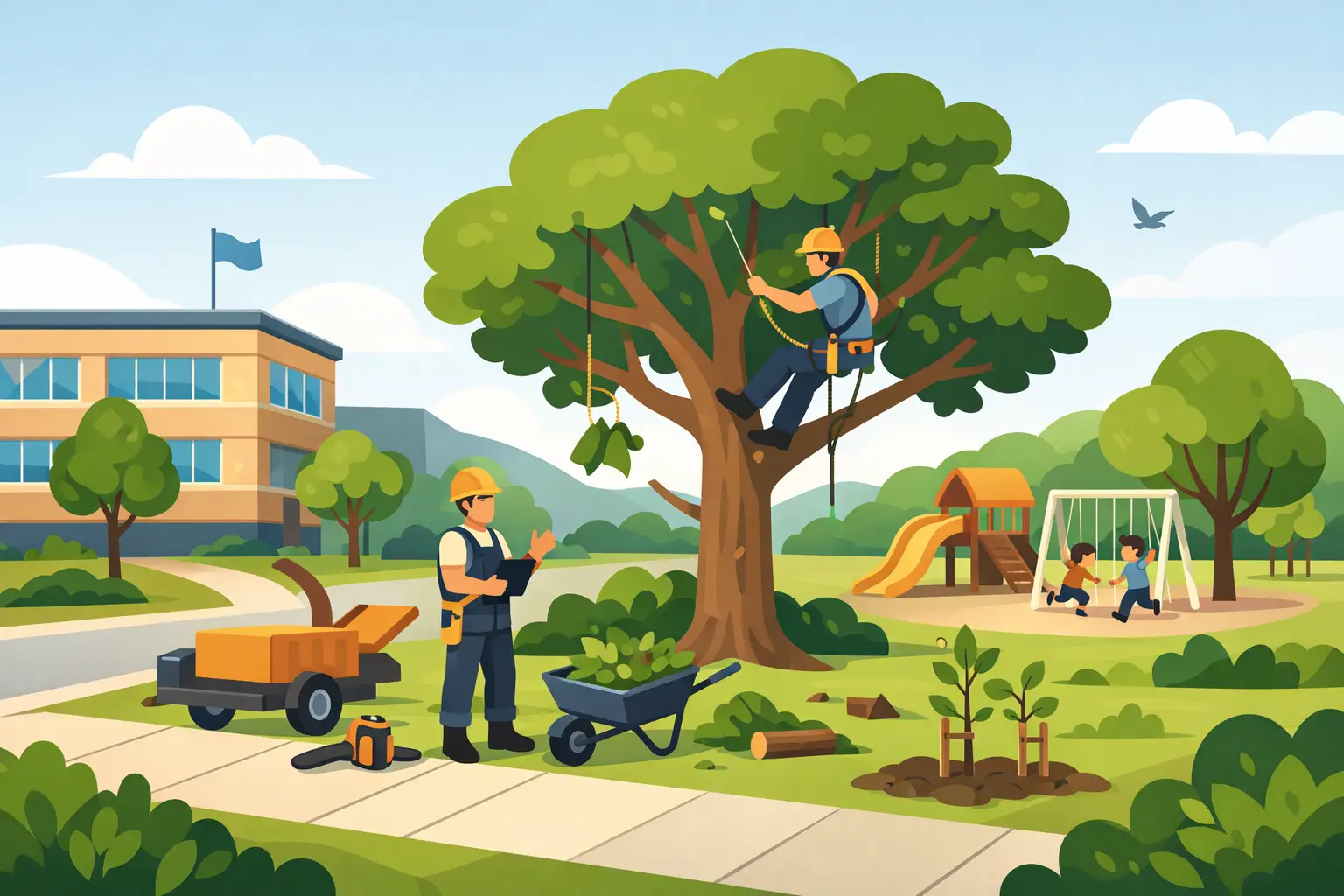
A mature oak beside a playground may be one of a school’s best-loved features, but it also needs more attention than a tree at the far end of a field. This school grounds tree management example shows how a practical, safety-led plan can protect pupils, staff, visitors and buildings while retaining the value that established trees bring to the site.
The aim is not to remove every branch that looks large or every tree that sits near a path. Good management starts by understanding the condition of each tree, how the surrounding area is used and what work will make a genuine difference. For schools, that means balancing safety, budgets, wildlife and the day-to-day running of the premises.
The site: a typical school setting
This example is based on a medium-sized primary school with mature trees around its boundary, several younger ornamental trees near the entrance and a row of conifers beside the sports field. The site includes a playground, pedestrian gates, staff parking, a hall roof and neighbouring homes close to the rear fence.
The grounds team had noticed deadwood falling from an oak over a perimeter footpath, low branches obstructing a delivery route and a dense conifer screen casting shade across part of the playing area. None of these issues necessarily called for wholesale removal. However, leaving them unaddressed would increase the chance of disruption, complaints or avoidable safety concerns.
A structured tree management plan gave the school a clear order of priorities rather than relying on reactive work whenever a branch fell or a parent raised a concern.
Step one: inspect trees and identify priorities
The first stage is a visual inspection by a competent tree professional. Each tree should be assessed for its species, size, general condition, visible defects and location. Particular attention is given to trees near areas with regular footfall, play equipment, classrooms, roads, car parks and boundary fences.
On this site, the oak beside the footpath was the highest priority. It showed dead branches in the crown and a damaged limb overhanging the route used by parents at drop-off and collection times. The tree was otherwise in reasonable condition, so the appropriate solution was targeted crown cleaning and removal of unsafe deadwood rather than felling.
The second priority was a multi-stem ash near the staff car park. Ash can deteriorate quickly where ash dieback is present, although symptoms and structural condition vary from tree to tree. This particular tree had thinning foliage and signs of decline. Because it stood close to parked vehicles and a frequently used access road, further assessment and a planned removal were recommended before its condition worsened.
Lower-priority work included lifting the crowns of younger trees along the delivery route and reducing the height of the conifer screen. These jobs improved access, visibility and light levels, but they did not carry the same immediate risk as the oak or ash.
Risk depends on both the tree and its location
A tree with a defect in a quiet corner of the grounds may need monitoring rather than urgent work. The same defect above a busy gate, playground or pavement needs faster action. This is why schools benefit from a site-specific assessment instead of a one-size-fits-all schedule.
The inspection should also record when work is needed, the recommended scope and an appropriate review date. Keeping clear records helps the school demonstrate that its grounds are being managed responsibly, particularly after high winds or when maintenance responsibilities change hands.
Step two: plan the work around school life
Tree work in a school setting must be organised carefully. Safe working areas, machinery, falling branches and access for chippers or a lorry all need to be kept separate from pupils, staff and visitors.
For the oak, the school arranged the work during a holiday period. This reduced disruption and allowed a full exclusion zone around the footpath. The arborist team used climbing equipment to remove deadwood in controlled sections, with a ground team managing the drop zone and processing branches safely away from the building.
The ash removal required more planning because of its proximity to cars, the access road and neighbouring property. The work area was clearly cordoned off, vehicles were moved in advance and sections were lowered under control rather than dropped. The stump was then ground below ground level so that the area could be reinstated and maintained easily.
Some schools prefer work to take place at weekends or on teacher training days. It depends on the site layout, the scale of work and whether access can be safely separated from normal school activity. A reliable contractor will discuss these practical details before work begins, rather than arriving with a plan that does not suit the grounds.
Step three: carry out proportionate tree work
The completed work on this example site was tailored to each tree. The oak received deadwood removal and selective pruning to reduce minor end weight on the damaged limb. This retained its shape, shade and habitat value while reducing the immediate risk over the path.
The declining ash was dismantled in sections and removed. Its condition and location meant that monitoring it indefinitely was not the sensible option. The school chose to replant with a suitable young tree in a position away from buildings and parking, allowing for future growth.
The conifer row was reduced and trimmed to improve light and prevent it from dominating the playing field. Over-reducing conifers can leave them thin, brown and unattractive, so the work was kept within a sensible, manageable level. A regular hedge maintenance programme was then recommended to stop the screen becoming a major job again.
The younger entrance trees had their lower branches lifted to provide clear sightlines and access for visitors. This modest work made the front of the school look tidier and more welcoming without compromising the trees’ health.
Wildlife, permissions and good timing
Trees on school grounds can support nesting birds, bats, insects and other wildlife. Before work is planned, the contractor should consider the time of year and check for signs of protected species or active nests. Nesting activity can mean work needs to be postponed or adjusted.
Schools should also check whether trees are subject to a Tree Preservation Order or whether the site sits within a conservation area. These controls can affect what work is permitted and may require notice or consent from the local authority. A professional arborist can help identify when these checks are needed, but the school should allow enough time for the process.
Wildlife awareness does not mean unsafe trees must be ignored. It means the work is planned properly, with the least harmful practical method used and any necessary ecological advice obtained where there is a reason for concern.
Step four: leave the grounds safe and tidy
A school should not be left with piles of brash, sawdust across a footpath or exposed stumps in a play area. Site clearance is part of a professional job, not an optional extra.
In this example, timber from the ash was removed from the school grounds, smaller branches were chipped and the work areas were raked and cleared. The oak footpath was reopened once the team had completed a final check for hanging debris. Staff could return after the holiday knowing the access route was clear and the trees had been dealt with properly.
For larger sites, woodchip can sometimes be retained for paths or landscaped areas if the school has a suitable use for it. That decision should be made before work starts, as storage space and access need to be considered.
A simple ongoing management plan
The value of this school grounds tree management example is not limited to one visit. Once urgent work has been completed, the school can move to a more predictable maintenance cycle. Annual visual checks, prompt inspections after significant storms and planned pruning before access becomes restricted will usually cost less and cause fewer problems than waiting for issues to become urgent.
The grounds manager can keep a straightforward record of inspections, completed work, photographs and future recommendations. If a tree changes noticeably – such as new cracks, fungal growth, leaning, extensive deadwood or branches resting on a roof – it should be assessed sooner rather than waiting for the next routine review.
Well-managed trees give a school shade, character, screening and a better environment for learning and play. With sensible inspections, carefully timed work and a contractor who understands safe site operations, those benefits can be retained without leaving safety to chance.