
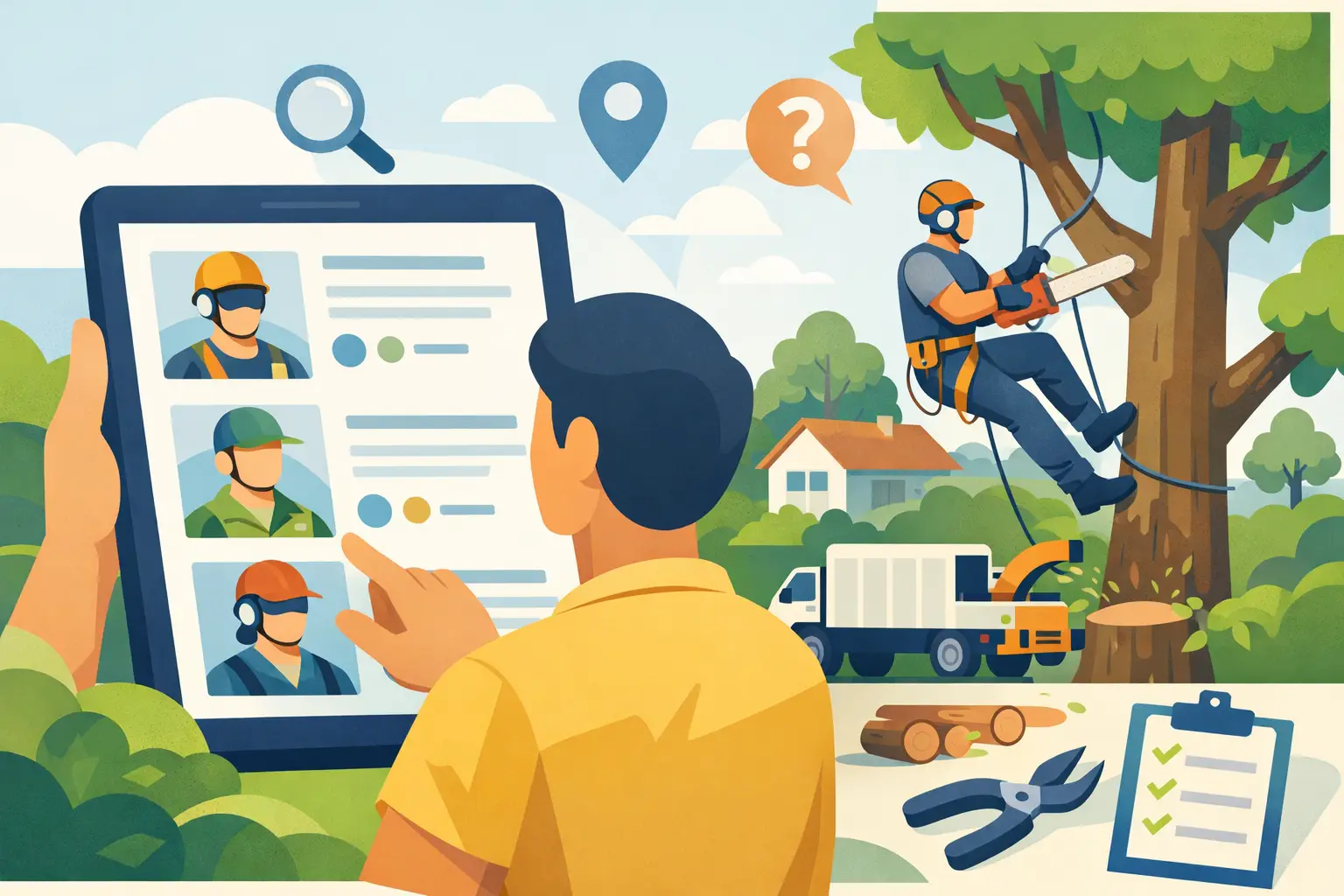
A split limb hanging over a drive, a hedge blocking light, or a tree that suddenly looks unsafe after strong winds usually sends people searching for a tree surgeon near me. The problem is not finding someone with a chainsaw. It is finding a qualified professional who can carry out the work safely, protect nearby buildings and leave the site clean and secure when the job is done.
Tree work can look straightforward from the ground. In practice, it often involves working at height, managing heavy timber, assessing structural weakness and making careful cuts that affect the long-term health of the tree. That is why choosing the right contractor matters, whether you are a homeowner with one overgrown conifer or a site manager responsible for ongoing maintenance.
What a tree surgeon near me should actually offer
A professional tree surgeon does far more than cut branches. The job starts with assessing the tree, the surrounding area and the safest method of work. That may mean pruning to improve shape and reduce weight, dismantling a hazardous tree in sections, pollarding to control regrowth, grinding out an old stump, or carrying out emergency work after storm damage.
Good service also includes the practical details people often care about most. Will access be managed properly? Will gardens, fences and parked vehicles be protected? Will waste be removed? Will the area be left tidy? For most customers, those points are just as important as the cutting itself.
A reliable contractor should be able to explain what work is needed, what is optional and what may be better left alone. That matters because not every tree needs drastic action. Sometimes a crown reduction is appropriate. Sometimes selective pruning is enough. Sometimes removal is the safest option. It depends on the tree species, its condition, its position and the risks around it.
Why local knowledge makes a difference
When people search for a tree surgeon near me, they are usually looking for speed and convenience. Both matter, but local knowledge matters as well. A contractor working regularly across Norfolk, Norwich and Suffolk is likely to understand the common tree issues in the area, the weather conditions that cause damage and the practical realities of reaching rural, residential and commercial sites efficiently.
A local team can also respond faster when the work is urgent. If a tree has failed, a limb is resting on a structure, or access to a road or entrance has been affected, delays can quickly turn a manageable problem into a larger one. Quick attendance is valuable, but only if it comes with the right equipment, the right method and a clear focus on safety.
There is also an accountability benefit in choosing local. A business that works in your area depends on its reputation. It needs to be known for turning up when promised, carrying out the work properly and leaving customers satisfied enough to recommend it.
What to check before booking
Price is always part of the decision, but it should not be the only one. Tree surgery is skilled, safety-led work. If a quote is unusually low, it is reasonable to ask why. Sometimes the difference comes down to shortcuts in equipment, waste removal, insurance or time allowed on site.
A good contractor should be clear about the scope of work. You should know what is being cut, what is being removed, whether logs or woodchip are staying or going, and how the site will be left afterwards. Clear communication at the start usually means fewer problems on the day.
It is also worth paying attention to how the advice is given. If somebody recommends heavy cutting without properly looking at the tree, nearby targets or access, that should raise questions. A professional approach is measured. The aim is to solve the problem in a way that is safe, suitable and proportionate.
For commercial clients, reliability is even more important. Maintenance schedules, tenant safety, access routes and public-facing areas all need careful handling. The contractor you choose should be capable of working efficiently while keeping disruption under control.
Tree work is not just about appearance
Many enquiries start because a tree or hedge looks untidy. Appearance matters, especially on residential properties, managed grounds and business premises. But tree surgery is often about risk reduction and long-term management as much as presentation.
Overextended limbs can fail. Dense crowns can place stress on weakened branches. Trees growing close to roofs, outbuildings, roads or utility routes need proper assessment. Hedges can become so overgrown that they restrict sightlines, reduce usable space and create ongoing maintenance problems.
This is where experience shows. The right work can improve light, shape and clearance while also reducing strain and making the area safer. The wrong work can leave a tree unstable, unsightly or vulnerable to decline. That is why careful pruning and informed decision-making matter.
When emergency response matters most
Storms and sudden failures are when customers most urgently need a dependable contractor. Emergency tree work is not just standard tree surgery done faster. It often involves unstable timber, broken tops, partially failed stems and unpredictable loads under tension.
In these situations, the safest option is not always the quickest-looking one. A professional team will secure the area, assess the hazard and work methodically. That may involve sectional dismantling, controlled lowering or clearing access before full removal can take place. The key point is that emergency work needs calm judgement as much as speed.
For homeowners, this can be a stressful moment. For commercial sites, it can also be a liability issue. Either way, fast response only has value if the team arriving is equipped to handle the risk properly.
Hedge and stump work should not be an afterthought
People often focus on trees and forget that hedge maintenance and stump removal can have just as much effect on the usability and appearance of a property. An unmanaged hedge can quickly make a frontage look neglected, reduce natural light and create access issues. Regular cutting keeps it neat, healthy and easier to manage over time.
Stumps are another common issue. Left in place, they can become an obstacle, interfere with landscaping plans and continue to affect the look of the space. Stump grinding is often the cleanest way to finish the job properly after felling. It is not always necessary, but when you want the area fully usable again, it is often the right step.
A tidy finish says a lot about the service
One of the clearest signs of a professional tree surgery business is what the site looks like when the work is complete. Customers do not want to be left with heaps of brash, scattered sawdust and damaged borders. They want the problem solved and the area left clean, safe and visually improved.
That is especially important on domestic properties, where gardens and drives need to be usable straight away, and on commercial sites, where appearance and access affect staff, visitors and tenants. A tidy finish is not an extra. It is part of doing the job properly.
This practical, customer-focused approach is one reason local clients across Norfolk and Suffolk look for experienced providers such as T.G. Bird Tree Services when they need reliable help with anything from routine pruning to urgent call-outs.
Choosing confidence over guesswork
If you are comparing firms after searching for a tree surgeon near me, the right choice usually becomes clear once you look past the headline price. You want a contractor who understands tree care, works safely, communicates clearly and treats your property with respect.
That might mean paying a little more for proper equipment, careful dismantling and full cleanup. In many cases, that is money well spent. Tree work carries real risk, and the cost of poor workmanship can be far higher than the difference between quotes.
A dependable tree surgeon should give you confidence from the first conversation. Not sales talk, just clear advice, sensible recommendations and a straightforward plan for getting the work done properly. When that is what you get, the whole process feels easier – and your trees, hedges and property are better off for it.
If a tree, hedge or stump is becoming a problem, the best time to deal with it is usually before it turns into a larger one.