
A tree does not need to be on the ground to be an emergency. In many cases, the real danger is a split stem hanging over a drive, a large limb twisted above a footpath, or a root plate starting to lift after heavy wind and rain. Knowing when to call emergency arborists can prevent injury, property damage and a far more expensive job later.
For homeowners, landlords and site managers, the hardest part is often deciding whether the situation can wait. Some tree issues are urgent but stable enough to book in during normal working hours. Others need immediate attention because the risk to people, buildings, vehicles or access routes is simply too high. The difference matters.
When to call emergency arborists straight away
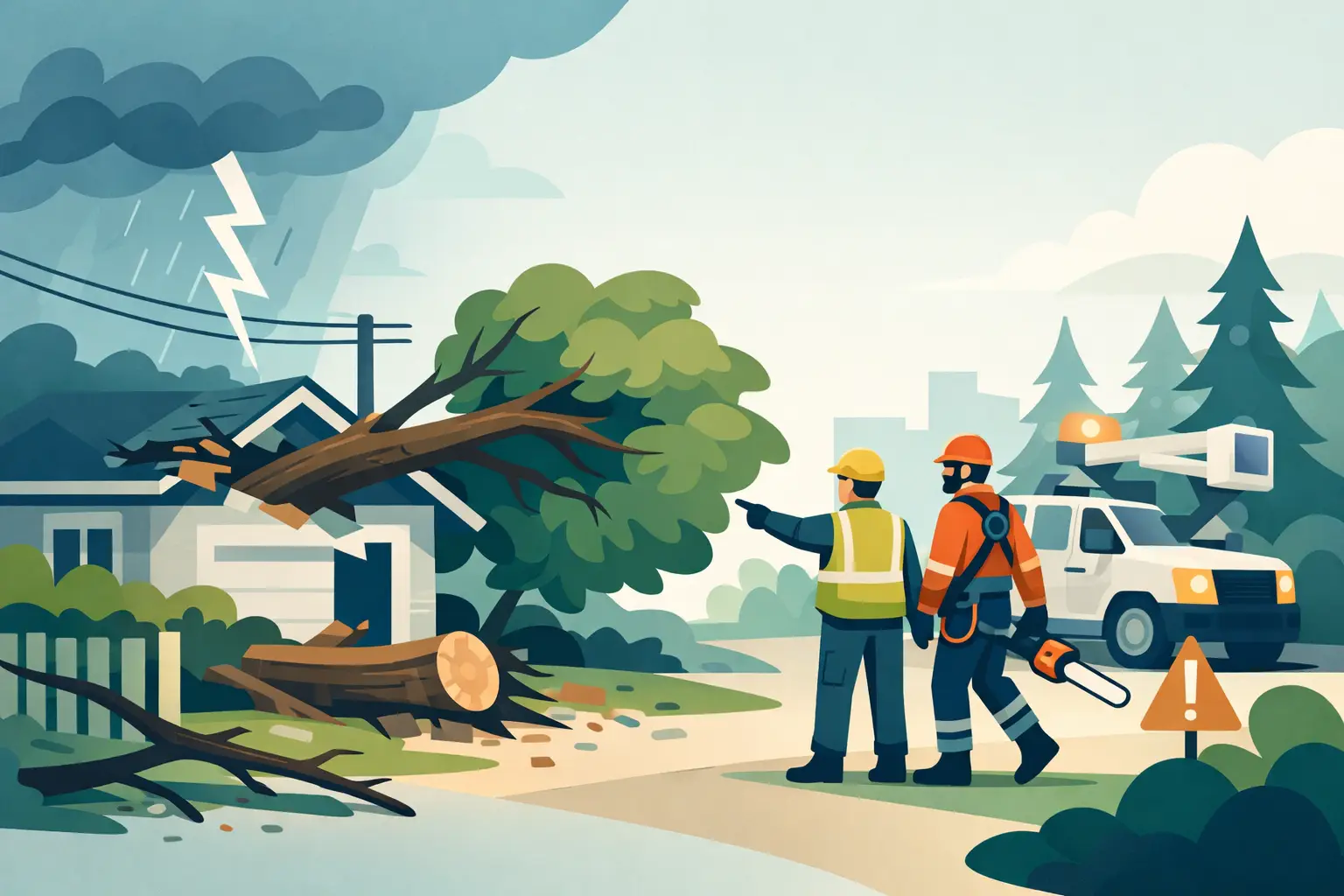
The clearest reason to call is when a tree has already failed or is in the process of failing. If a tree has fallen onto a road, driveway, outbuilding, fence, parked vehicle or roof, the site needs to be made safe as quickly as possible. The same applies if a tree is leaning suddenly after a storm, especially where the soil around the base is heaving or cracking.
A hanging branch is another common emergency. Large limbs can remain lodged in the canopy for hours or days before dropping without warning. From the ground, they may not look severe, but tension and weight can make them highly unpredictable. If the branch is above a public path, garden seating area, entrance, parking space or neighbouring property, it should be treated as urgent.
Storm damage is one of the main reasons emergency arborists are called out across Norfolk and Suffolk. High winds can expose weak unions, old decay pockets and previously hidden structural faults. A tree may still be standing, but if the crown is badly torn, the stem is split or major limbs have fractured, it needs professional assessment straight away.
Situations that are urgent, but not always immediate
Not every damaged tree requires a middle-of-the-night callout. If a branch has come down in the far end of a garden and there is no risk to people, access or structures, the work may be urgent without being an immediate emergency. The same can be true for a tree that has lost limbs but remains stable and clear of occupied areas.
This is where practical judgement matters. If the tree is isolated, the weather has settled, and the damage is contained, it may be reasonable to arrange prompt daytime work. If conditions are worsening, the tree is close to a public area, or you are not confident it is stable, it is safer to treat it as an emergency.
A good rule is simple: if you cannot safely keep people away from the danger area, do not wait.
Warning signs a tree has become dangerous
Some emergencies build gradually before they become obvious. A tree may have shown stress for months and then fail during bad weather. Spotting the signs early can help you act before a near miss becomes an accident.
Cracks in the main stem or major limbs are a serious warning sign, especially if they are fresh, widening or visible after wind. A sudden lean is equally concerning, particularly where the tree did not lean that way before. Lifted soil, exposed roots or movement at the base suggest instability below ground.
Dead or dying limbs in the upper crown can also create urgent risk. Smaller deadwood may be routine maintenance. Large dead sections over roads, gardens, schools, car parks or commercial sites are different. They can fail with very little warning, even in calm conditions.
Decay around the base, fungal growth near the root flare and cavities in the trunk do not always mean a tree is about to collapse, but they should never be ignored when combined with movement, cracking or recent storm exposure. Trees fail for different reasons, and the level of urgency depends on the whole picture, not one symptom in isolation.
Storm damage, blocked access and public safety
Emergency tree work is often about more than the tree itself. Access can be the deciding factor. If a fallen tree blocks a driveway, private road, farm track, business entrance or emergency route, the disruption becomes part of the problem. For commercial premises, schools and managed sites, delays can quickly affect staff, visitors and operations.
Public safety also changes the response time. A damaged tree near a pavement, highway, play area or neighbouring boundary needs faster action than the same damage in a closed field. Even if the tree has not yet failed, the potential for harm is too high to leave to chance.
This is one reason professional emergency arborists do more than just cut branches. They assess the site, identify immediate hazards, work with the weight and tension in damaged timber, and clear the area methodically so the risk is reduced rather than shifted elsewhere.
What to do before the arborists arrive
If you believe a tree is unsafe, the first priority is distance. Keep family members, staff, visitors and neighbours away from the area. Do not walk under a damaged canopy to inspect it more closely. Do not move parked vehicles if doing so means entering the danger zone. If the tree has affected power lines, stay well clear and report it to the relevant utility provider immediately.
It is also best not to start cutting anything yourself. Emergency tree work is dangerous because damaged timber often holds hidden tension. Branches can spring, roll or drop suddenly when cut in the wrong place. Ladders, chainsaws and storm-damaged trees are a particularly poor mix.
If safe to do so from a distance, take a few clear photos. That can help when describing the issue over the phone. You can also note whether the tree is still moving, whether access is blocked, and what is at risk nearby. That gives the arborist a clearer picture before attending.
Why emergency arborists are different from routine tree surgeons
Routine tree work is planned. Emergency tree work is reactive, time-sensitive and often carried out in difficult conditions. The equipment may be similar, but the approach is different. Damaged trees can be unstable in ways that are not obvious from the ground, and safe dismantling often requires careful sequencing rather than quick cutting.
That is why experience matters. A professional emergency response should focus first on making the site safe, then on clearing and reducing the tree in a controlled way. In some cases, the immediate aim is not full removal but hazard reduction until follow-up work can be completed in daylight or under better conditions.
For customers, that means peace of mind. You are not simply paying for a tree to be cut up. You are paying for a safe assessment, the right equipment, competent handling of a high-risk situation, and a tidy outcome once the danger has been dealt with.
When waiting could cost more
Many people hesitate because they hope the problem will settle or look less severe in the morning. Sometimes it does. Quite often, it gets worse. A split limb can tear further overnight. A leaning tree can shift in saturated ground. Stronger winds can bring down what was only just holding on.
There is also the knock-on cost. Damage to roofs, vehicles, walls and fences can escalate quickly if unstable timber is left in place. On commercial and managed sites, delay can also increase liability if a known hazard is not dealt with promptly.
Calling early does not always mean major work is needed. Sometimes the right response is a careful inspection and a limited intervention to remove the immediate risk. But leaving a dangerous tree unassessed rarely saves money if the situation is genuinely unstable.
A sensible approach for homes and commercial sites
The best approach is calm, not casual. If a tree has failed, is visibly unstable, has dropped a major limb, or threatens people, buildings or access, treat it as an emergency. If the damage seems contained but you are unsure, get professional advice rather than guessing.
For property managers and site operators, it also helps to think ahead. Trees near car parks, roads, entrances and high-footfall areas deserve closer monitoring after storms. For homeowners, regular maintenance can reduce the chance of sudden failure, but it will not remove risk entirely, especially in severe weather.
At times like these, fast response and safe workmanship matter more than anything. T.G. Bird Tree Services deals with urgent tree problems in a practical, safety-led way, helping customers make sites safe without unnecessary fuss. If a tree on your property does not look right and you would not feel comfortable walking beneath it, that is usually the moment to stop watching and start acting.