
A hedge that has pushed out over paths, blocked light from windows or started leaning into a neighbour’s boundary can go from untidy to unmanageable faster than most people expect. If you are wondering how to reduce hedge overgrowth without ruining its shape or creating a bigger job later, the key is to act methodically. A heavy cut can improve the look of the hedge quickly, but only if it is done at the right time and with the right approach.
For many properties across Norfolk and Suffolk, hedge overgrowth is not just a visual issue. It can narrow driveways, interfere with pavements, reduce visibility near entrances and add extra weight to older stems. In some cases, it also hides weak growth, storm damage or dead sections that need proper attention. That is why a good reduction is about more than simply cutting everything back hard and hoping for the best.
What causes hedge overgrowth?
Most overgrown hedges have been allowed to gain height and spread gradually over several seasons. A missed trim here and there often does not seem like much, but repeated delays change the structure of the hedge. New outer growth keeps extending, while the inner framework becomes woody, shaded and less productive.
Fast-growing species can make this problem more obvious. Leylandii is a common example, but laurel, privet and mixed boundary hedging can also become dense and oversized if maintenance slips. Once a hedge reaches a size that cannot be handled with routine clipping, the work becomes less about trimming and more about controlled reduction.
How to reduce hedge overgrowth without damaging it
The best way to reduce an overgrown hedge depends on its species, condition and how severe the growth has become. Some hedges will respond well to a firm cutback and recover with strong regrowth. Others are less forgiving, especially if cut too far into old wood.
A sensible reduction starts by deciding what the hedge needs to achieve. In some gardens that means lowering the height to restore light. In others it means narrowing the sides to reclaim access along a path or boundary. Where a hedge has become both too tall and too wide, it is often better to phase the work rather than remove too much in one visit.
That slower approach usually gives a better long-term result. It keeps the hedge healthier, avoids exposing large bare sections too suddenly and allows fresh growth to fill out properly. The trade-off is that it may take more than one round of work to get the final shape right.
Start with the species and condition
Before any cutting begins, it helps to understand what sort of hedge you are dealing with. Evergreen conifers, broadleaf evergreens and deciduous hedges all respond differently. A yew hedge, for example, can often tolerate renovation better than Leylandii. Laurel may recover from hard reduction, but it can look rough for a while if handled badly. Formal hedges also need a different finish from informal screening hedges.
Condition matters just as much as species. If the hedge has dead patches, split stems or signs of disease, reducing it heavily may reveal deeper structural problems. If it is already thin at the base, cutting only the top might keep it tall but leave it leggy and weak-looking. In those cases, a more balanced reshaping plan is usually needed.
Pick the right time of year
Timing can make a big difference to how well a hedge recovers. For general maintenance, many hedges are trimmed during the growing season to keep them neat. For heavier reductions, the best window depends on the species and whether wildlife is present.
Bird nesting season is a major consideration. Hedges often provide shelter for nesting birds, so checks should always be carried out before work starts. Cutting during active nesting periods can create legal and welfare issues as well as practical delays. This is one of the main reasons professional hedge work is not just about appearance – it also needs to be done responsibly.
Weather matters too. Very hot, dry spells can stress a hedge after reduction, while waterlogged ground can make access difficult and unsafe. Frost is another factor, especially after heavier cuts. A stable period with moderate conditions usually gives the hedge the best chance to recover well.
Reduce in stages if the hedge is badly overgrown
If a hedge has been neglected for years, the quickest-looking solution is not always the best one. Cutting a large amount off the top and both sides in one go can shock the plant and leave a poor finish. It may also expose brown inner growth that takes a long time to cover, if it covers at all.
A staged reduction is often the safer option. The height may be lowered first, then the sides brought in more carefully, or one side may be renovated before the other where space allows. This is especially useful on boundary hedges, roadside hedges or long runs where appearance and screening still matter.
There is a practical benefit as well. A staged job gives better control over line, balance and final proportions. It also reduces the chance of ending up with a hedge that is too hard-cut to recover attractively.
Keep the shape wider at the bottom than the top
One of the most common reasons hedges become patchy near the base is poor shaping. When a hedge is clipped straight up and down, or worse, wider at the top than at the bottom, the lower growth loses light. Over time the base thins out, and no amount of light trimming on the outside will fix that properly.
A slight taper is far better. Keeping the hedge a little narrower at the top allows light to reach lower foliage and supports denser growth from top to bottom. This is true whether you are maintaining a compact formal hedge or reducing a larger boundary screen.
It is a small detail, but it has a big effect on how the hedge looks a year or two down the line.
Use the right tools and work safely
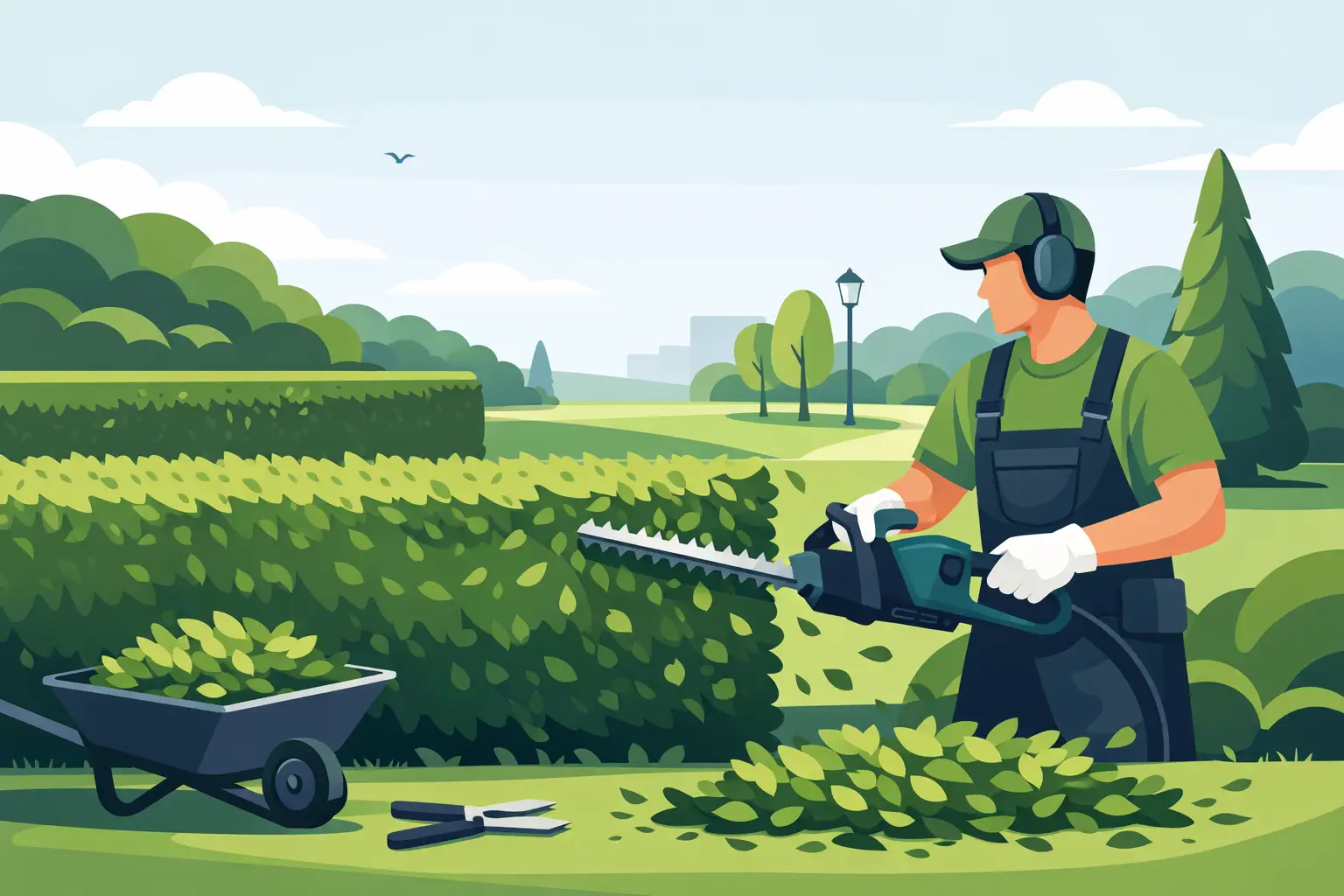
Small domestic hedges can often be maintained with standard hedge trimmers and hand tools, but larger overgrown hedges are a different job. Thick stems, awkward heights and restricted access all add complexity. Ladders on uneven ground, cutting near roads, and working around sheds, fences or greenhouses create risks very quickly.
Safe hedge reduction often requires more than trimming equipment. It may involve proper access methods, sharp hand tools for selective cuts and a plan for clearing and removing the waste efficiently. Large volumes of arisings can build up fast, especially with dense species such as laurel.
For taller hedges or heavily overgrown screens, bringing in an experienced contractor is usually the sensible route. The finish is cleaner, the work is safer and the site can be left tidy rather than covered in brash and clippings.
What to do after cutting back an overgrown hedge
Aftercare matters more than many people realise. Once reduced, the hedge needs time and support to recover. In dry weather, watering may help, particularly for younger or recently stressed hedges. Mulching around the base can help retain moisture and suppress competing weeds.
It is also worth keeping expectations realistic. A heavily reduced hedge rarely looks perfect straight away. Some species will flush back strongly, while others take longer to fill out. What matters is that the structure has been corrected and future maintenance can now keep it under control.
Regular follow-up trimming is what prevents the same problem returning. Once the hedge has been brought back to a sensible size, lighter maintenance at the right intervals is far easier and usually more cost-effective than another major reduction later.
When professional hedge reduction is the better option
Knowing how to reduce hedge overgrowth is one thing. Doing it neatly, safely and in a way that protects the hedge is another. If the hedge is tall, very dense, close to public areas or showing signs of poor health, professional assessment is often the best step.
This is particularly true where visibility is affected near entrances or roads, where neighbouring properties are involved, or where the hedge has grown around fences and structures. Commercial sites also tend to need a more controlled finish, with attention to access, public safety and efficient waste removal.
At T.G. Bird Tree Services, hedge work is approached in the same way as any other arboricultural job – with care, clear planning and a tidy result. The aim is not just to cut growth back, but to leave the hedge manageable, presentable and safer for the long term.
An overgrown hedge does not usually need a drastic answer. It needs the right one. When the reduction is timed properly, shaped correctly and carried out with a clear plan, even a difficult hedge can be brought back under control and kept that way.