
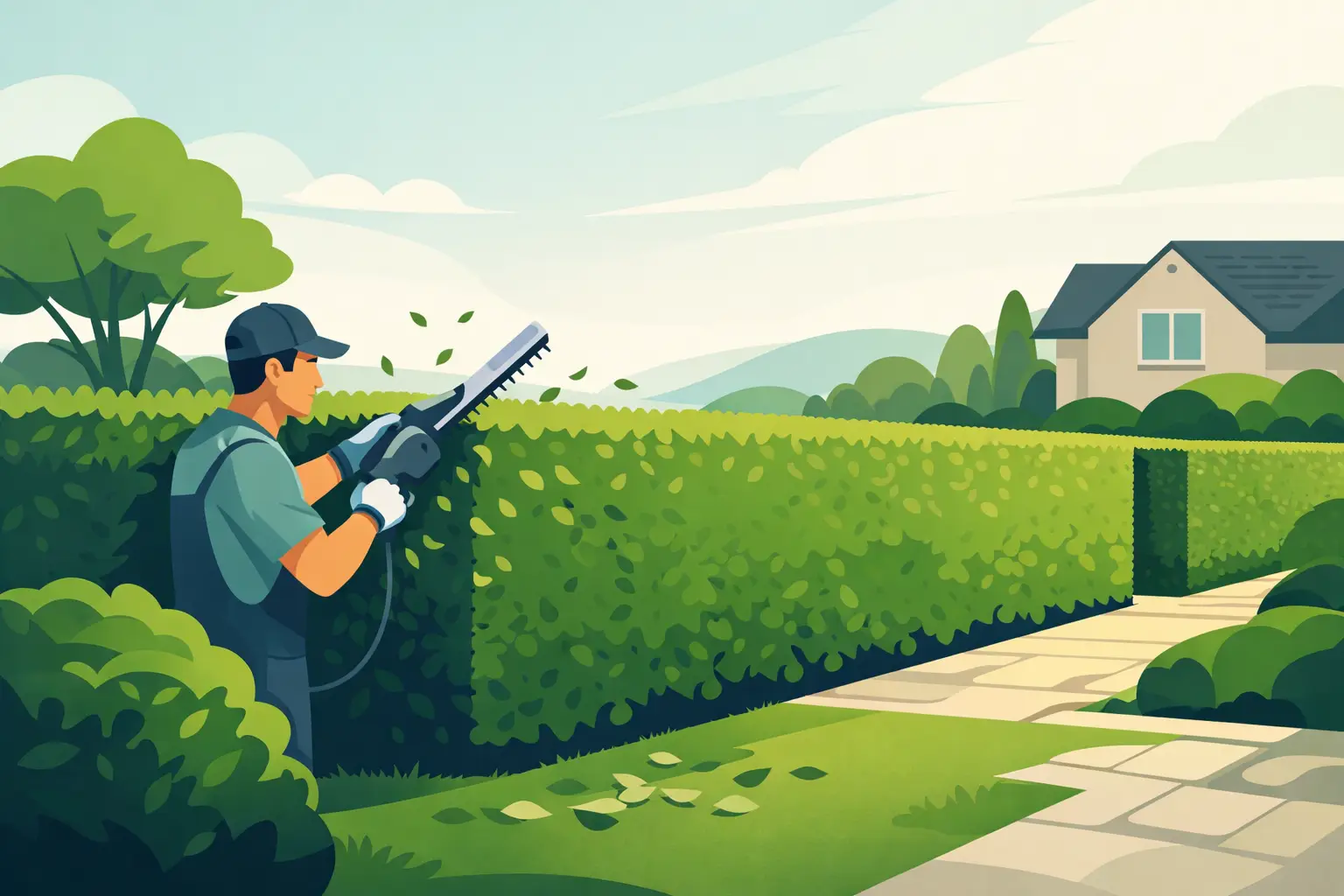
A hedge that has crept over the drive, narrowed a footpath or started to look thin at the base usually does not need replacing. More often, it needs proper hedge trimming at the right time and in the right way. Done well, it keeps boundaries neat, supports healthy growth and helps the whole garden or site look cared for.
For homeowners and commercial properties alike, hedges do more than mark a line. They provide privacy, improve appearance, soften hard edges and, in some cases, act as an important windbreak. The problem is that neglected hedges quickly become harder and more expensive to manage. A light maintenance visit is one thing. Cutting back years of overgrowth is another.
Why hedge trimming matters
Regular hedge trimming is not just about keeping things tidy. It helps control shape, prevents paths and entrances from becoming obstructed and encourages dense, even growth. When a hedge is trimmed correctly, it tends to fill out better and stay stronger over time.
There is also a practical safety side to consider. Hedges that spill into pavements, car parks, roads or access routes can reduce visibility and create avoidable hazards. On commercial sites, schools, rental properties and shared access areas, that can quickly become a management issue rather than a cosmetic one.
Appearance matters too. A clean, well-kept hedge frames a property properly. It can make a front garden look sharper, improve kerb appeal and help larger grounds look maintained rather than left behind. For landlords, site managers and businesses, that first impression counts.
When hedge trimming should be done
Timing depends on the species, the age of the hedge and how formal you want the finish to be. Fast-growing hedges may need more than one trim during the growing season, while slower-growing or more natural hedges may only need periodic maintenance.
In general, many established hedges are trimmed in late spring or summer to maintain shape. Some benefit from a second cut later in the season to keep them looking neat through autumn and winter. Newly planted hedges often need formative trimming to encourage strong structure early on.
It is never quite as simple as picking a date on the calendar. Wildlife considerations matter, particularly during bird nesting season. Any responsible hedge work should take nesting activity into account before cutting begins. That is one reason professional assessment makes a difference. It is about more than getting a machine out and cutting everything back.
Different hedges need different treatment
Not every hedge responds well to the same approach. Formal hedges, such as privet, yew or box, are usually maintained for a crisp outline and need accurate, consistent cutting. Informal hedges may suit a softer finish, but they still need control to stop them becoming uneven or top-heavy.
Conifer hedges are a common example of where experience matters. They can provide excellent screening, but if they are cut back too hard into old wood, recovery can be poor or patchy. That means a quick fix can leave a long-term problem.
Deciduous hedges can often take firmer management, but even then, the right method depends on condition and age. An overgrown boundary hedge around a field entrance will not be approached in the same way as a decorative hedge at the front of a house. Good hedge trimming is always tailored to the plant and the setting.
Signs your hedge needs attention
Some signs are obvious. The hedge may be blocking light, narrowing access or growing over fences and neighbouring boundaries. In other cases, the warning signs are more gradual. A once-dense hedge may start looking bare at the bottom, bulging at the top or uneven along its length.
That usually points to a maintenance issue rather than a plant health issue alone. Hedges that are allowed to widen too much at the top can end up shading their own lower growth. Over time, that leads to a thin, leggy appearance near the base. Correct trimming helps maintain a better profile, often slightly narrower at the top than the bottom, so light reaches lower branches.
If the hedge has become too large for routine cutting, it may need reduction work rather than a standard trim. That is where expectations need to be realistic. A heavily overgrown hedge can often be improved significantly, but the neatest result sometimes takes more than one visit or more than one season.
What professional hedge trimming includes
A proper hedge trimming service starts with assessing the hedge itself, the access around it and the standard of finish required. Some customers want a straightforward maintenance cut to keep things under control. Others need a more substantial reshape after years of unchecked growth.
The work should be carried out with the right equipment for the size and type of hedge, with care taken around fences, sheds, greenhouses, parked vehicles and planted borders. Clean lines matter, but so does safe working practice. Tall hedges, awkward banks and roadside positions all increase the level of care needed.
Cleanup is part of the job, not an optional extra. Hedge cuttings can be bulky and surprisingly time-consuming to clear. A professional service should leave the area tidy, with waste removed and the site looking better than it did on arrival. That is often one of the main advantages for busy homeowners and site managers. The job gets done properly, and the mess goes with it.
DIY or professional hedge trimming?
For a small, low hedge with easy access, some routine trimming may be manageable as a DIY job. Even then, the result depends on having the right tools, enough time and a steady hand. Many people start with good intentions and then find the job is larger, slower and messier than expected.
Once height, thickness or access become an issue, professional help is usually the safer option. Working off ladders with powered cutting equipment can be risky, especially on uneven ground or close to roads and boundaries. There is also the issue of achieving a consistent finish across the full length of the hedge, particularly where visibility is limited from one end to the other.
For commercial properties and larger domestic grounds, reliability is often the deciding factor. Scheduled maintenance keeps hedges under control without the stop-start cycle of leaving them too long and then needing heavy work. That tends to be better for appearance, budget and the long-term condition of the hedge.
Hedge trimming for homes, estates and commercial sites
Domestic customers often call for hedge work because a boundary has become unmanageable or the garden no longer looks as tidy as it should. In these cases, trimming can make the whole outdoor space feel more open and maintained in a matter of hours.
On estates, farms and larger properties, the priorities can be different. Access, visibility, boundary control and keeping outdoor areas presentable all matter. The same goes for commercial premises, where overgrown hedges can affect customer impressions and day-to-day practical use of the site.
This is where a dependable local contractor earns their place. T.G. Bird Tree Services works with residential and commercial clients who need hedge maintenance carried out safely, efficiently and with a proper standard of finish. That includes one-off tidy-ups as well as ongoing maintenance where regular attention prevents larger problems later.
Choosing the right approach
The best results come from treating hedge trimming as part of ongoing property care rather than a last-minute fix. A hedge that is cut little and often usually stays healthier and easier to manage than one left untouched for years. That said, every site is different. A formal front boundary, a tall privacy screen and a rural perimeter hedge all need slightly different thinking.
A good contractor will explain what is realistic, what the hedge can tolerate and whether the work is best done now or at another point in the season. That straightforward advice matters. It helps you protect the hedge, control costs and avoid making a problem worse with rushed cutting.
A well-trimmed hedge does its job quietly. It sharpens the look of the property, keeps boundaries under control and removes one more maintenance concern from the list. When it is handled properly, the result is simple – a cleaner, safer and more presentable outdoor space that stays that way for longer.